
Your three-year-old walks up to you and announces, “Me hungry!” You smile because you understand perfectly, but you also know something’s missing. She gets the idea right but hasn’t figured out when to say “I” instead of “me.” This happens with most kids around this age.
Pronouns confuse children because they’re not like regular words. A ball is always a ball, but “I” becomes “you” when someone else talks. The same person can be “he,” “him,” “she,” or “her” depending on the situation. No wonder kids get mixed up!
These pronoun flashcards take something abstract and make it concrete. Each card shows exactly who we’re talking about. Kids see the pictures and connect them to real conversations they have every day.
Images


The Ten Pronouns That Matter Most
Most pronoun sets dump twenty or thirty cards on kids at once. That’s way too many. These ten cards cover the pronouns children actually use when they talk to family and friends.
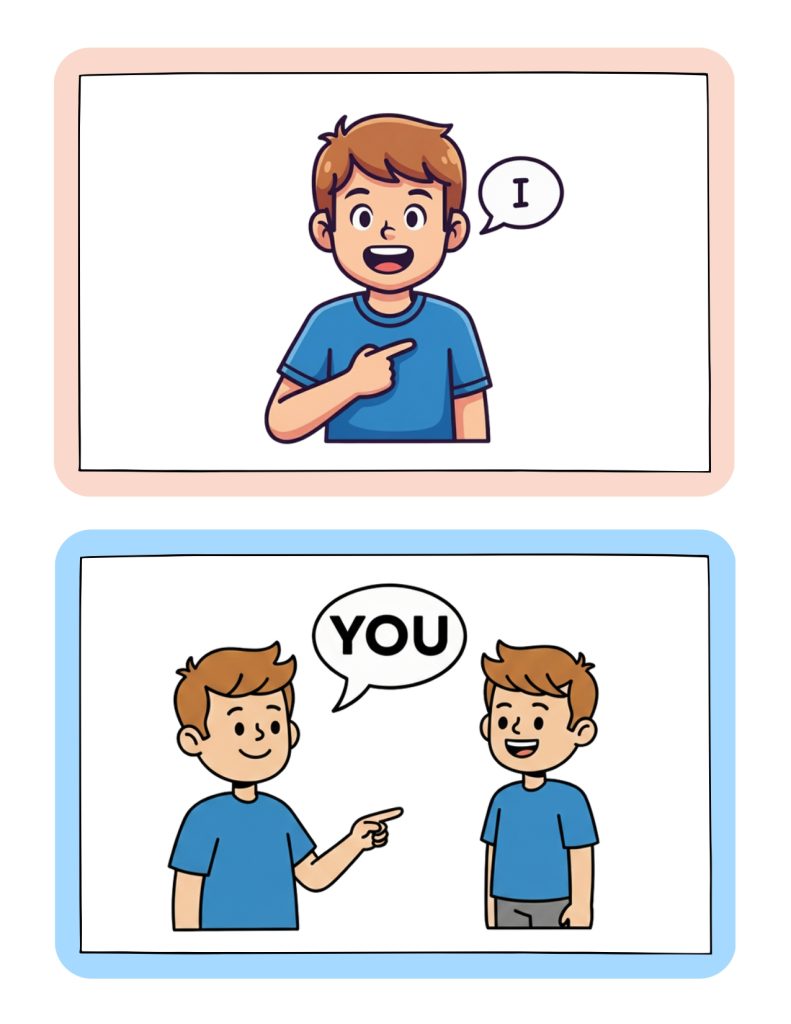
- I shows a boy pointing to himself. This is the person doing the talking. When kids want to say something about themselves, they use “I” instead of their own name.
- YOU has a boy pointing right at another kid. This means the person you’re talking to. Kids learn that “you” changes depending on who they’re chatting with.
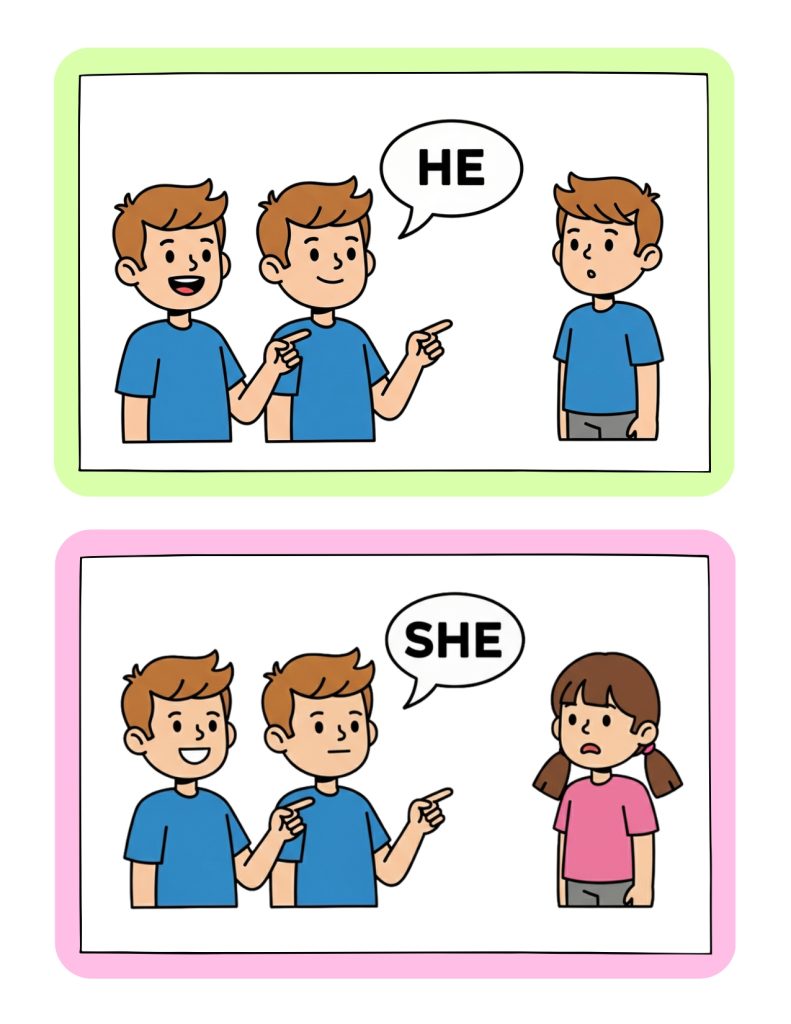
- HE shows someone pointing to a boy nearby. Kids use this instead of saying the boy’s name over and over. It only works for boys, which the picture makes obvious.
- SHE works just like “he” but for girls. The card shows someone pointing to a girl. Kids see the difference between the boy card and the girl card right away.
- IT has a child pointing to a box. This teaches kids that “it” is for things, not people. They stop saying “he” about their favorite stuffed animal and start using “it.”
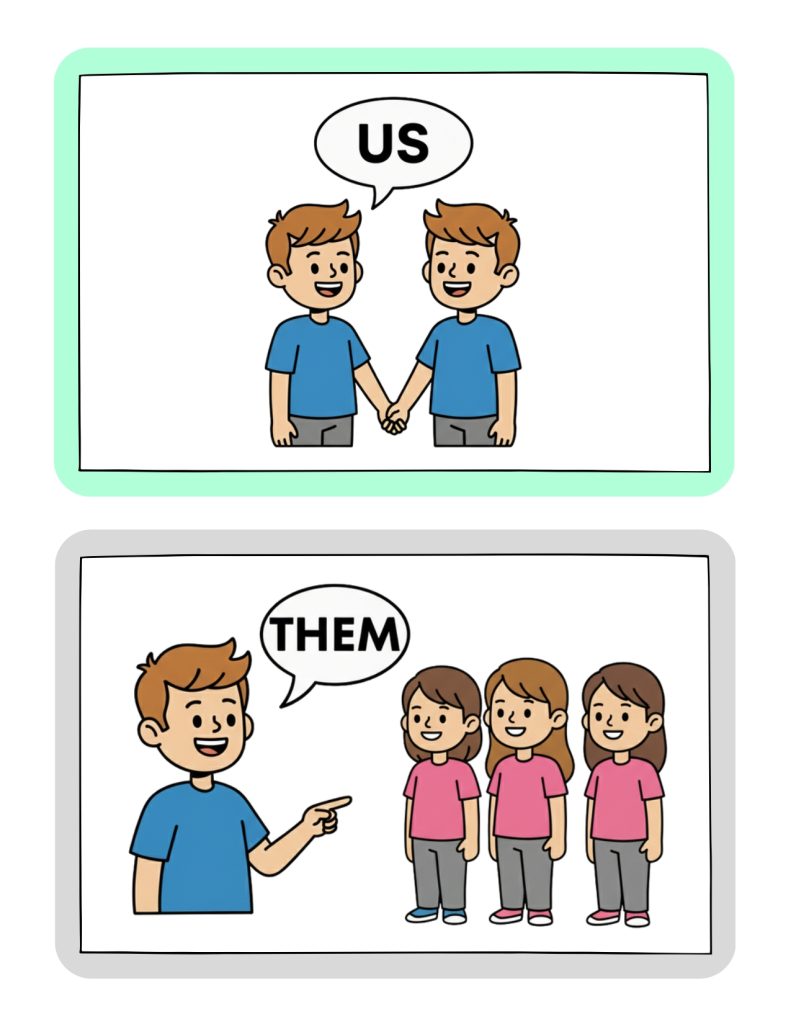
- WE shows two kids together, maybe holding hands. This means the speaker plus someone else. Kids learn that “we” includes themselves and at least one other person.
- THEY has one child pointing to a group of three kids. This covers multiple people who aren’t part of your group. The picture shows the clear separation.
- ME displays a child pointing to himself, but it’s different from “I.” Kids figure out when to say “Give it to me” instead of “Give it to I.”
- HIM shows pointing to a boy, similar to “he” but used differently. Kids practice saying “Tell him” instead of “Tell he.”
- HER mirrors “him” but points to a girl. Children learn to say “Ask her” instead of “Ask she.”
Why These Flashcards Actually Work
Kids learn better when they can see what words mean. Abstract ideas like pronouns make more sense with pictures attached. When children see the “we” card showing two friends together, they remember saying “We went to the playground” or “We ate lunch together.”
The cards help with the trickiest part of pronouns: perspective. Holding the “I” card while looking in a mirror teaches kids about being the speaker. Pointing to the “you” card while looking at mom shows them about addressing someone directly.
Most kids mix up “I” and “me” because both words refer to themselves. The different pictures help. The “I” card shows someone ready to speak. The “me” card shows someone receiving something or being talked about. Kids start choosing the right word for different spots in sentences.
Games That Get Results
- Quick Grab: Put all cards face-up on the kitchen table. Say sentences like “Connor is riding his bike. He loves going fast.” Kids race to grab the “HE” card. The first one to get it right keeps the card. This builds listening skills and pronoun recognition at the same time.
- Story Chain: Start with “The girl walked her dog.” Hold up the “SHE” card and add: “She threw a stick.” Pass cards around the circle. Each person adds a sentence using whatever pronoun they get. Stories turn silly fast, but kids remember pronouns better when they’re making up funny adventures.
- Mirror Game: Stand in front of the bathroom mirror with your child. Hold up cards and practice together. Show the “I” card and both point to yourselves, saying “I.” Show “you” and point at each other. Kids love this because they get to see themselves while learning.
- Dinner Challenge: Try using only pronouns for five minutes during supper. Say “She wants more potatoes” instead of “Emma wants more potatoes.” Kids think it’s hilarious, and the practice makes pronouns automatic in regular conversation.
- Secret Message: Whisper sentences that include pronouns around a circle. “He likes chocolate ice cream” could turn into “They like vanilla cake” by the end. Children focus intensely on picking up differences in pronouns, and everyone enjoys the laughter when messages alter. You can also try our Clothes Flashcards for Kids to apply simple words used in everyday conversation.
- Action Cards: Pick a pronoun card and act out sentences. Get “THEY” and everyone dances together for “They are dancing.” Movement helps kids who learn better with their whole body, not just their eyes and ears.
Pictures Make the Difference
Children understand things they can touch and see before they grasp abstract concepts. They know “dog” and “cookie” because they can point to these things. Pronouns shift meaning based on who’s talking, which makes them much harder.
Visual cards solve this problem. Kids build mental pictures of what each pronoun means. The boy on the “HE” card becomes their reference point. When they need to talk about other boys, they remember that picture and choose “he.”
Different colored borders help too. Visual learners remember information better when colors are involved. Kids might think “the blue card with two people” when they need “WE” in conversation.
Better Communication Skills
Understanding pronouns correctly helps children express complicated ideas without repeating names constantly. Instead of “Mackenzie told Mackenzie’s dad that Mackenzie wanted to visit Mackenzie’s cousin,” they learn to say “She told her dad that she wanted to visit her cousin.”
School becomes easier when kids understand pronouns. Teachers give instructions like “Give it to him” or “Tell her to line up.” Kids who know pronouns don’t get confused about who should do what.
Reading improves too. Beginning readers who understand that “she” refers back to the girl character can follow stories better. They spend their brain power understanding what happens instead of figuring out what pronouns mean.
Making It Stick
These cards work best as part of regular family life, not special study time. Point out pronouns in bedtime stories. Use them during car trips. Encourage pronoun use in everyday conversations. Natural practice beats formal drills every time.
Keep cards handy in the kitchen, car, or wherever your family spends time together. Quick games during waiting periods reinforce learning without feeling like work. Kids practice while having fun, which makes the lessons stick longer.
Don’t worry about perfection. Young children take time to master pronouns completely. Celebrate small improvements. When your child switches from “Me want juice” to “I want juice,” that’s real progress worth acknowledging. You can also explore our Wild Animals Flashcards for Kids to give them more learning options.
Getting Started
Printing directions are simple. Open up the PDF file and choose the default print settings. Portrait layout using “fit to page” is ideal. Printing in color highlights the dramatic contrasting better, but black and white printing is good enough for learning.
Print these cards on thick paper or cardstock for durability. Laminate them if you want them to survive juice spills and sticky fingers. Cut along the borders carefully, and you’re ready to start.
Begin with just a few cards rather than all ten at once. Master “I,” “you,” and “it” before adding others. Build slowly and let your child’s interest guide the pace.
Watch your child transform from someone who says “Her don’t like that” to confidently stating “She doesn’t like that.” These small changes add up to clearer communication and stronger language skills that benefit kids throughout their lives.
The investment in pronoun learning pays off in countless conversations ahead. Your child will speak more clearly, understand others better, and read with greater comprehension. Most importantly, they’ll feel confident expressing their thoughts and ideas to everyone around them.