

Your kid pushes the broccoli to the side of their plate for the third night in a row. You ask them to try the carrots, and they wrinkle their nose like you just offered them dirt. They claim they hate vegetables, but honestly, they just don’t know what most of them are or where they come from.
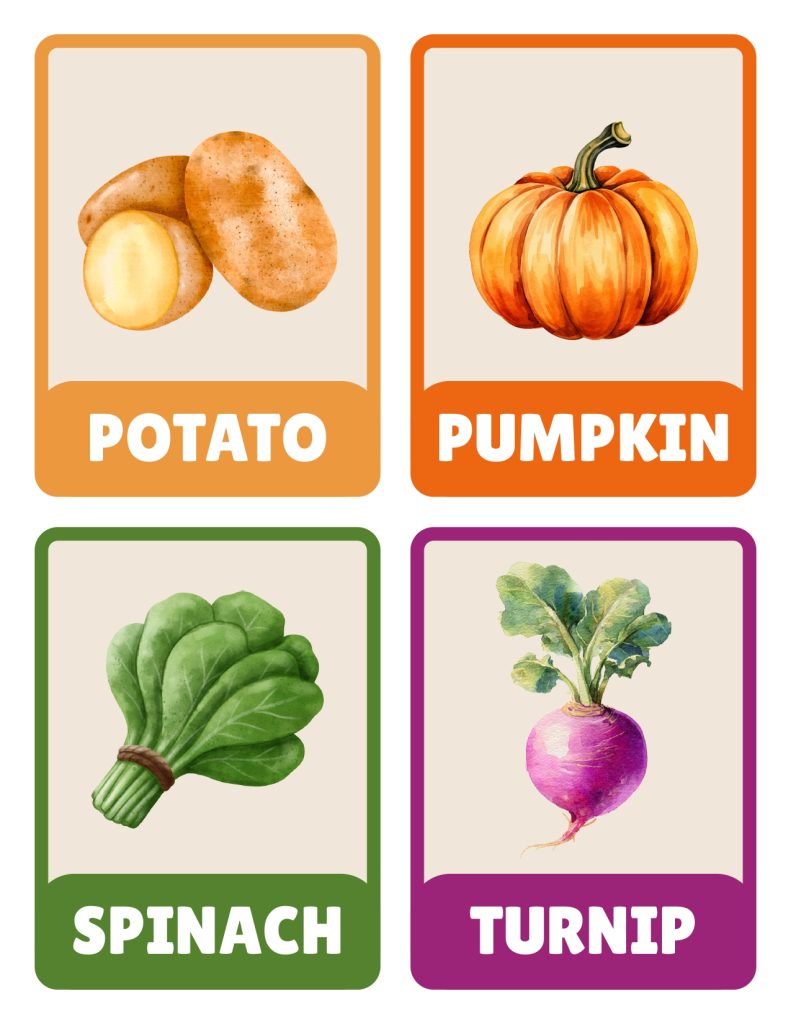
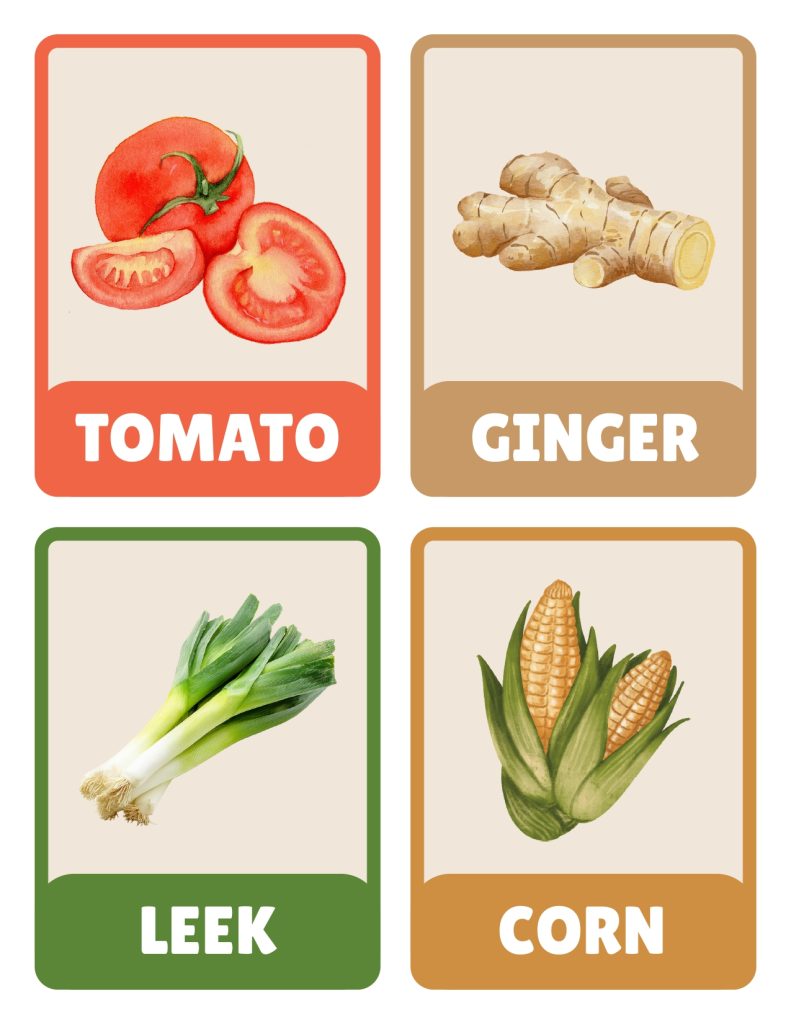
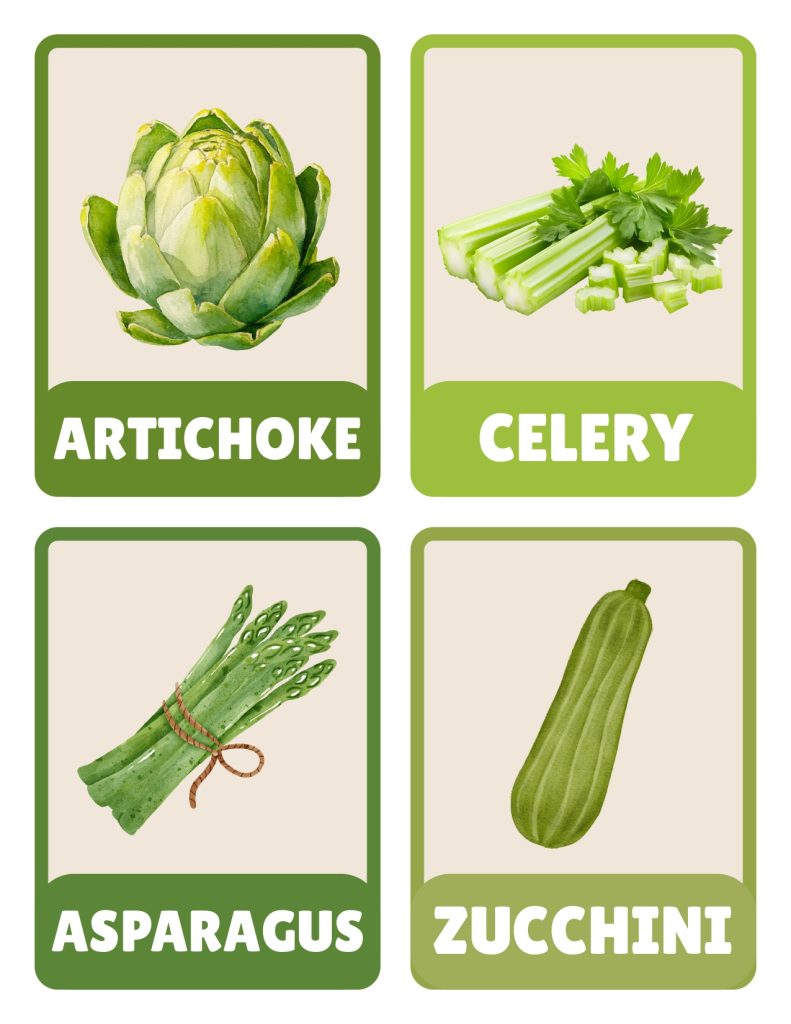
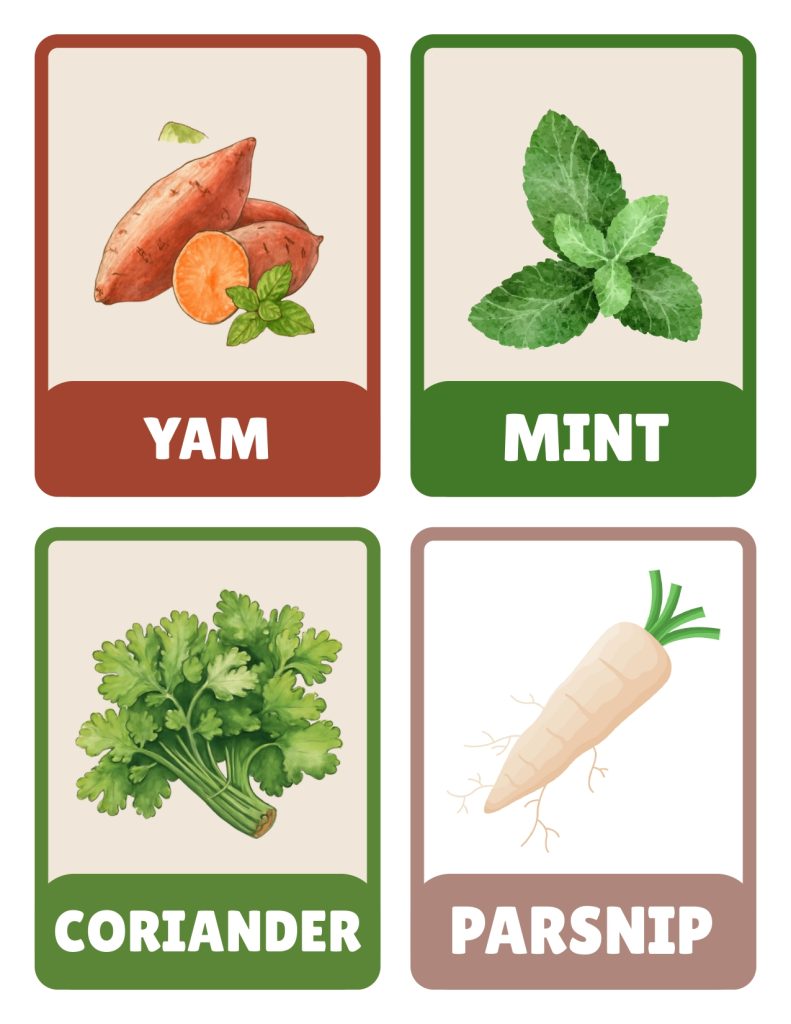
These Vegetable Flashcards for Kids introduce 32 common vegetables through pictures kids can actually recognize. Clear images showing what each vegetable looks like before it gets chopped up and hidden in dinner. No confusing botanical names or scientific classifications. Just the everyday vegetables sitting in grocery stores and growing in gardens that kids need to recognize.
When children know what vegetables are called and what they look like whole, they get curious instead of suspicious. Oh, that’s the cucumber I saw on the flashcard. Those are the same green beans from the picture. Different vegetables have different colors, shapes, and textures, and they all do different jobs keeping bodies healthy and strong.
Images
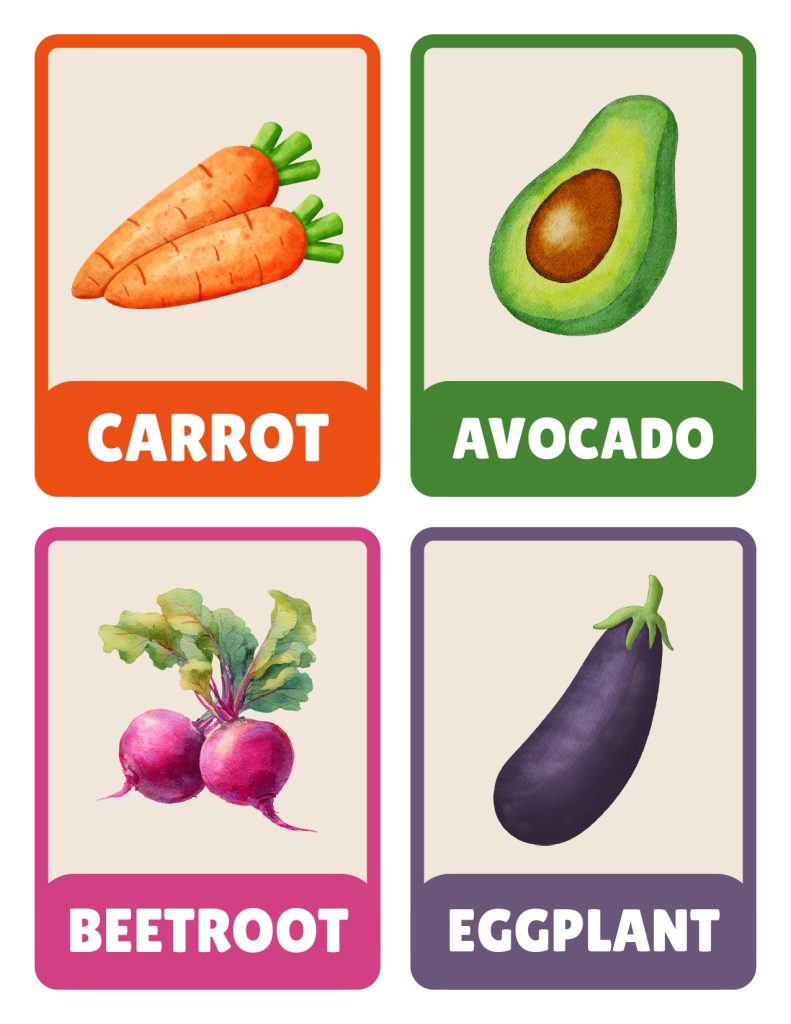
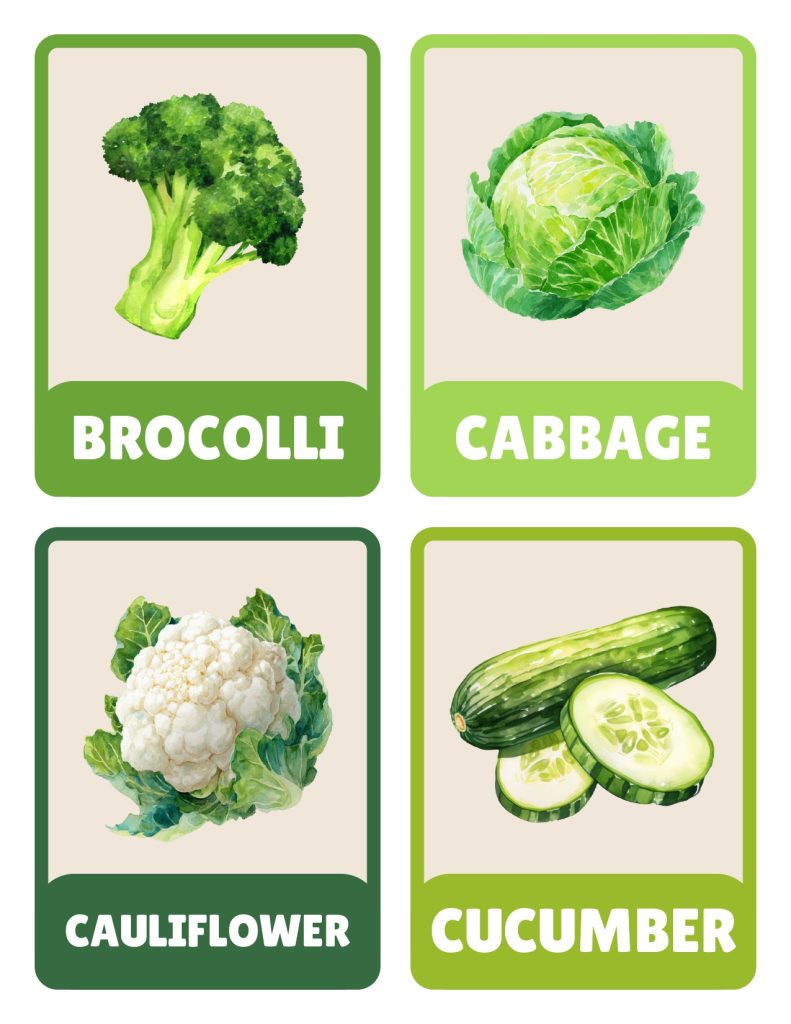
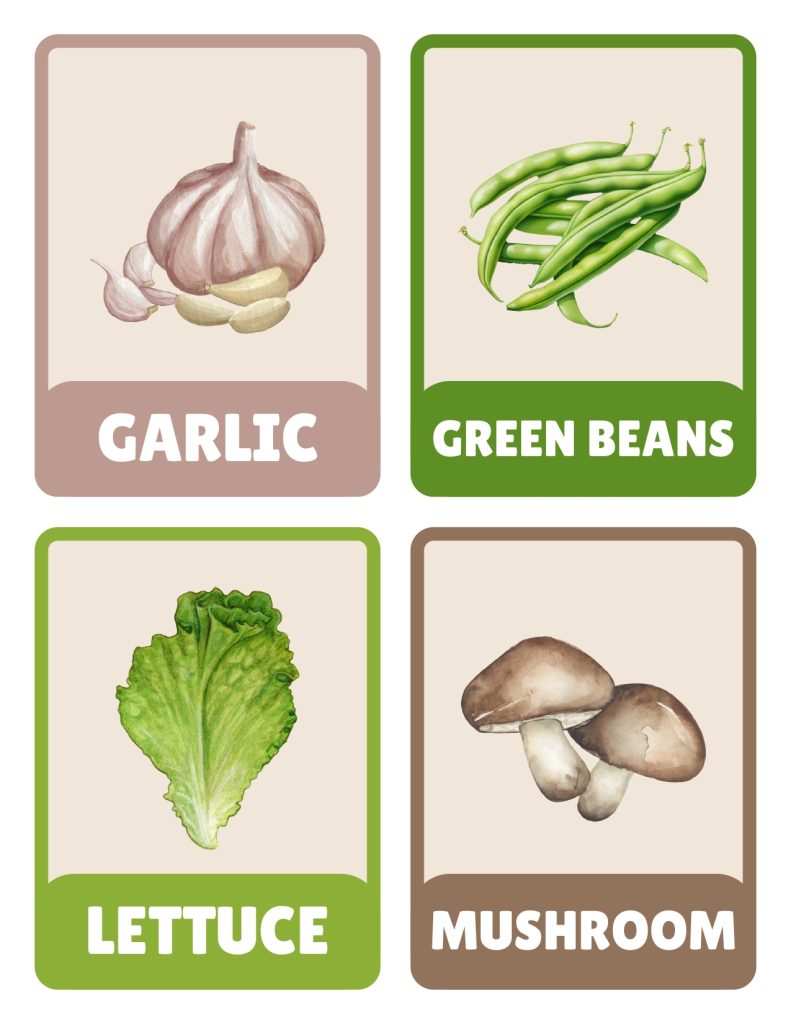
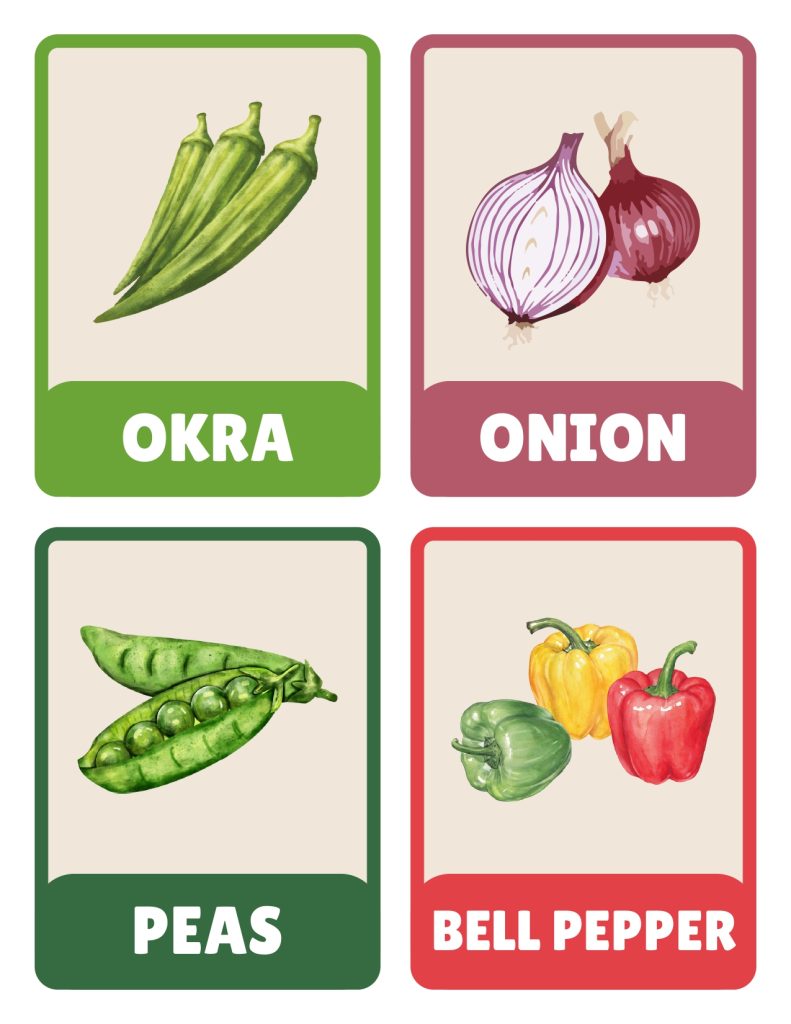
Vegetables Kids See Every Day
The collection covers vegetables kids actually see in real life. The carrots in lunch boxes. The lettuce on sandwiches. The potatoes that become french fries. The corn served at barbecues. The cucumbers sliced for snacks. Building familiarity with common vegetables makes trying them way less intimidating than facing unknown foods.
- Carrot – Long, orange, and crunchy. Kids see carrots everywhere but might not recognize them whole with the feathery green tops. They taste sweet raw and softer when cooked. Grow underground and get pulled up when ready.
- Tomato – Round and red, though sometimes yellow or green. Most kids know ketchup comes from tomatoes but don’t connect it to the whole fruit growing on vines in gardens. Juicy inside with little seeds.
- Potato – Brown and lumpy on the outside, white or yellow inside. Becomes french fries, mashed potatoes, and chips. Grows underground in dirt and stores for months, which is why every kitchen has them.
- Cucumber – Long, green, and mostly water inside. Crunchy and mild tasting, often sliced into circles for snacks or salads. Grows on vines and has bumpy skin that some people peel off before eating.
- Corn – Yellow kernels attached to a cob in neat rows. Kids recognize corn on the cob from summer cookouts but might not realize loose corn kernels came from the same place. Sweet when fresh, gets tougher as it sits.
- Lettuce – Green leaves that make up most salads. Crunchy and watery with barely any taste, which is why it gets covered in dressing. Grows in heads that look like giant leafy balls in gardens.
- Broccoli – Looks like tiny green trees. The florets on top are what most people eat, though the stalks work too. Gets mushy when overcooked, which is why many kids think they hate it.
- Onion – Round with papery skin in white, yellow, or red. Makes people cry when cut because it releases strong chemicals. Tastes sharp raw but sweet when cooked. Shows up in almost every dinner recipe.
- Peas – Tiny round green balls that come in pods. Fresh peas taste sweet and pop in your mouth. Frozen peas are what most kids eat, usually rolling them around plates trying to avoid them.
- Bell Pepper – Comes in red, yellow, orange, and green. Crunchy and slightly sweet, especially the red ones. Hollow inside with seeds that get scraped out. Kids either love the crunch or hate the texture.
- Spinach – Dark green leaves that shrink down to almost nothing when cooked. Shows up in salads raw or cooked into dishes where it mostly disappears. Tastes earthy and slightly bitter to some kids.
- Cauliflower – White broccoli’s cousin, with the same tree-like shape in pale cream color. Tastes milder than broccoli. Gets roasted, mashed, or hidden in recipes as a substitute for rice or pizza crust.
Games That Make Vegetables Fun
- Veggie Scavenger Hunt: Take the flashcards to the grocery store and have kids find each vegetable in the produce section. They match the card to the real vegetable, learning what each one looks like in person. Makes shopping take longer but turns it into active learning instead of boring errands.
- Color Sorting Challenge: Separate cards by vegetable colors. All the green ones in one pile, red in another, orange in another. Kids discover most vegetables are green while fewer are red or purple. This visual sorting helps them remember vegetables by color when shopping or eating.
- What’s for Dinner Detective: Before cooking dinner, show kids flashcards of the vegetables you’re using in tonight’s meal. They identify each one and guess what dish you’re making. This builds anticipation and connection between raw vegetables and finished meals. They’re more likely to eat something they helped identify.
- Veggie Memory Match: Print two sets of cards and play classic memory match. Lay cards face down and flip two at a time trying to find pairs. Kids learn vegetable names through repetition while playing a game they already know. Start with just ten pairs for younger kids.
- Taste Test Game: Pick five vegetables kids haven’t tried. Show the flashcard, talk about where it grows, then offer a tiny taste. No pressure to like it, just trying. They rate each one with thumbs up or down. Trying new vegetables feels less scary when it’s framed as a game with flashcards as the introduction.
- Growing Guide: Pick vegetables from the flashcards that are easy to grow. Carrots, peas, lettuce, tomatoes. Plant them together and watch them grow from seeds to the vegetables pictured on the cards. Kids who grow vegetables eat vegetables because they’re proud of what they created.
- Alphabet Vegetable Challenge: Go through the alphabet and find vegetables for as many letters as possible using the flashcard set. A is for artichoke and avocado. B is for beetroot and broccoli. This combines literacy practice with vegetable learning.
- Chef’s Choice: Let kids pick three vegetable flashcards randomly. Those three vegetables must appear in dinner this week. They get to decide how, or you can surprise them. Giving kids choice and control makes them more willing to try what’s served.
Looking to expand learning beyond vegetables? Check out our Flashcards for 2 year olds to make the games more interesting, or explore Animal Flashcards to discover different types of animals.
Getting Your Vegetable Flashcards Ready
Want kids who actually know what vegetables are called and might even try them? These flashcards provide the foundation for vegetable familiarity that makes mealtimes easier and grocery shopping more educational.
Download the PDF and print using standard settings. Portrait orientation on letter or A4 paper works perfectly. Color printing shows vegetables in their natural colors, which helps kids recognize them in stores and gardens.
Use cardstock for cards that survive sticky fingers and frequent handling. Laminating protects against spills and food smudges since these cards will likely end up near actual vegetables. Cut along the borders and you have 32 vegetables ready for learning.
Some families keep one set in the kitchen and another in the car. The kitchen set comes out during meal prep. The car set occupies kids during grocery store trips. Repetition through different contexts helps vegetable names stick better than one-time exposure.
Start building vegetable knowledge that reduces dinner battles and increases curiosity about trying new foods. These flashcards turn mysterious vegetables into familiar friends kids can identify and name.