

Ever noticed those weird letters on clocks that look like numbers? Those are Roman numerals, and they’re actually everywhere once you start looking.
Kids see them on fancy clocks, in movie titles (like Rocky II or Star Wars Episode IV), on building cornerstones, and even in their favorite books’ chapter headings. Learning to read them feels like cracking a secret code that most friends haven’t figured out yet.
These Roman Numbers Flashcards for Kids teach numbers 1 through 20 in Roman numerals. No boring history lectures or confusing rules. Just the symbols kids need to recognize these special numbers when they spot them around town or at home. Plus, once kids learn these, they notice them everywhere. It becomes a fun game spotting Roman numerals on buildings, in movies, or on fancy restaurant signs.
What’s Inside the Set
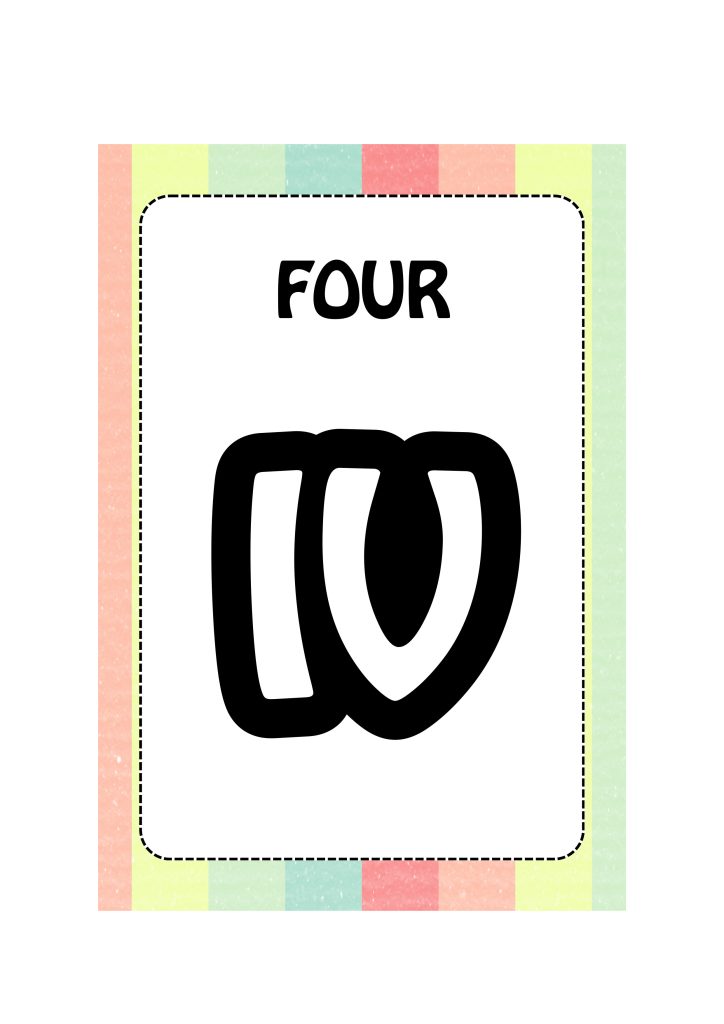
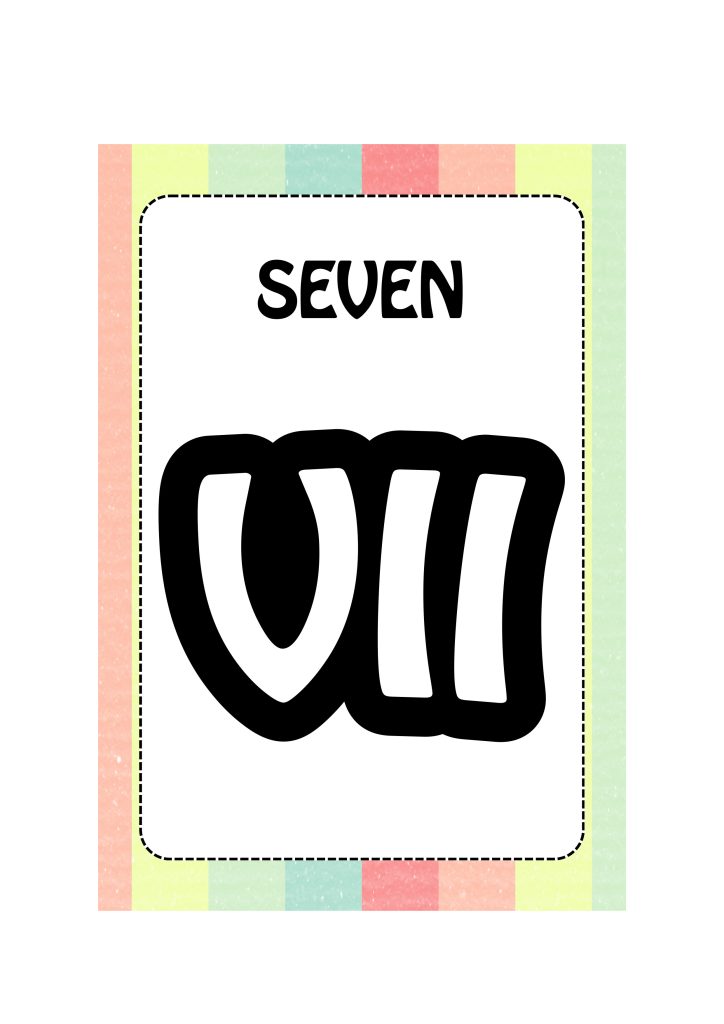
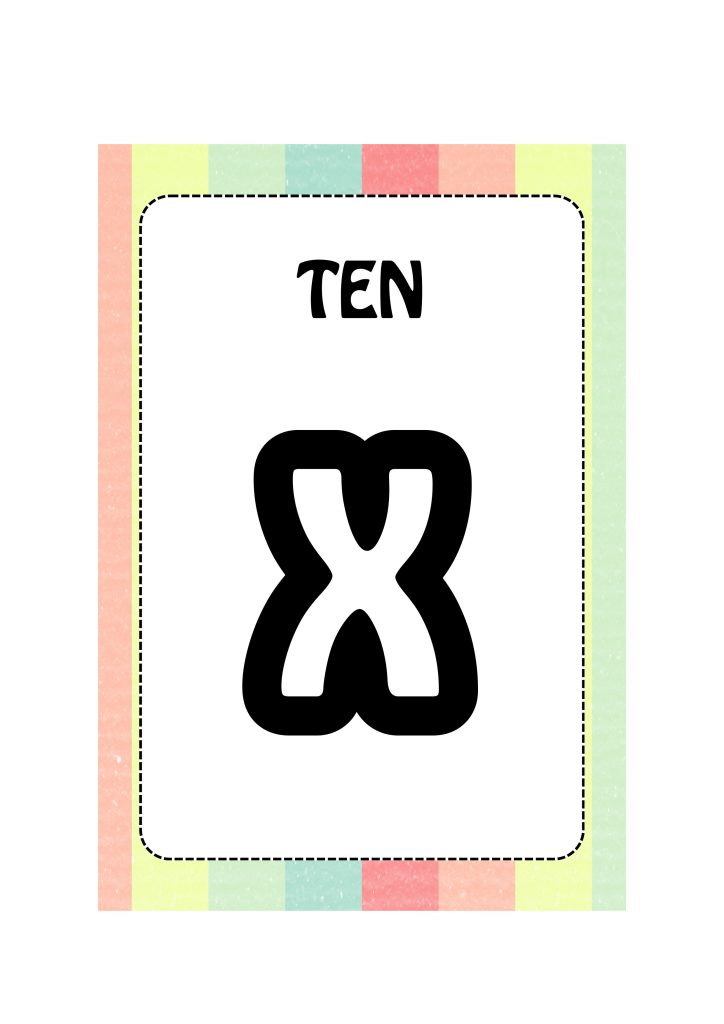
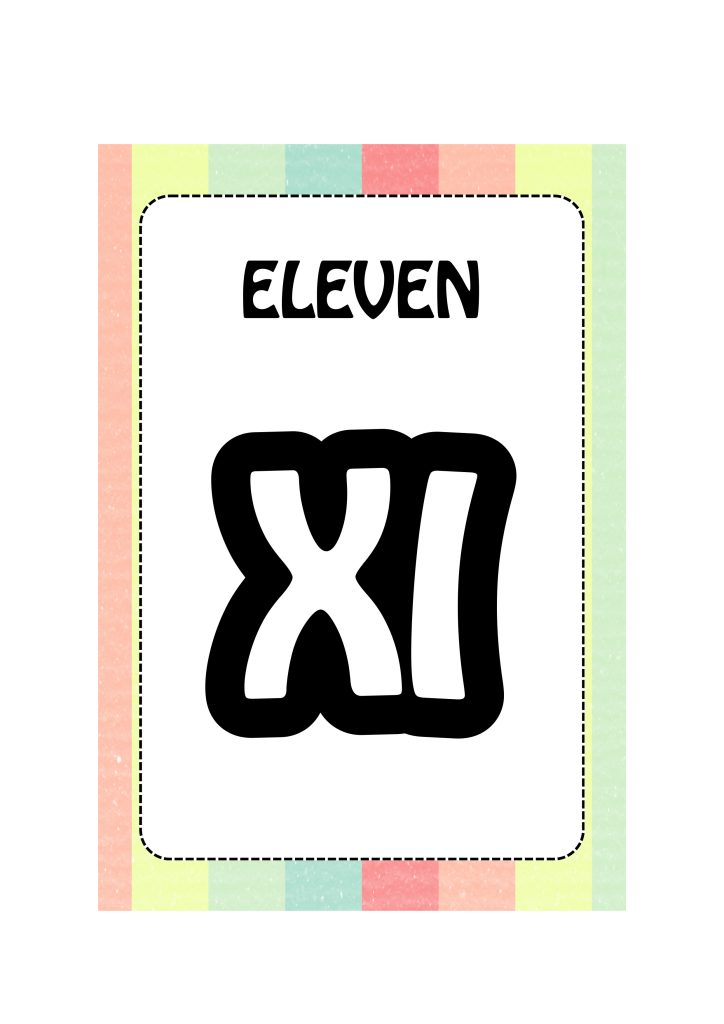
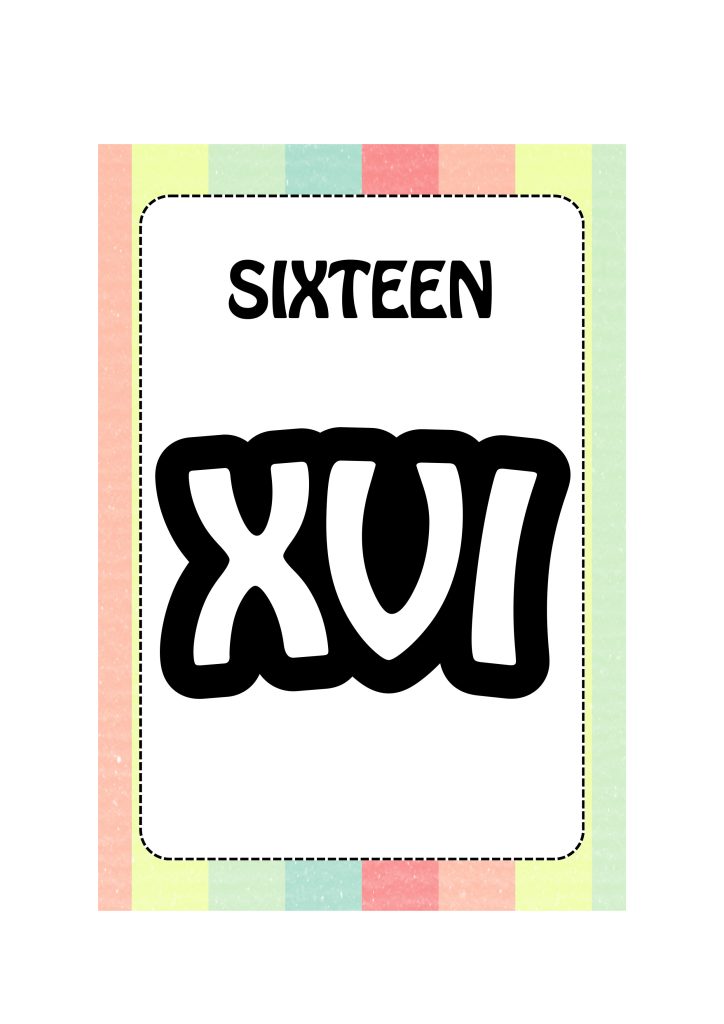
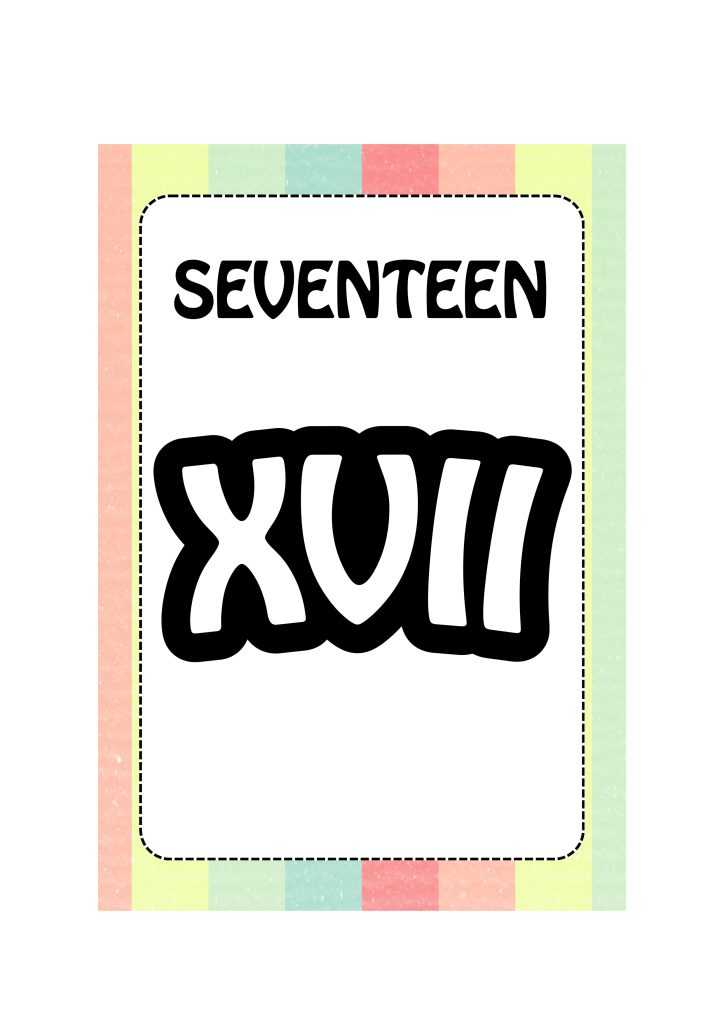
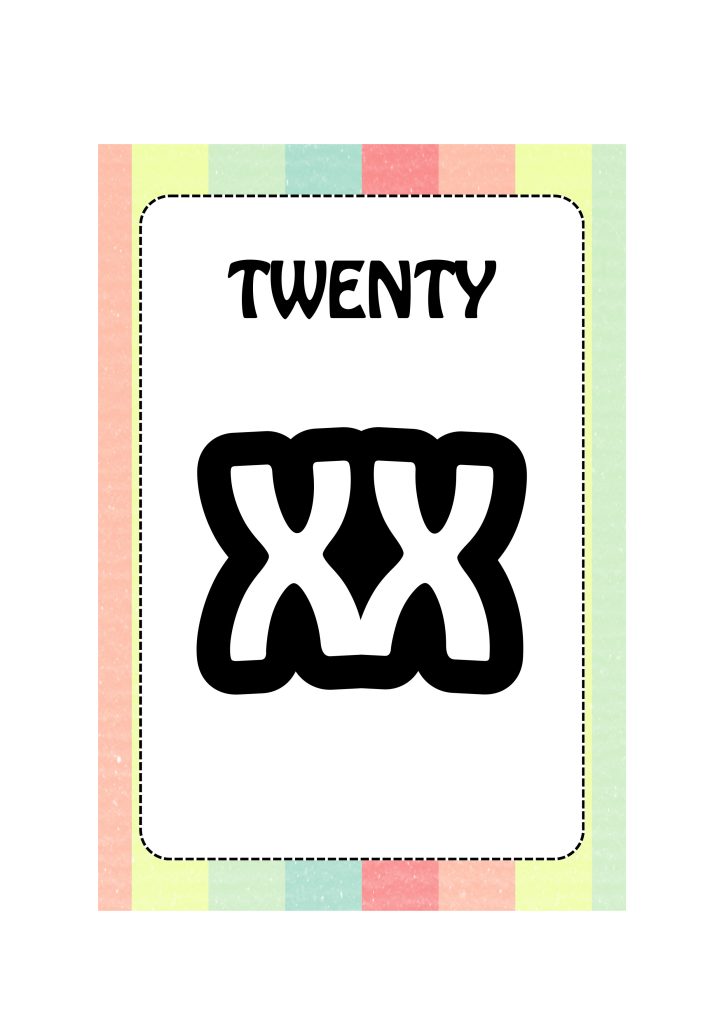
Each flashcard shows one Roman numeral with the regular number written underneath. Bold, clear letters that match what kids will actually see on real clocks and books.
- I – One: The simplest Roman numeral. Just a single straight line.
- II – Two: Two lines side by side.
- III – Three: Three lines in a row.
- IV – Four: Here’s where the subtraction rule starts. One before five means take away one from five.
- V – Five: Looks like an open hand with five fingers.
- VI – Six: Five plus one.
- VII – Seven: Five plus two.
- VIII – Eight: Five plus three.
- IX – Nine: One before ten means take away one from ten.
- X – Ten: The base for the next set of numbers.
- XI – Eleven: Ten plus one.
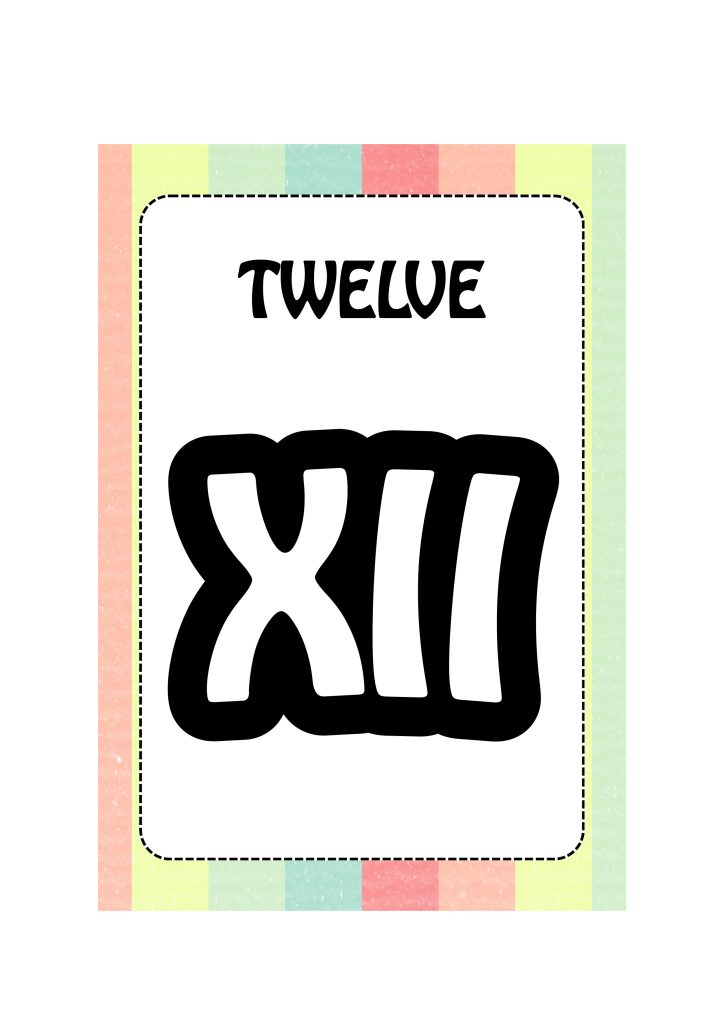
- XII – Twelve: Ten plus two. The last number on most clock faces.
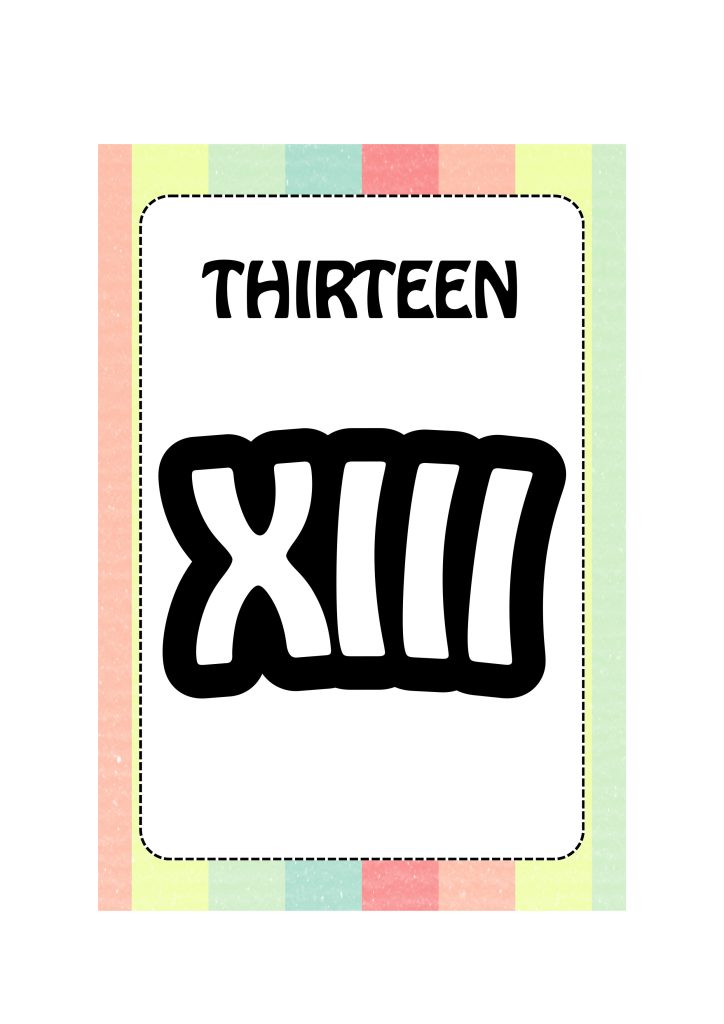
- XIII – Thirteen: Ten plus three.
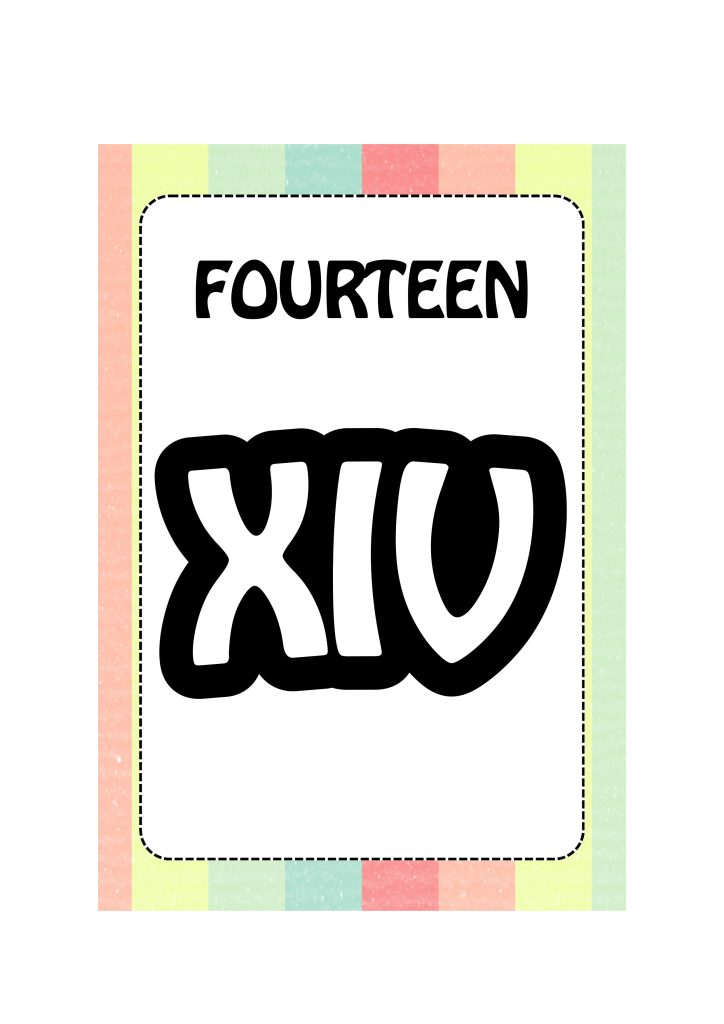
- XIV – Fourteen: Ten plus four (using the subtraction rule).
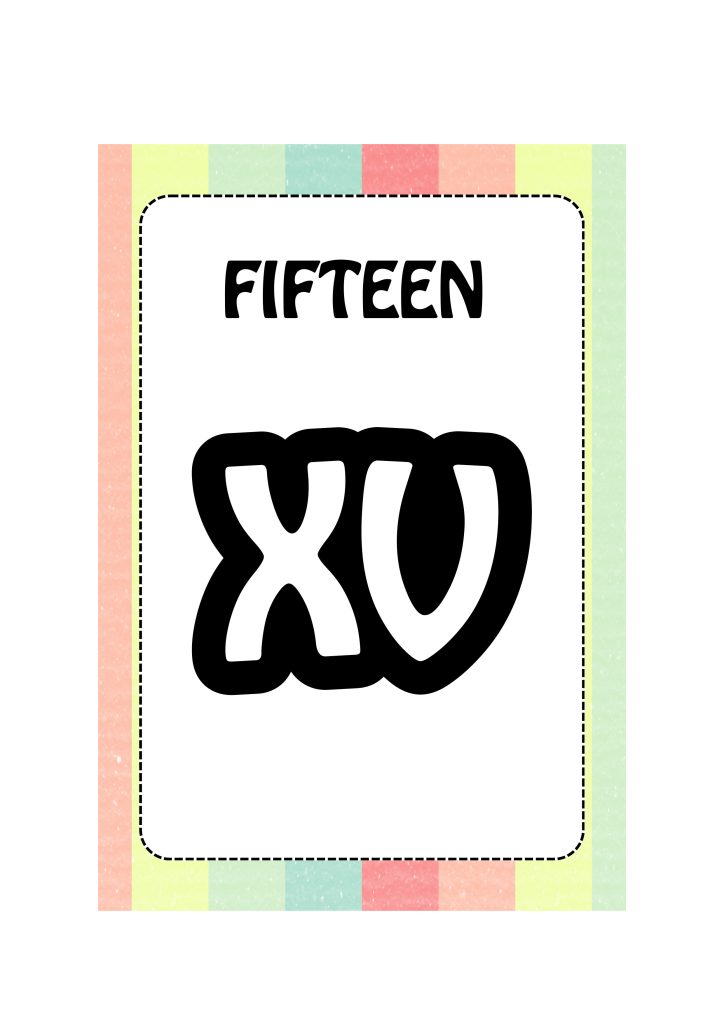
- XV – Fifteen: Ten plus five.
- XVI – Sixteen: Ten plus six.
- XVII – Seventeen: Ten plus seven.
- XVIII – Eighteen: Ten plus eight.
- XIX – Nineteen: Ten plus nine (using the subtraction rule).
- XX – Twenty: Two tens side by side.
This range covers what kids see most often. Once they nail these twenty numbers, bigger ones start making sense too.
Images








Fun Ways Kids Can Practice
- Clock Time: Find a clock with Roman numerals at home or in a store. Have kids point to different numbers throughout the day. “Where’s the III?” “Can you find the IX?” This makes Roman numerals feel useful instead of just something to memorize.
- Building Numbers: Lay out cards for I, V, and X on the table. Ask kids to build different numbers. “Can you make 8?” They’ll grab V, I, I, and I. “How about 14?” They’ll pick X and IV. Moving the cards around with their hands helps the patterns stick in their brain.
- Treasure Hunt: Go on a Roman numeral hunt around the house or neighborhood. Check clocks, books, buildings, or even DVDs. Every time kids spot a Roman numeral, they grab the matching flashcard. It’s like a scavenger hunt that teaches without feeling like work.
- Sequence Challenge: Mix up all the cards and spread them on the floor. Have kids arrange them from smallest to biggest. Can they put them in the right order? This helps them understand how the numbers progress.
- Memory Match: Make or print two sets of the cards. Flip them all face down and play memory. Kids flip two cards, trying to find matching pairs. When they find XV and XV, they keep the pair. This game makes practice feel like playtime.
- Quick Flash: Hold up random cards and see how fast kids can shout out the number. Start with five cards they know well, then add trickier ones. Time them and let them try to beat their own record the next day.
Looking for more learning fun? Check out our Multiplication Flashcards to help kids master their times tables with the same hands-on approach.
Games Kids Actually Enjoy
- Roman Numeral War: Just like the card game War, but with Roman numerals. Each player flips a card. Whoever has the higher number wins both cards. Kids have to figure out quickly which number is bigger, and that’s where the learning happens.
- Missing Number Detective: Lay out cards in order, but secretly remove a few. Kids have to figure out which numbers disappeared. “Here’s XV, XVI, and XVIII. What’s missing?” They have to think about the sequence to spot the gap.
- Speed Sort: Give kids ten random cards. Set a timer for one minute. How fast can they sort them from smallest to biggest? Try again tomorrow and see if they beat their time.
- Build Your Own Clock: Draw a big circle on paper for a clock face. Kids place the right flashcards where each number should go. Most clocks only use I through XII, so this becomes a manageable challenge.
- Story Problems: Make up silly math problems using Roman numerals. “If you have V cookies and eat II cookies, how many are left?” Kids solve it using the flashcards as tools.
- Roman Numeral Bingo: Make simple bingo cards with regular numbers on them. Call out Roman numerals instead. When you say “VIII,” kids have to find 8 on their bingo card. First to get five in a row wins.
Want to try numbers in another language? Our Spanish Numbers Flashcards teach kids to count in Spanish using the same fun approach.
Making It Stick
Here’s what really helps Roman numerals stick in kids’ brains.
- Daily Exposure: Put a few flashcards on the bathroom mirror where kids brush their teeth. Change them every few days. Kids see them twice a day without any pressure to study.
- Use Them in Real Life: Instead of saying “turn to page 12,” say “turn to page XII.” Count down from X during cleanup time. Sneak Roman numerals into everyday conversation naturally.
- Let Kids Teach Someone: Have kids teach a younger sibling, stuffed animal, or even you. Teaching forces them to understand the material well enough to explain it. Plus, kids love being the expert.
- Make It a Challenge: Some kids love beating their own records. Time how fast can they correctly identify ten cards. Let them try again the next day. Improvement becomes its own reward.
- Celebrate Spotting: When kids spot Roman numerals out in the world, make a big deal about it. “You’re right, that building does say MCMXC! Good eye!” Noticing them matters as much as reading them.
Printing Roman Number Flashcards at Home
Open the PDF file and hit print. Set your printer to A4 paper and portrait orientation. Choose “fit to page” so everything prints at the right size.
Color ink isn’t necessary but it looks nice. These cards work perfectly fine in black and white as well since they’re just letters and numbers.
For cards that survive spills and crumpled backpacks, print on cardstock instead of regular paper. Even better, laminate them after cutting. Laminated cards last through years of use and multiple kids.
Cut along the borders to separate the twenty cards. Store them in a ziplock bag or small box so they don’t scatter all over the house.
Some families print two sets. One lives at home for regular practice. The other stays in the car for entertainment during errands or long drives.