Your five-year-old points at the Spanish words on the cereal box and asks what they mean. You’re at the park and hear kids speaking Spanish on the swings, and your child wants to join in but doesn’t know how to say hello. Spanish surrounds kids everywhere, from restaurant menus to signs at school, and they’re curious about those different words that sound musical and fun.
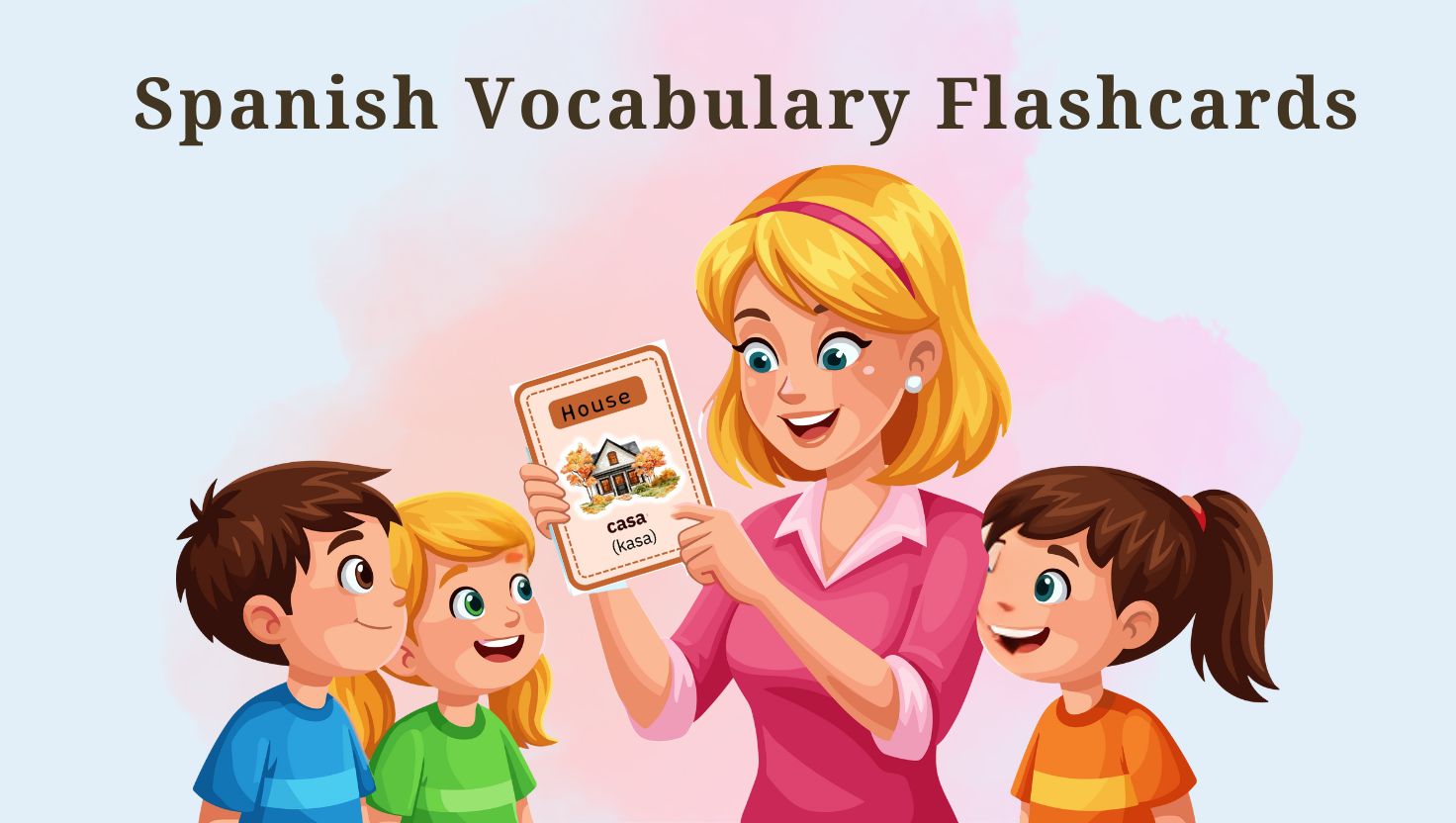
These Spanish Vocabulary Flashcards give kids 38 essential Spanish words they’ll actually use. Simple greetings for making friends. Food words for ordering lunch. Numbers for counting toys. Family words for talking about people they love. No complicated verb stuff or confusing grammar. Just everyday Spanish that makes kids feel brave enough to try speaking.
These cards stick to words children hear all the time. The Spanish in their neighborhoods, at restaurants, in stores. Real words that show up in regular life, not weird terms nobody ever says. When kids spot Spanish words around town, learning stops feeling like homework and starts feeling like a treasure hunt.
Images


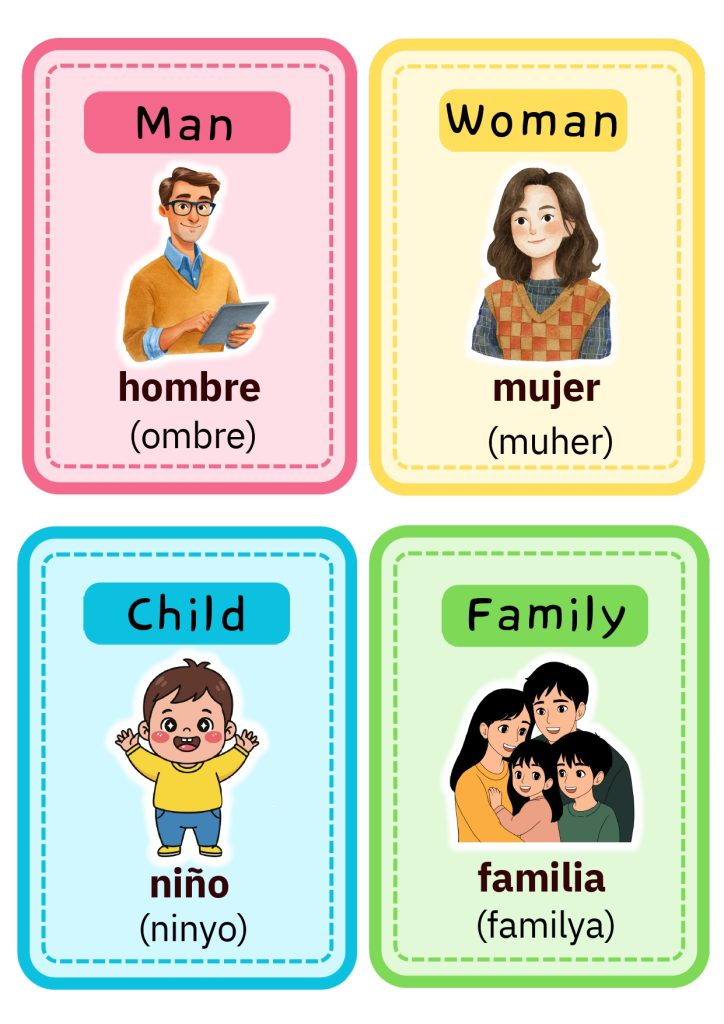
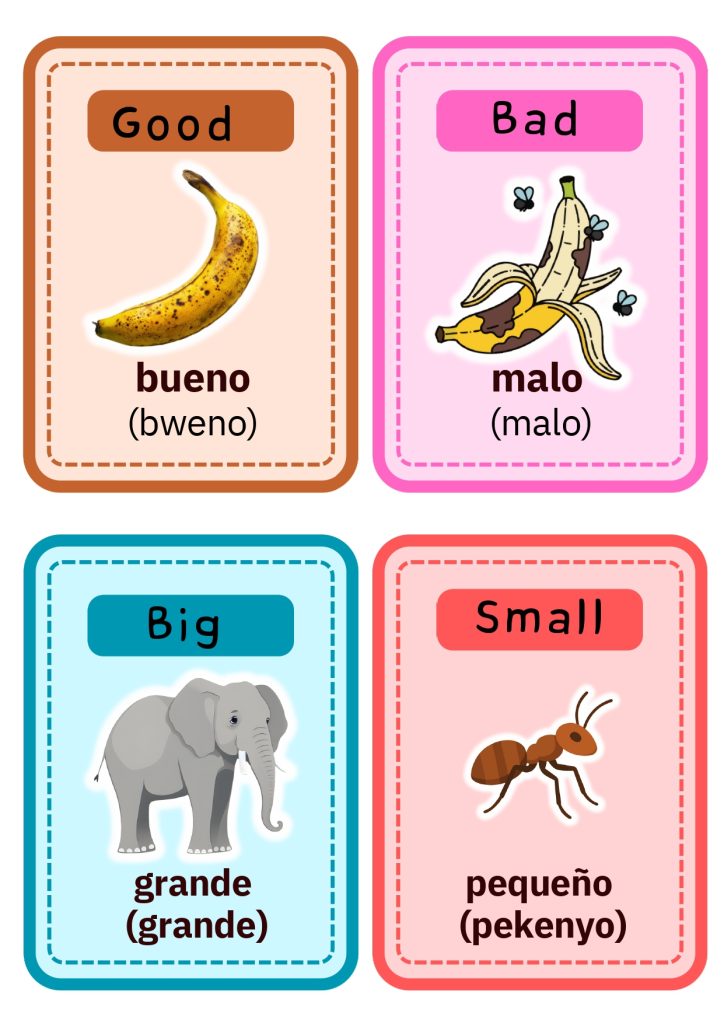


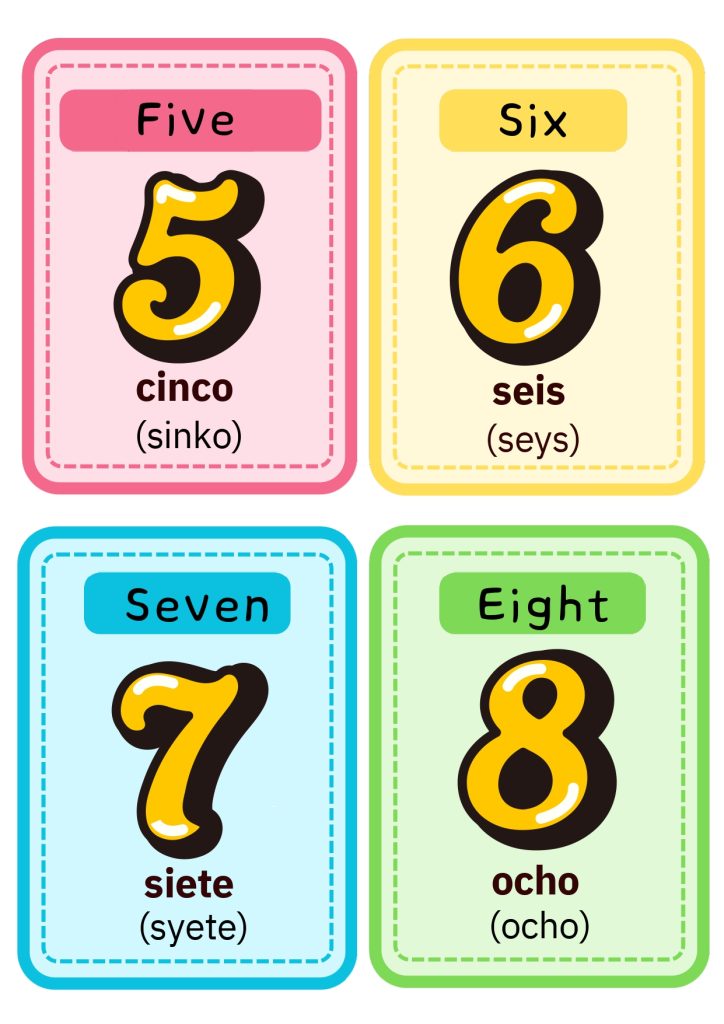
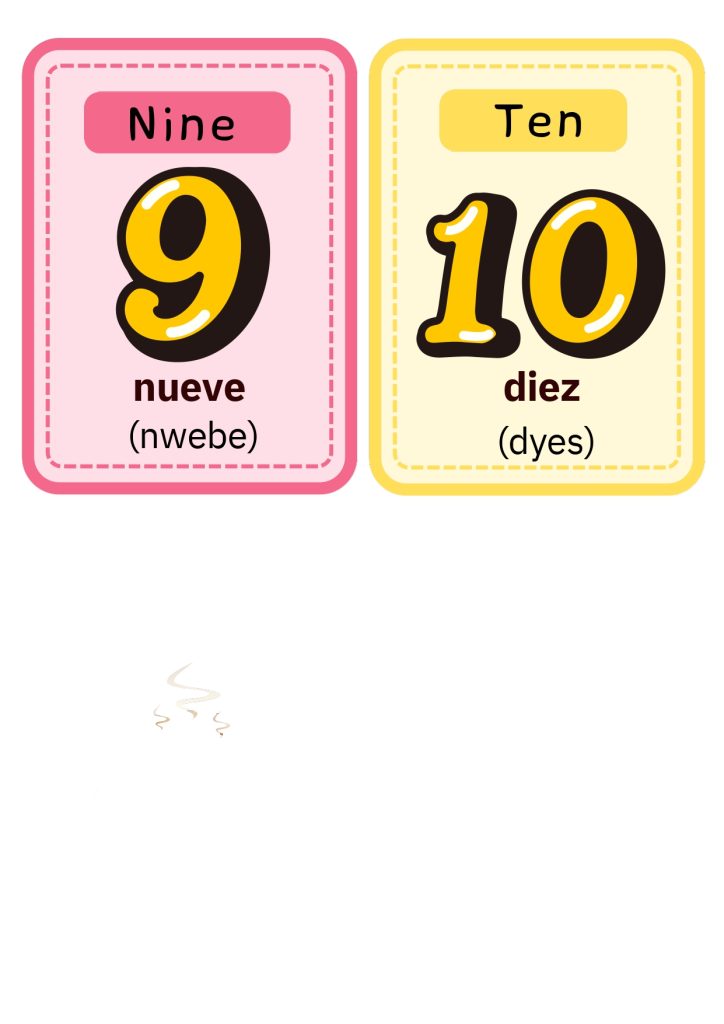
Words Kids Use Every Day
The flashcard set covers Spanish words children run into constantly. Food at lunch. Places they go. People in their lives. Numbers for counting stuff. This foundation makes Spanish feel normal instead of foreign and impossible.
Food and Drinks
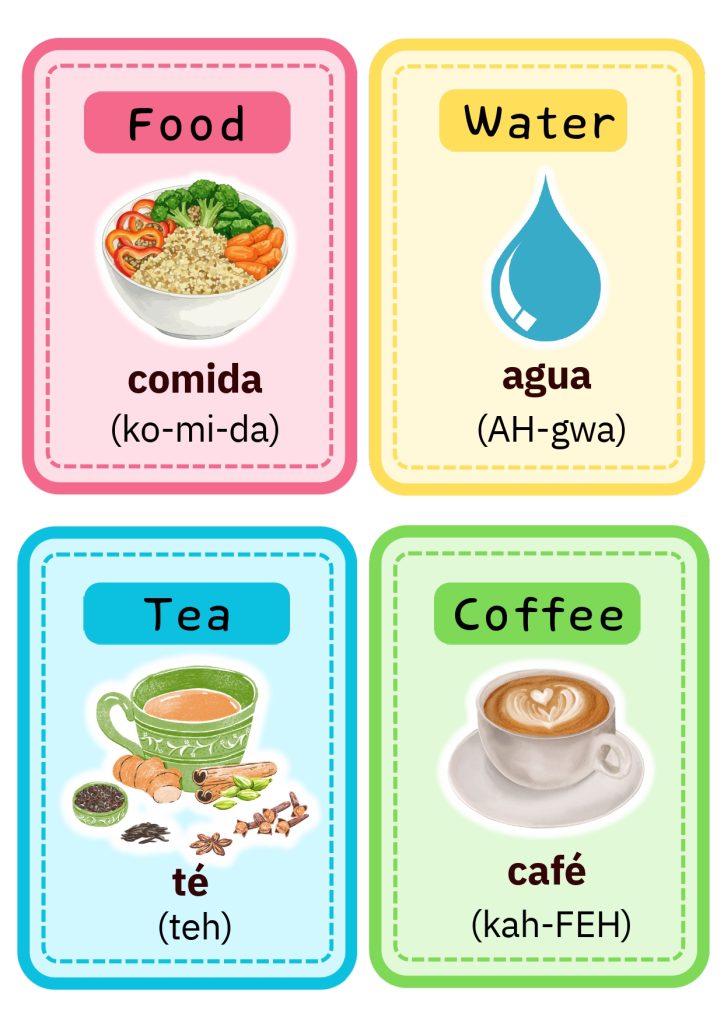
- comida (ko-mi-da) – Food matters to every kid. They all eat, so this word clicks right away.
- agua (AH-gwa) – Water sounds like “aqua” so most kids get it fast, which feels like winning.
- té (teh) – Tea sounds nearly the same in both languages, perfect for starting out.
- café (kah-FEH) – Coffee shows kids that Spanish uses those little marks to tell you which part to say louder.
Places That Matter
- casa (kasa) – House means home, the place they feel safest.
- escuela (eskwela) – School becomes cooler when kids can say it in Spanish.
- tienda (tyenda) – Shop comes up every time you run errands together.
- ciudad (syudad) – City helps kids describe where they live and where they visit.
Time and Travel
- día (DEE-ah) – Day connects to those “What did you do today?” talks at dinner.
- noche (NO-cheh) – Night links to bedtime stories and tucking in.
- camino (kamino) – Road covers walks to school and car rides to grandma’s.
- tiempo (tyempo) – Time works for asking “What time is it?” in Spanish.
Around the House
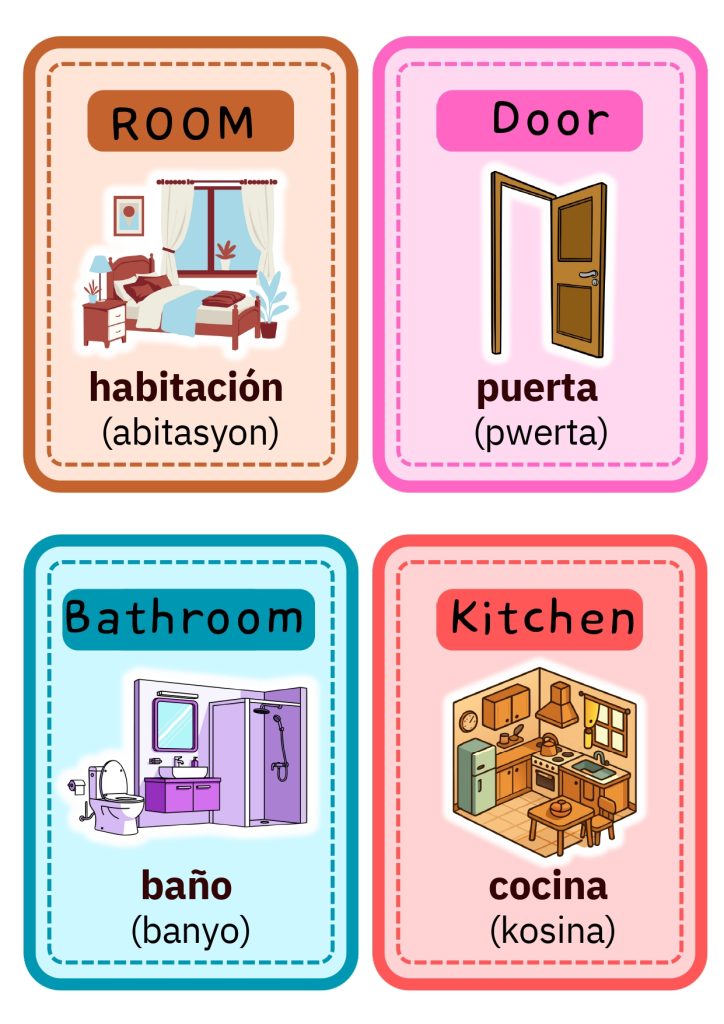
- habitación (abitasyon) – Room helps kids talk about their bedroom and personal space.
- puerta (pwerta) – Door is something they touch and use a hundred times a day.
- baño (banyo) – Bathroom vocabulary saves the day when nature calls.
- cocina (kosina) – Kitchen connects to cooking, snacks, and hanging out as a family.
People We Know
- niño (ninyo) – Child helps them relate to other Spanish-speaking kids.
- hombre (ombre) – Man covers dads, uncles, and male teachers.
- mujer (muher) – Woman includes moms, aunts, and women they look up to.
- familia (familya) – Family wraps up everyone they love most.
Describing Things
- bueno (bweno) – Good lets kids show they like something.
- malo (malo) – Bad helps when stuff goes wrong or tastes gross.
- grande (grande) – Big describes elephants, skyscrapers, and big brothers.
- pequeño (pekenyo) – Small fits puppies, baby sisters, and lost toys.
Being Polite
- hola (ola) – Hello works for greeting anyone, anywhere, anytime.
- gracias (grasyas) – Thank you builds manners that work in any language.
- por favor (por fabor) – Please shows respect and gets you further.
- adiós (ah-DYOHS) – Bye wraps up conversations nicely.
Games That Make Spanish Stick
- Spanish Scavenger Hunt hides flashcards around the house. You give clues in English like “Find where you sleep” and they hunt for habitación. “Find where you cook” leads to cocina. Kids love hunting for stuff and remember words better when they’re moving around finding them.
- Number Hopscotch works great outside. Draw ten squares on the sidewalk and write Spanish numbers uno through diez in them. Kids hop through saying the numbers loud. Moving their bodies while learning makes the words stick better than sitting still.
- Spanish Kitchen turns play time into practice time. Set up a pretend restaurant with the food cards. Kids switch off being the waiter and customer, ordering comida, agua, and café in Spanish. This makes the words useful for actual restaurant trips later.
- Story Time Mix grabs three random flashcards. Kids make up goofy stories using those Spanish words. Maybe a pequeño niño lives in a grande casa with his familia. Silly stories get creativity going while practicing new words. Mix cards with Hindi Alphabet Flashcards and make this game more interesting.
- Match and Translate flips cards face down for memory games. Kids turn over two cards trying to match Spanish with English. Start with just ten pairs for little ones, then add more when they’re ready.
- Around Town Adventure brings cards on errands. Point out casa when you pass houses. Say tienda walking into stores. Spot ciudad buildings downtown. Practicing in real places makes Spanish matter more than just sitting at home with cards.
Making Spanish Part of Daily Life
- Morning Spanish swaps out a few English words at breakfast. Say buenos días instead of good morning. Ask for agua with your cereal. Say por favor when someone passes the juice. Small changes make Spanish normal without stressing anyone out.
- Bedtime Numbers creates a calm routine of counting uno through diez before sleep. Spanish numbers have a nice rhythm that settles kids down. This quiet practice ties Spanish to feeling safe and cozy.
- Car Ride Practice fills drive time with Spanish review. Kids spot houses and say casa. Count cars in Spanish. Say hola to relatives when you arrive. Being stuck in the car anyway turns into useful learning time.
- Dinner Table Spanish sneaks words into meals naturally. Say gracias when someone passes food. Call dinner bueno when it tastes good. Ask for more agua in Spanish. You eat together every day anyway, so why not practice then.
Why Spanish Matters for Kids
Spanish pops up constantly in American life. Restaurant menus, store signs, school announcements, neighbors talking. Kids who know basic Spanish move through their world feeling more confident and clued in.
Learning different languages builds brain power that helps everything else. Kids tackling new languages get better at reading, solving problems, and remembering stuff. These brain benefits reach way past just knowing two languages. You can also explore Hiragana Flashcards to create interesting learning experiences for kids.
Getting Your Flashcards Ready
These Spanish Vocabulary Flashcards turn confusing foreign words into everyday vocabulary. Thirty two useful terms connected to daily life, with easy pronunciation guides included.
Print the PDF on regular letter or A4 paper using normal settings. Portrait orientation works perfect. Color printing helps kids recognize and remember better, but black and white gets the job done too.
Cardstock survives sticky fingers and constant use better than regular paper. Laminating protects against spills and food smudges since these cards will definitely end up near snacks. Cut along the edges and you’ve got 38 Spanish words ready to go.
Some families keep one set in the kitchen for meal practice and another in the car for drive time review. Practicing in different spots helps words stick better than always studying in the same place.
Start building Spanish confidence right now. These flashcards turn foreign words into everyday vocabulary kids actually recognize and use. Spanish stops being scary and becomes an exciting adventure.