Your child keeps hearing Vietnamese at home, but cannot connect the sounds to anything real. Grandma says something, and everyone laughs, but your kid just smiles and nods without understanding a single word. The alphabet looks completely different from English, with marks above and below letters that seem impossible to figure out.
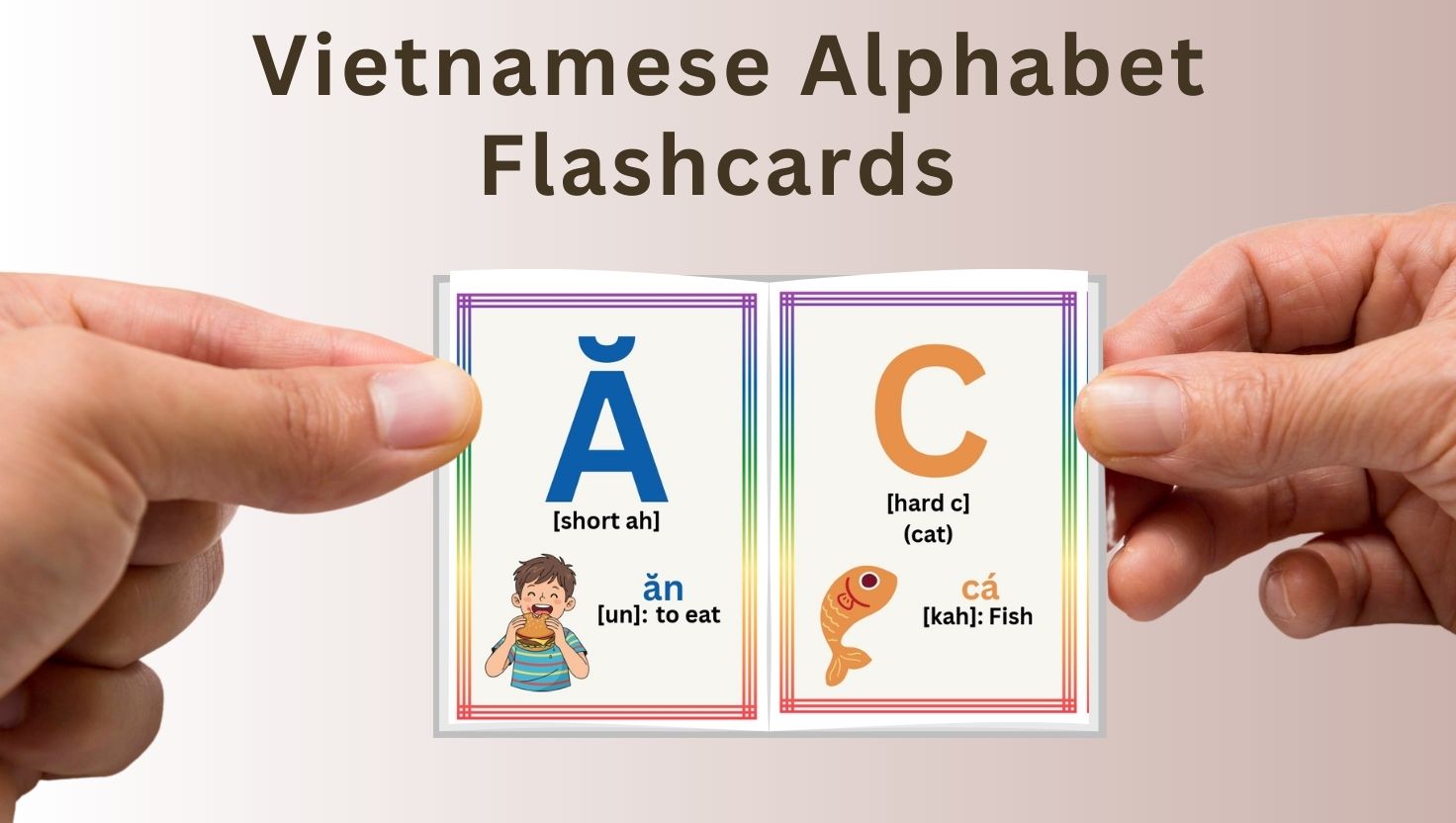
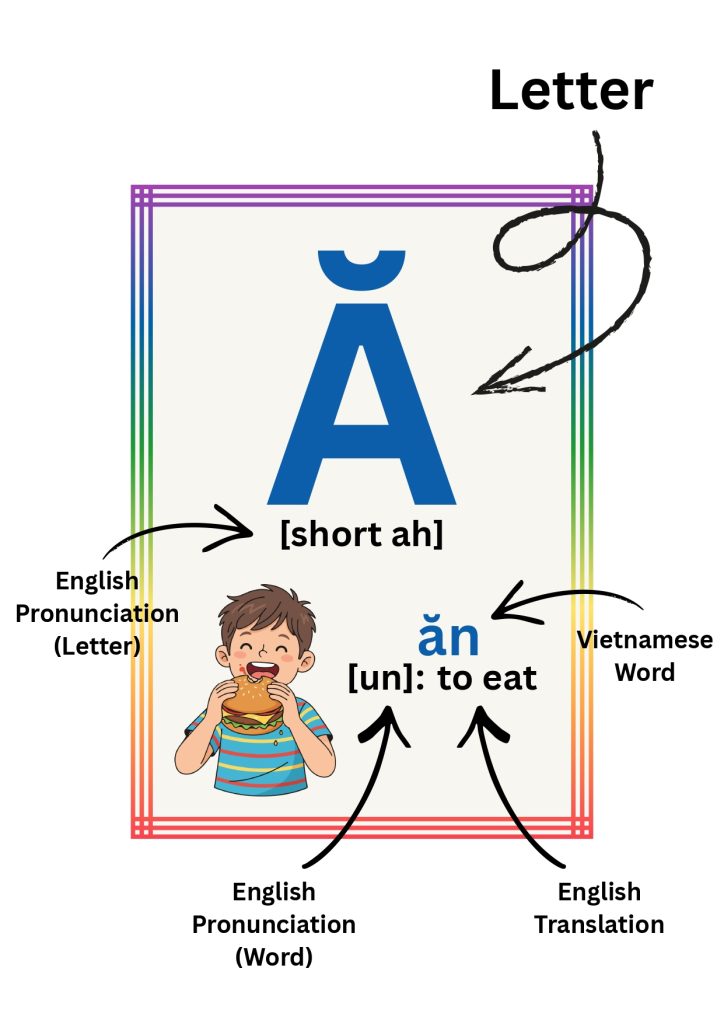
These Vietnamese Alphabet Flashcards change that. Twenty-nine cards covering the Vietnamese alphabet with the actual letter, how to pronounce it in English sounds, a real Vietnamese word using the letter, and a picture showing exactly what that word means.
When your child sees the letter  and learns it sounds like “uh,” then sees âm, meaning “warm,” with a cozy girl wrapped in a scarf, something clicks. The letter is not just a shape anymore. It belongs to a word that belongs to a feeling they already know.
Images

What These Cards Actually Teach
Vietnamese has letters that look familiar but sound completely different from what English speakers expect. The letter D sounds like “zee” in Northern Vietnamese. X sounds like “s.” These surprises trip up beginners every single time because nobody warned them.
Each card shows the letter name the way Vietnamese people actually say it, not guesses based on English rules. The pronunciation guide sits right there on the card so parents can help even if they are still learning Vietnamese themselves.
If your child is also learning other languages, pair these cards with Spanish Vocabulary Flashcards to build a strong multilingual foundation from an early age.
Going Through the Alphabet
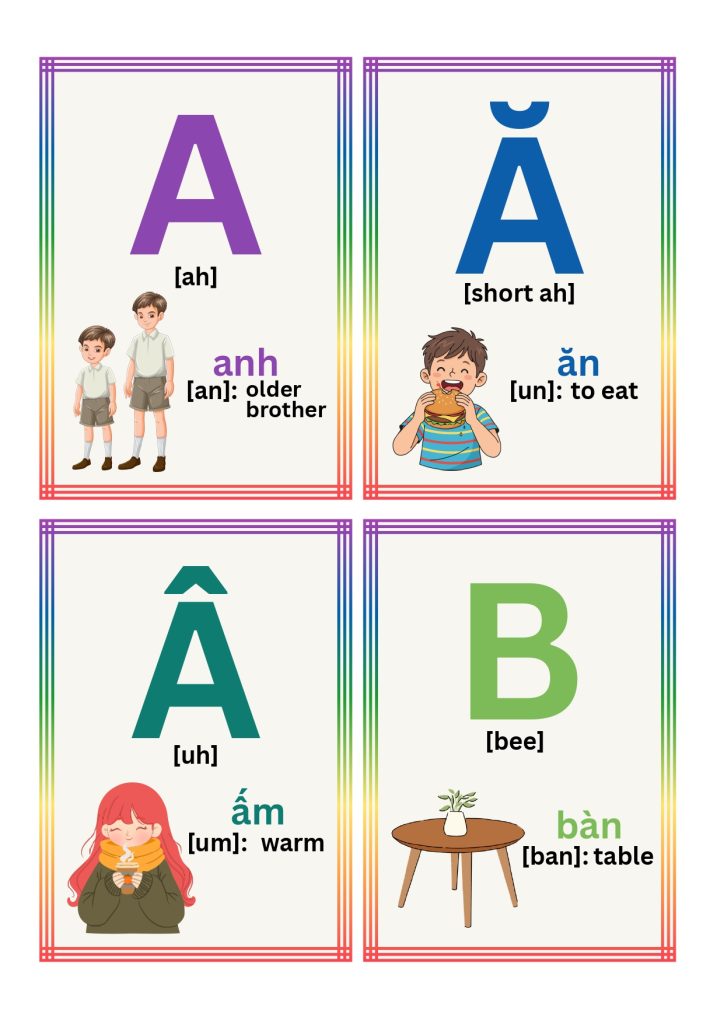
- A sounds like “ah” and teaches anh, meaning older brother. Vietnamese family terms matter deeply in the culture, so starting here makes sense.
- Ă sounds like a short clipped “ah” and the example word is ăn, meaning to eat. Every child understands eating.
- Â sounds like “uh” and pairs with âm, meaning warm. The illustration shows a girl bundled in a scarf, looking completely content.
- B sounds like “bee” and introduces bàn, meaning table. Simple, familiar, and useful.
- C makes a hard “c” like in cat, and the word is cá, meaning fish.
- D in Northern Vietnamese sounds like “zee” and teaches da, meaning skin.
- Đ sounds like “dee” and introduces đèn, meaning lamp. E sounds like “eh” and teaches em, meaning younger sibling.
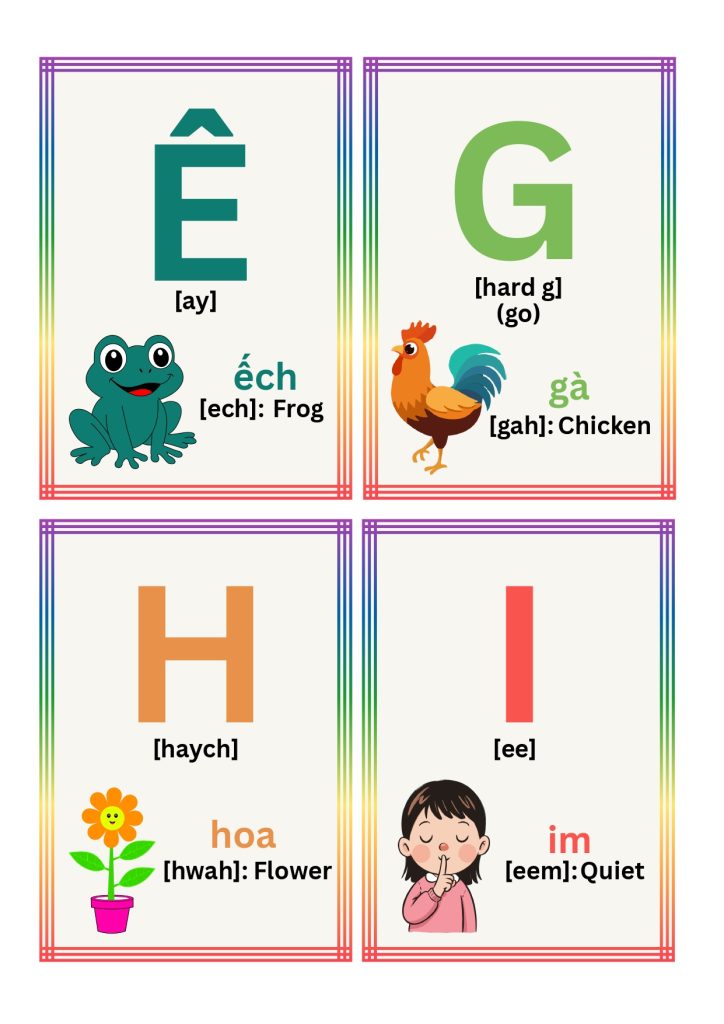
- Ê sounds like “ay” and the example word is ếch, meaning frog.
- G makes a hard “g” sound like in “go” and introduces gà, meaning chicken. H sounds like “haych” and teaches hoa, meaning flower. I sounds like “ee” and introduces im, meaning quiet.
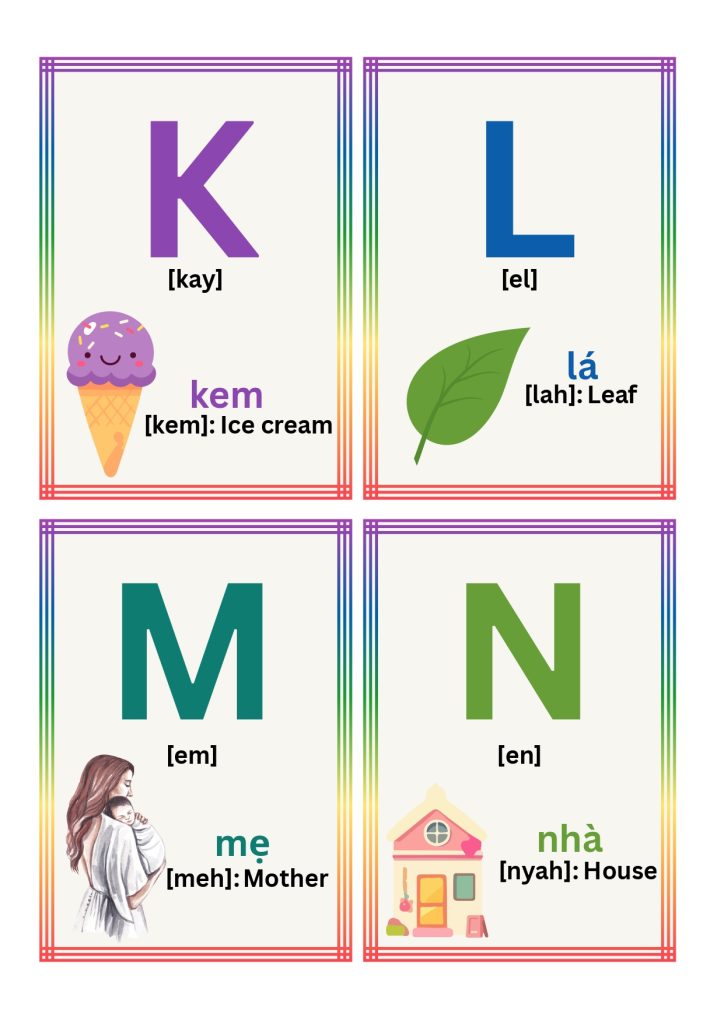
- K sounds like “kay” and teaches kem, meaning ice cream. This card always gets a reaction from kids.
- L sounds like “el” and introduces lá, meaning leaf. M sounds like “em” and teaches mẹ, meaning mother.
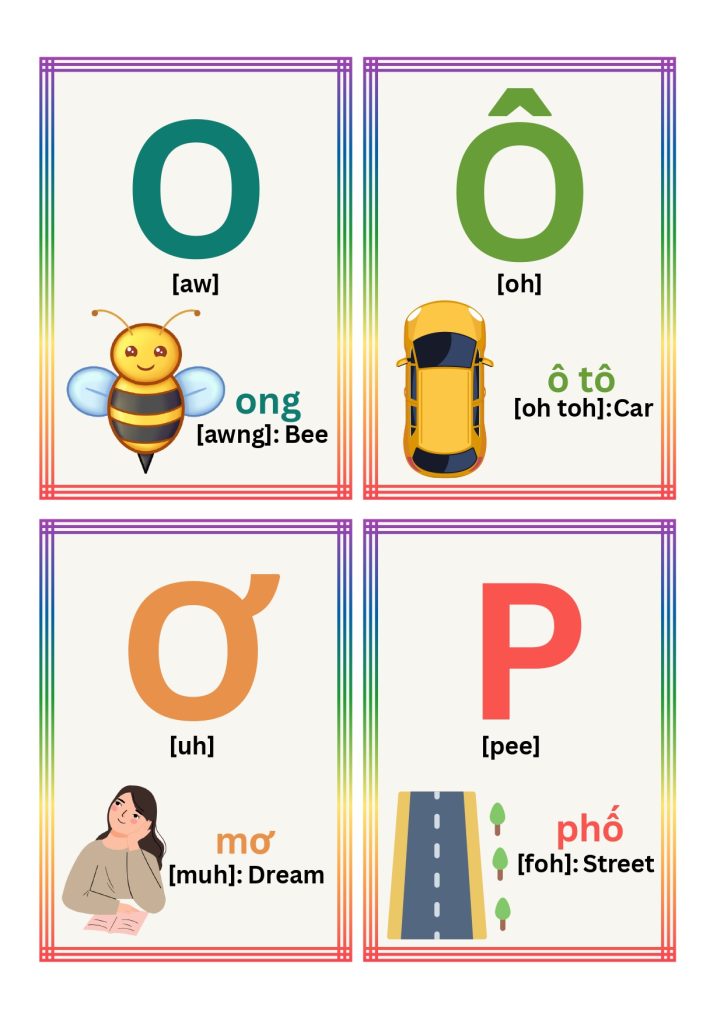
- N sounds like “en” and introduces nhà, meaning house. The pink illustrated house looks warm and inviting. O sounds like “aw” and teaches ong, meaning bee.
- Ô sounds like “oh” and introduces ô tô, meaning car. Ơ sounds like “uh” and teaches mơ, meaning dream. P sounds like “pee” and introduces phố, meaning street.
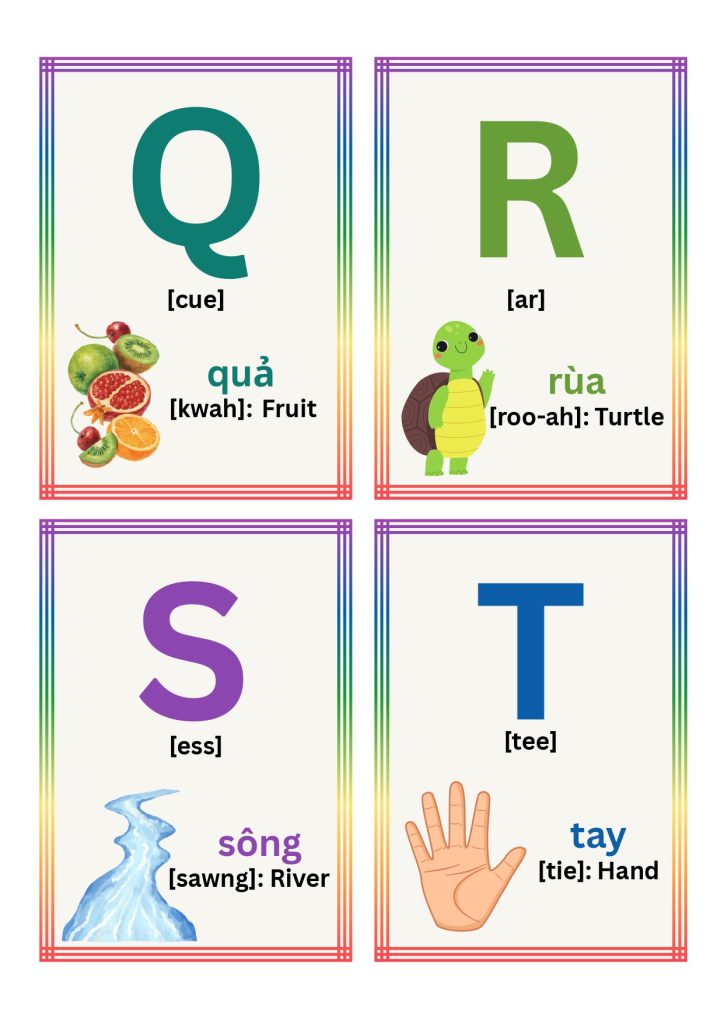
- Q sounds like “cue” and teaches quả, meaning fruit. R sounds like “ar” and introduces rùa, meaning turtle.
- S sounds like “ess” and teaches sông, meaning river. T sounds like “tee” and introduces tay, meaning hand.
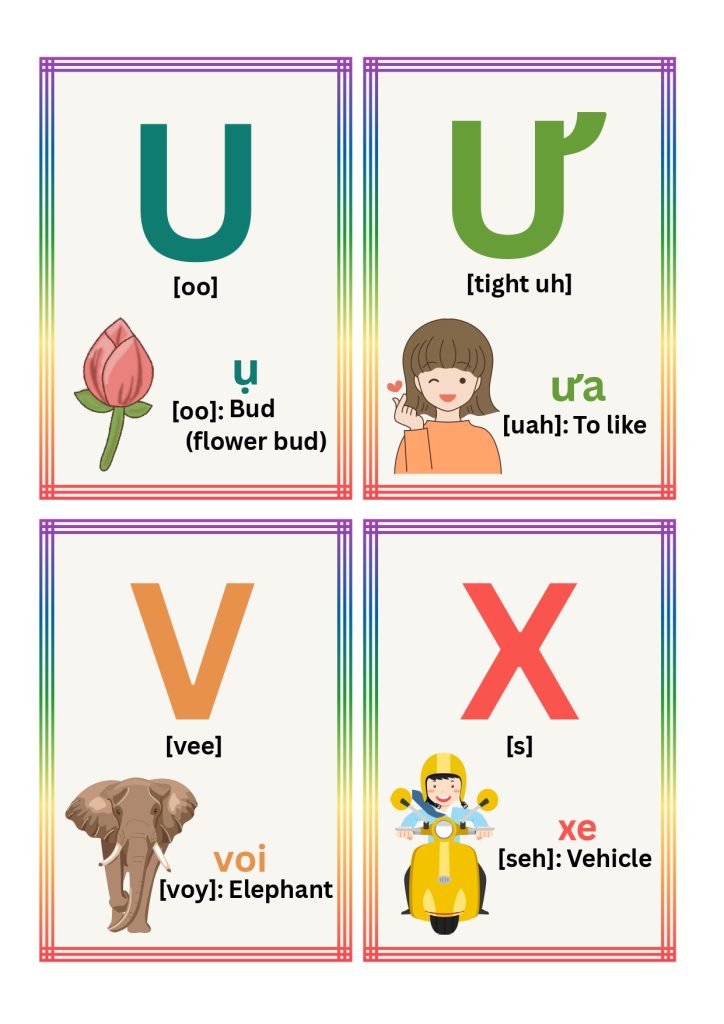
- U sounds like “oo” and teaches ụ, meaning flower bud. Ư sounds like a tight “uh” and introduces ưa, meaning to like.
- V sounds like “vee” and teaches voi, meaning elephant. X sounds like “s” and introduces xe, meaning vehicle.
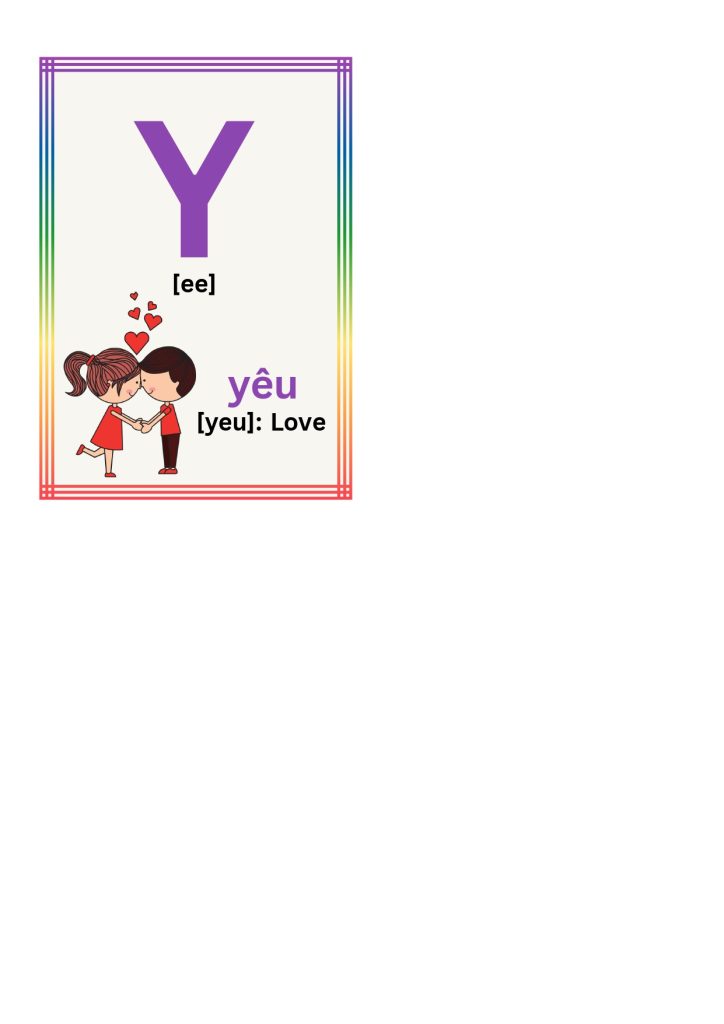
- Y sounds like “ee” and ends the entire set with yêu, meaning love.
For kids also exploring Asian languages, the Korean Alphabet Flashcards offer a similar letter-by-letter approach to Hangul that pairs well with Vietnamese learning.
Games to Try at Home
- Sound Sorting: Spread all the cards face up and call out a pronunciation sound. Kids grab every card that matches. “Find all the cards that say ‘uh'” gets them looking at Â, Ơ, and Ư and noticing how different letters can share similar sounds.
- Word and Picture Match: Cover the word on each card and have kids describe what they see in the illustration. Then reveal the Vietnamese word and practice saying it together. Connecting an image to a spoken word builds faster recall than just staring at letters.
- Family Word Hunt: Pick the cards showing family words like anh, em, and mẹ, then have kids find those family members in real life and say the Vietnamese word out loud to them. Real conversations make vocabulary stick in ways that drills cannot.
- Alphabet Order Race: Shuffle the cards and race to put them back in Vietnamese alphabet order. Kids learn the sequence while the physical sorting builds familiarity with every letter shape.
Interesting Activities with Vietnamese Flashcards
- Color by Letter: Print extra copies of the card and let kids color each letter however they want. While they color, they say the Vietnamese word on the card. The creative focus actually relaxes the brain and makes words absorb more naturally than direct memorization.
- Flashcard Wall: Tape all the cards around one room at different heights. Call out a Vietnamese word, and kids run to touch the right card. Kem sends them sprinting to the ice cream card. Voi sends them hunting for the elephant. Movement and location together create stronger memory anchors than sitting at a table.
- Guess My Letter: One person describes a card using only clues about the picture, never the word or letter. “It has something you ride on two wheels,” points toward xe. “It is something you do three times a day,” points toward ăn. Other players race to grab the right card first.
- Draw It From Memory: Flip a card over so nobody can see it. Call out the Vietnamese word, and kids draw what they think the illustration shows from memory. Flip the card back and compare. The gap between what they drew and what the card shows always gets a big reaction.
- Card Conversations: Pick two cards at random and challenge kids to make one sentence in English that uses both words. Pull hoa and nhà together, and they might say, “There is a flower outside my house.” Then everyone tries to say at least one of those words in Vietnamese. It pushes kids to think about words in context rather than isolation.
- Bedtime Review Stack: Each night before sleep, go through five cards slowly. Kids say the letter name, the pronunciation, and the Vietnamese word. Cards they get right go into a “done” pile. Cards they hesitate on go back for tomorrow. The stack shrinks over time, and kids can actually see their own progress, which keeps them wanting to continue.
Ready to Start
Open the PDF file and select standard print settings. Portrait orientation with “fit to page” works perfectly. Print these cards on cardstock or regular paper and laminate them if you want them to survive young learners. Color printing shows the illustrations at their best, but black and white works fine for basic letter and pronunciation practice. Cut along the edges and start working through the alphabet one letter at a time.