
Family members are the first ones that a child sees right from birth. No wonder family forms an essential part of everyday life. Children see them around, form relationships, and share their joys with everyone around. Family flashcards are an excellent educational resource for children to identify people close to their hearts.
One of the major barriers to understanding the names is the language. You may be using your mother tongue for communication with children. That’s how they spell and pronounce the names of family members. That’s when family flashcards help them explore the common terms used around the world.
Printable Family Flashcards: What’s Included Inside?
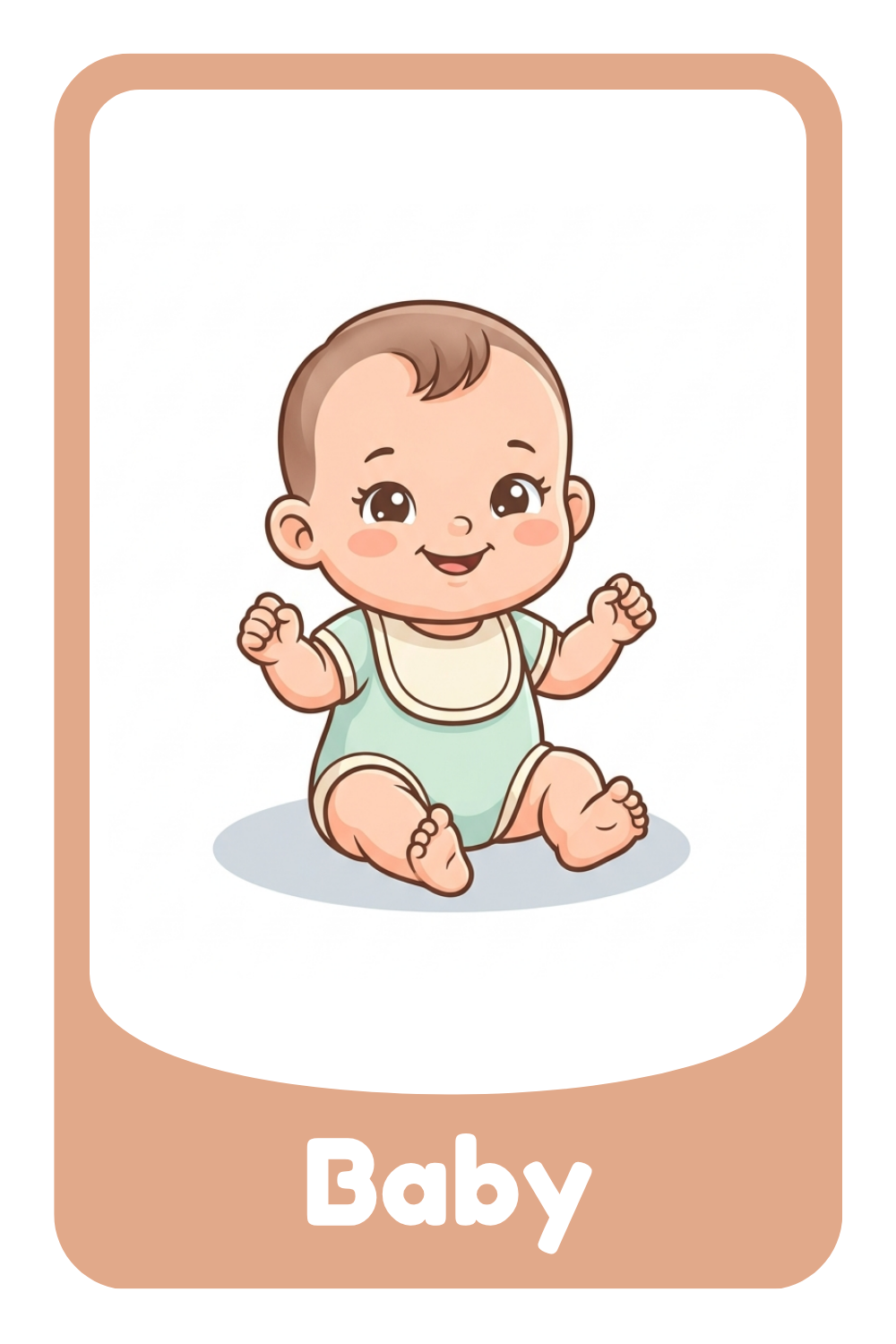
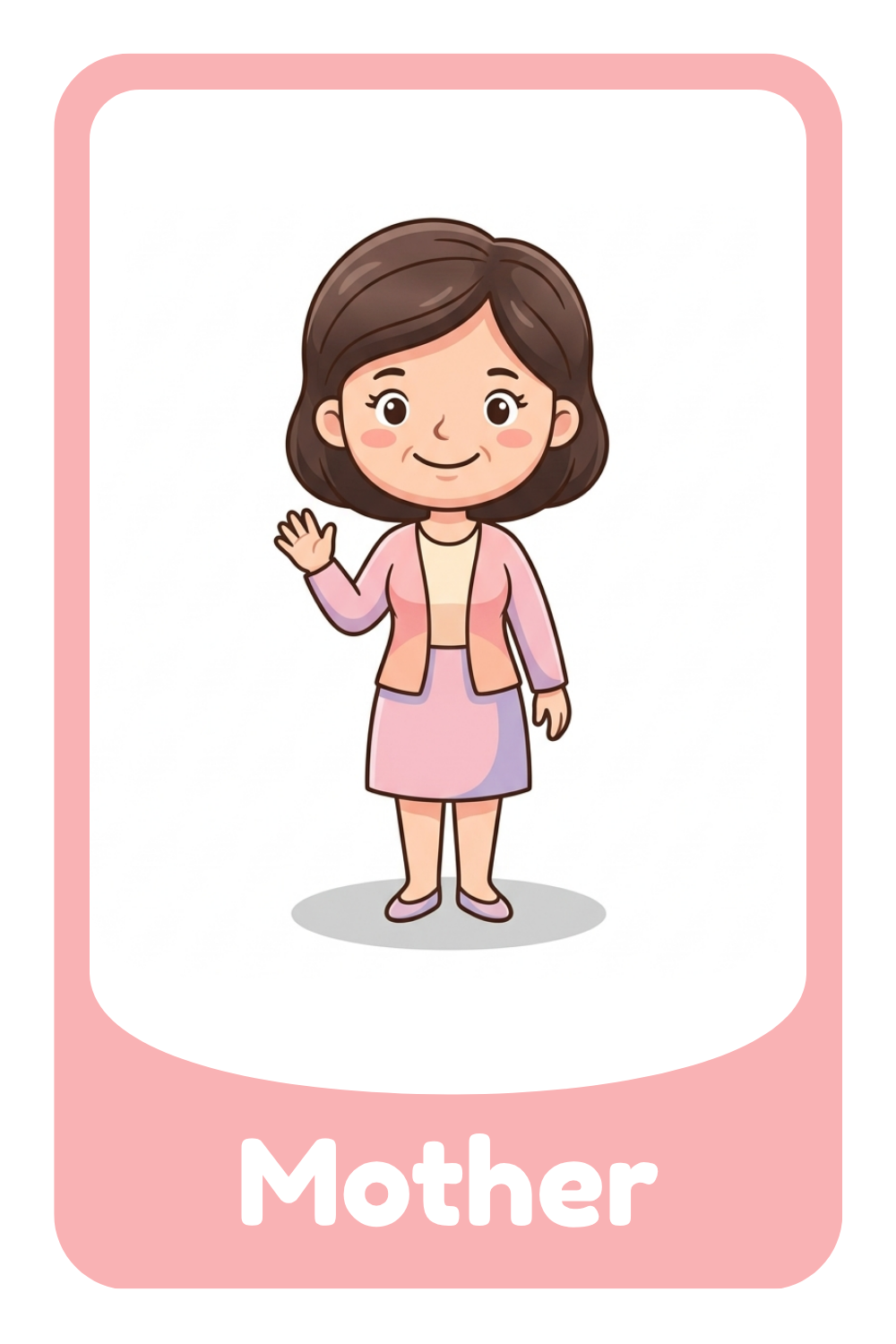
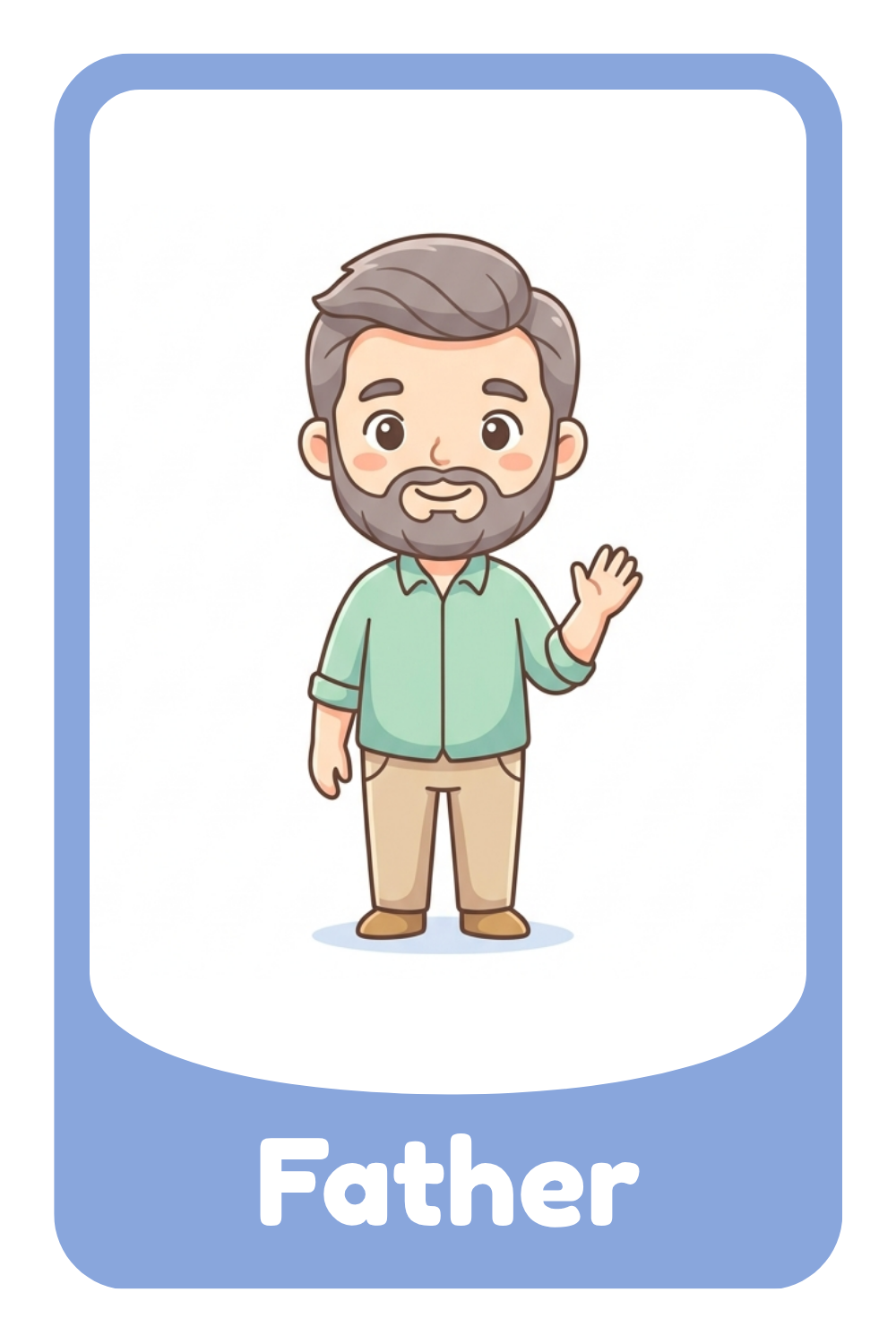
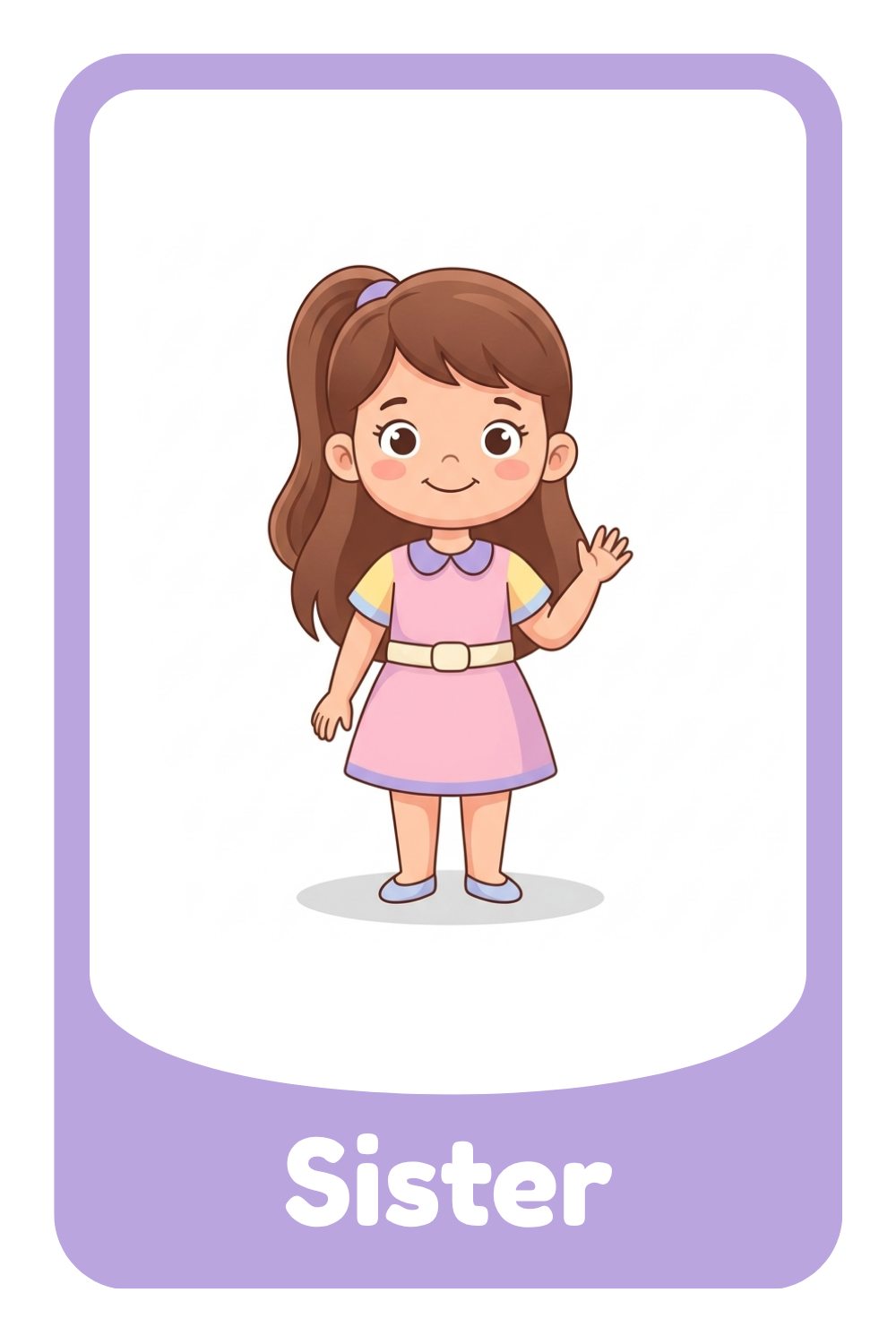
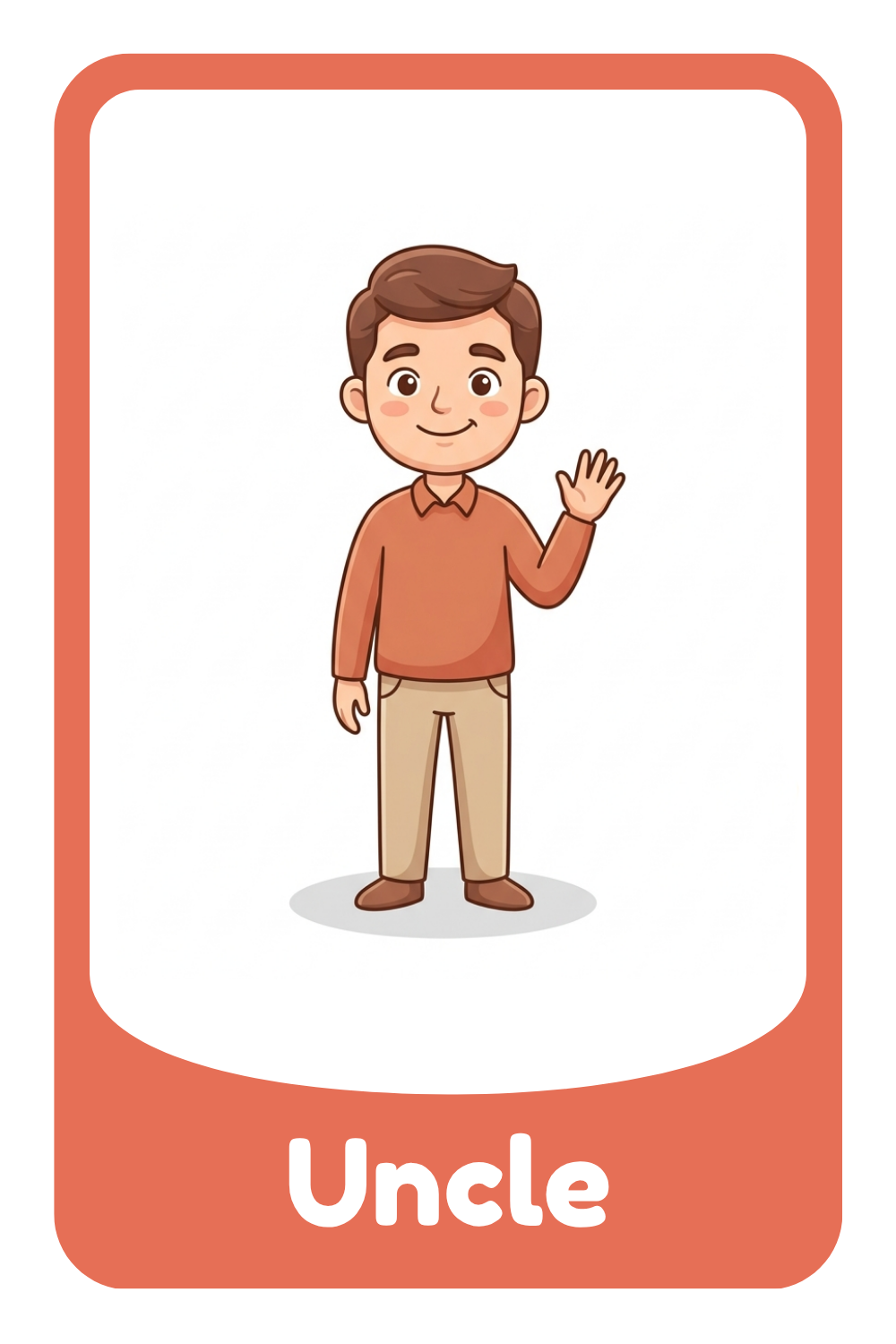
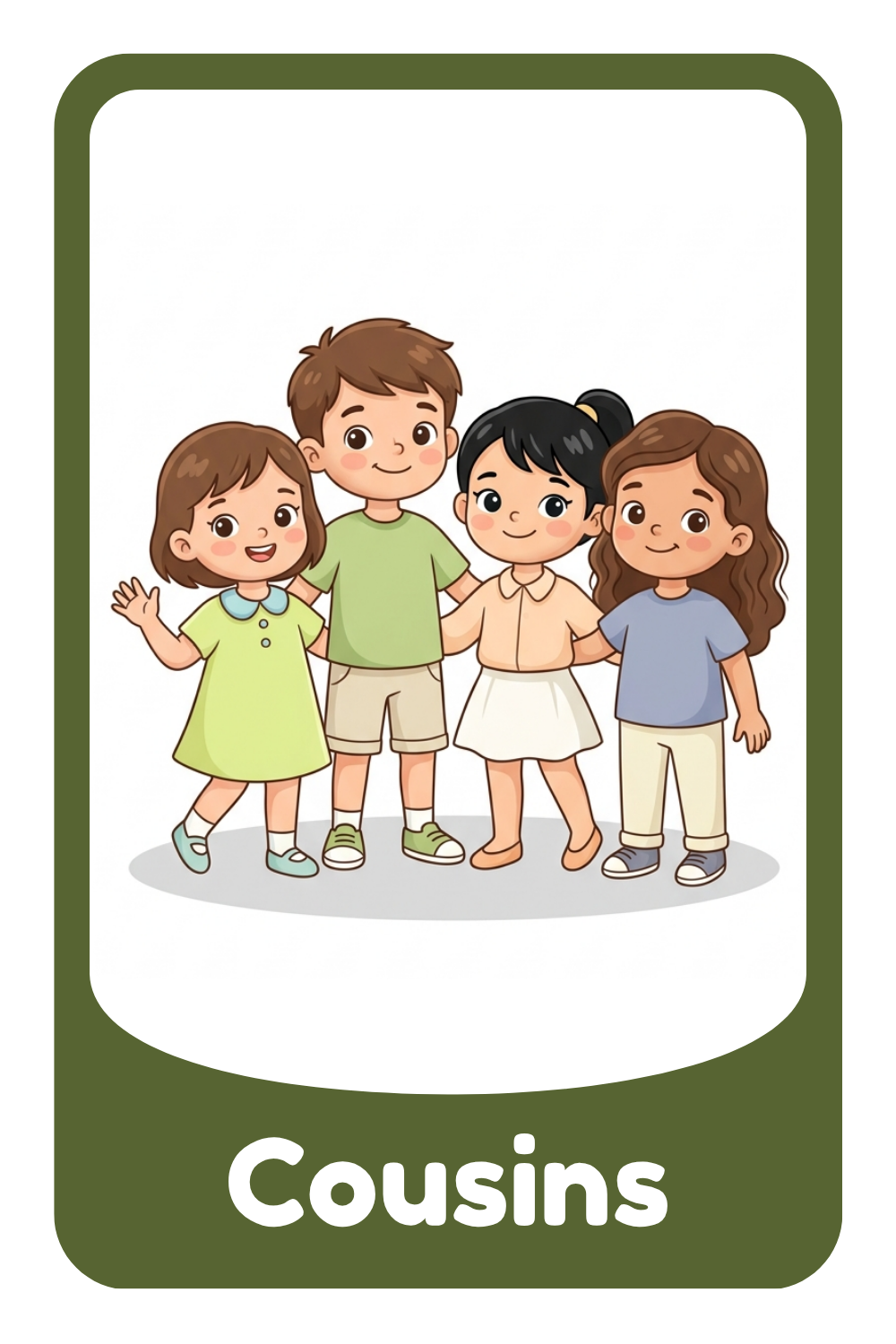
These family flash cards are illustrated vocabulary cards that feature family members as cartoonish illustrations.
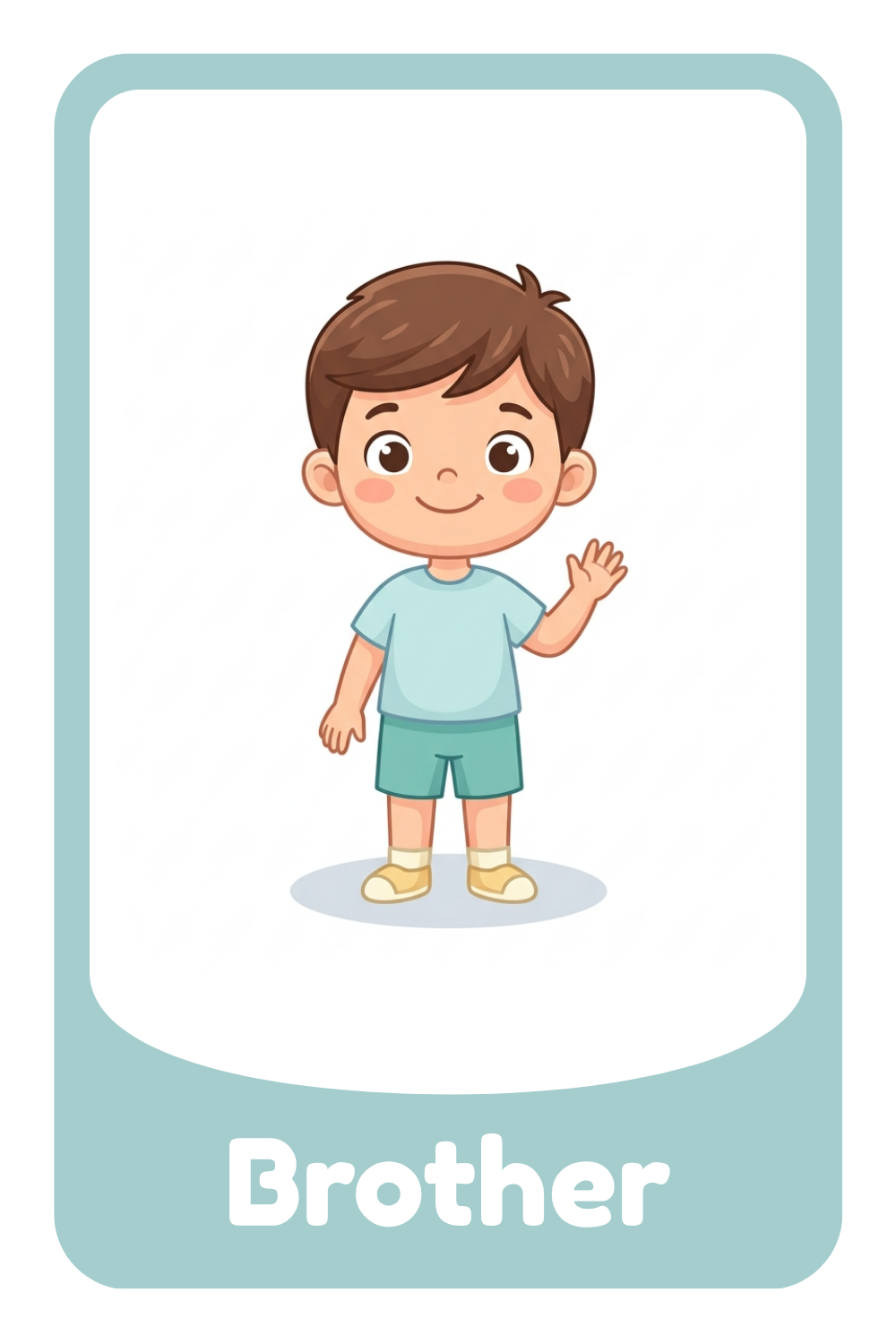
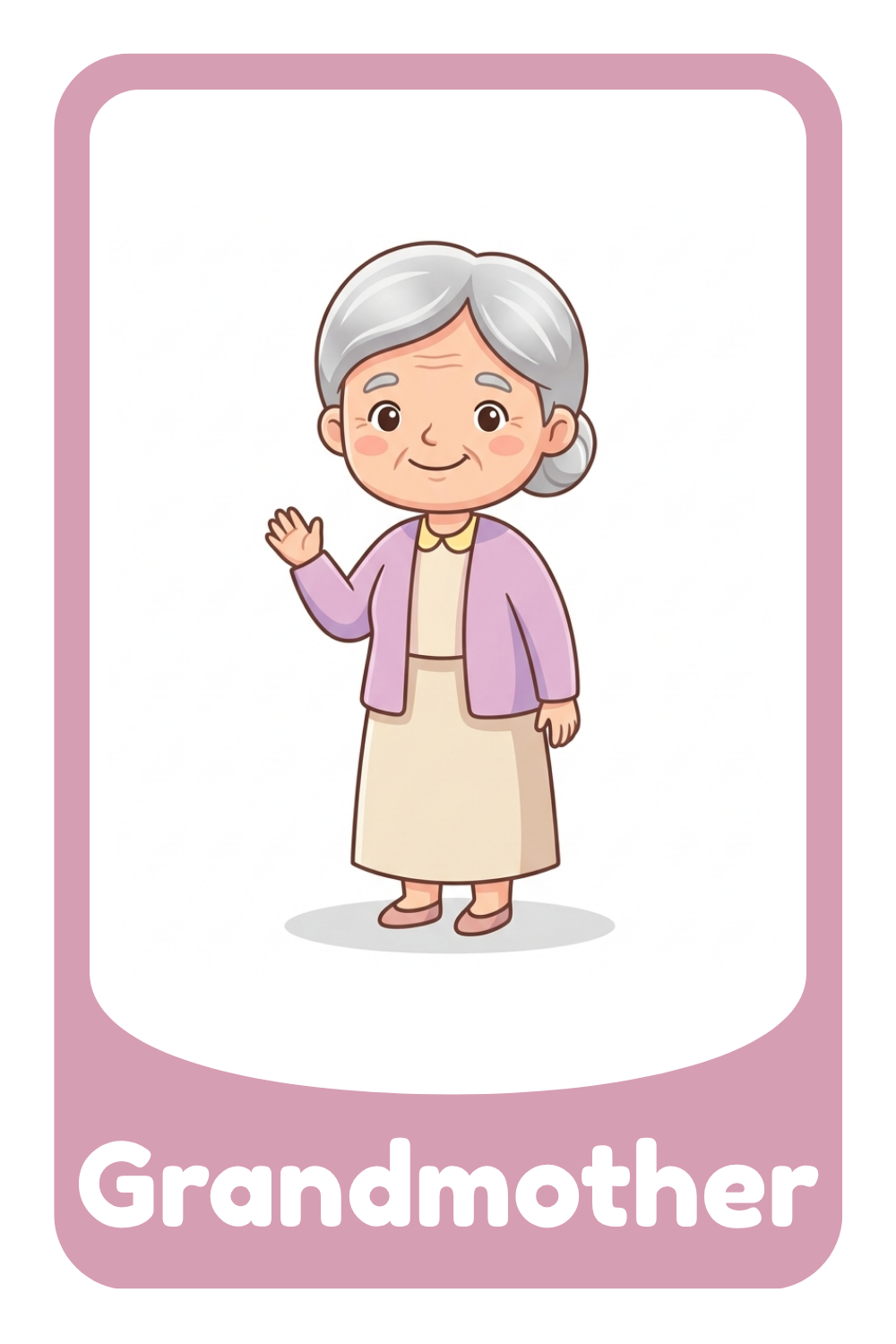
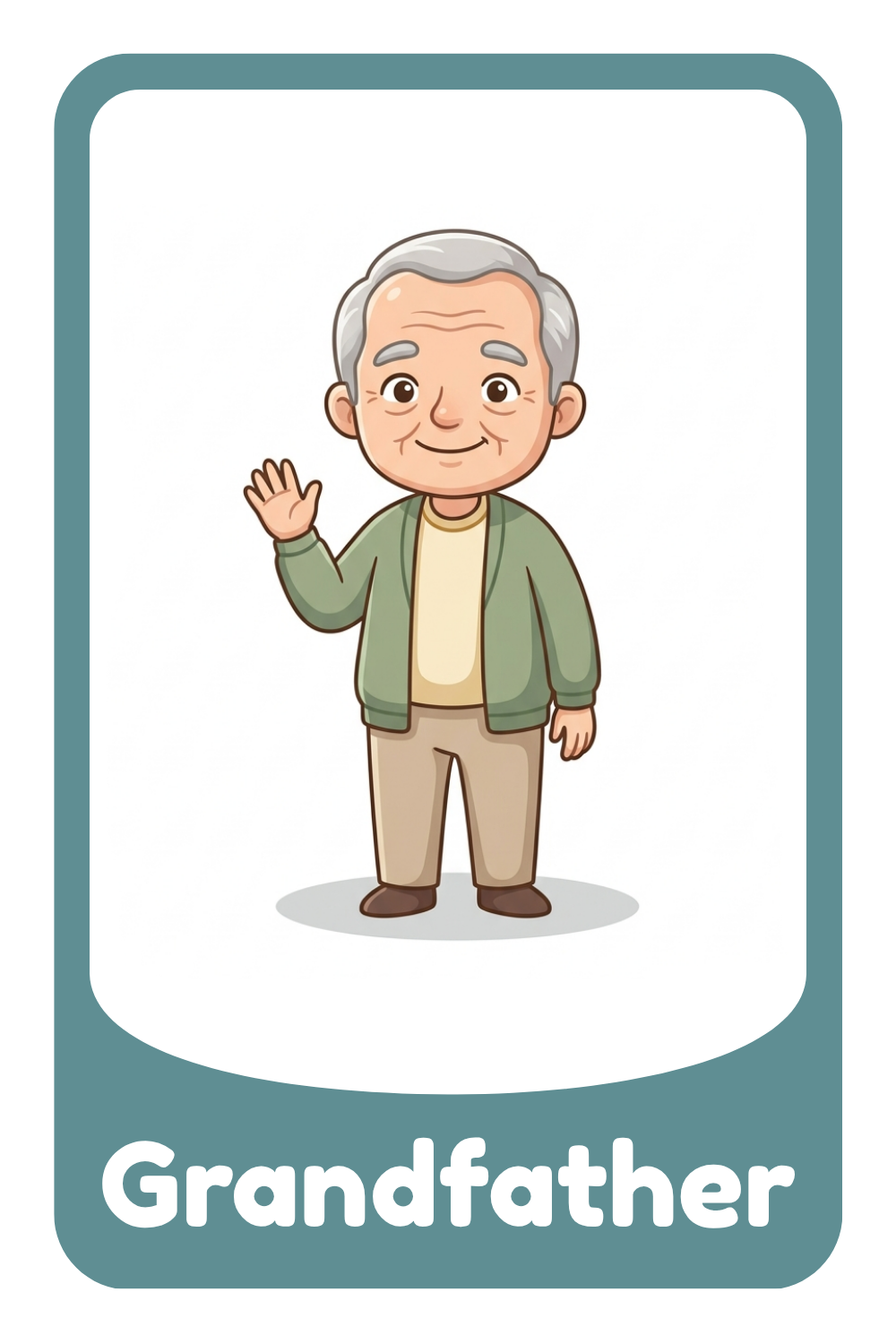
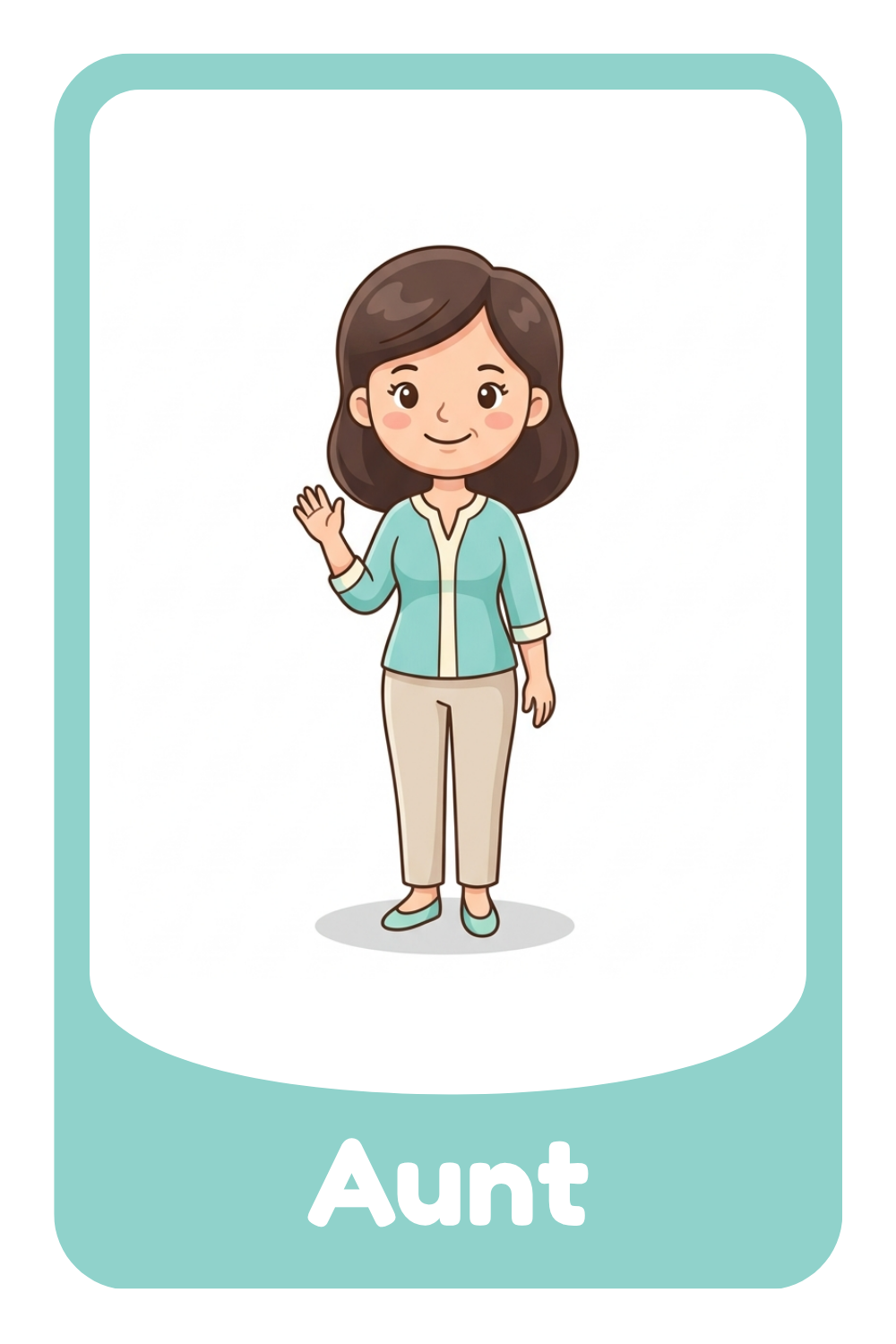
The set of ten cards is designed in a way that helps children calmly learn without feeling the pressures of memorizing.The set contains cards for baby, mother, father, sister, brother, grandmother, grandfather, aunt, uncle, and cousins. Each flashcard includes a cute cartoon-style character with bold and easy-to-read text. The usage of pastel shades makes it visually appealing without any distractions in between. With the presence of words, children also understand spellings.
The illustrations exactly show features of family members that children see in everyday life. For example, cousins are depicted in a group, with cute smiles. Similarly, grandparents have grey hair and wrinkles on skin. With such fine details, children can understand and channelize their feelings for any particular family member.
How to Use Family Flashcards?
Just as you use personal pronoun flashcards to teach the basics of communication, you can utilize family flashcards similarly. With the below-mentioned ways, teaching children becomes easier.
1. Point to the Family Member
Pick up the ‘mother flashcard’ and point towards the mother. If Grandpa isn’t around, use his photograph to help the child find a connection. Next, pick brother or sister flashcards and ask the child to point at siblings.
You may think that a 6-month-old baby cannot comprehend your actions. However, they are continuously learning. They are making sense of the world around them. So, no age is too young to dive into learning with family flashcards.
2. Ask Identification Questions
Showing children flashcards and actually questioning them are two different things. You can hold any card and then ask “Who is this?” or “Can you find the grandmother card?” In this way, they can connect with images instantly. It improves their observation skills in real life as well.
3. Encourage Storytelling
Teachers, parents, and even children can use these flashcards for storytelling. Simply pick one card and let the child talk about that family member. They can talk about the routine of these family members or any memory associated with them.
4. Practice Sorting and Grouping
No matter whether children live in a joint family or a nuclear one, it is important for them to understand different relations. With these family flashcards, you can help them understand the concept of immediate family members and extended ones. It improves their logical thinking at an early age.
5. Family Tree Activity
Ask children to arrange the flashcards like a family tree. They can place grandparents at the top, parents in the middle, and siblings below. This helps them understand relationships visually.
Wrapping Up
It is important to remember that ages two to six represent an important window of language acquisition. You do not need an expensive tool to bring out the best in your child. All you need is the right resource for learning. That is when these family flashcards come free and handy.
After children understand families and the relationships, you can pick printable jobs flashcards for kids. The set includes humans engaged in different careers. Hence, it can be a practical way to get them started with further learning.