Your eight-year-old keeps asking where her food goes after she swallows it. She wants to know why her heart beats faster when she runs. She wonders what that bump on her throat does when she talks. Kids notice their bodies working but have no clue what’s happening inside.
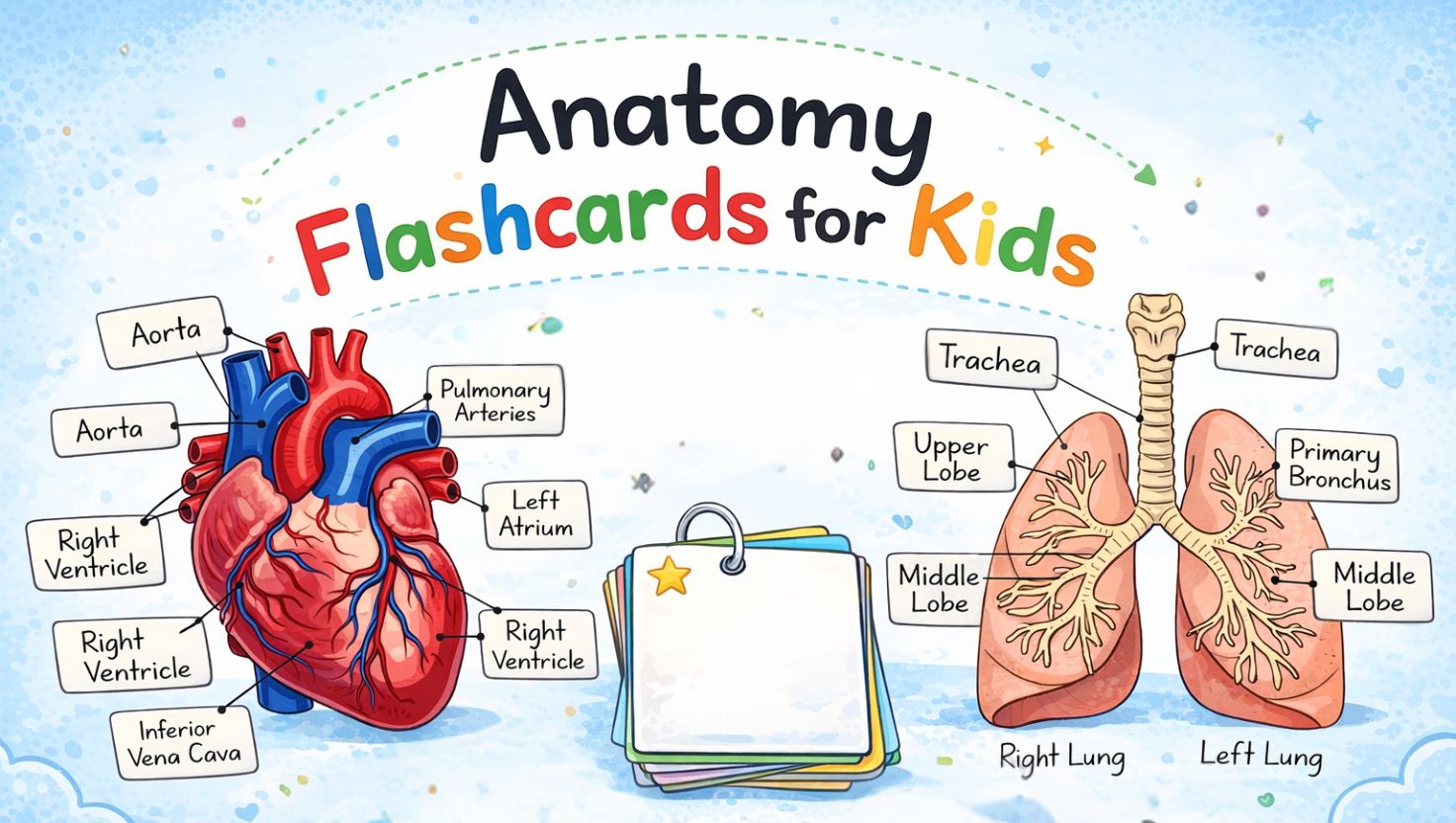
These Anatomy Flashcards for Kids answer those questions with pictures that make sense. Ten cards showing the major organs and body parts that keep everyone alive and moving. There is no medical school terminology or confusing diagrams that look like textbook nightmares. The flashcards have clear images showing what’s actually inside the human body.
It helps kids understand how their bodies work. Oh, the heart pumps blood to every part of me. The lungs fill with air when they breathe. The brain tells everything what to do. Different parts do different jobs, and they all work together.
Images

Body Parts Kids Wonder About
Most anatomy books add fifty organs for kids all at once, with names nobody can pronounce. These cards focus on the big players: the organs children actually feel working or hear adults mention at doctor visits. Each card shows what the organ looks like, where it sits in the body, and the basic job it performs every day.
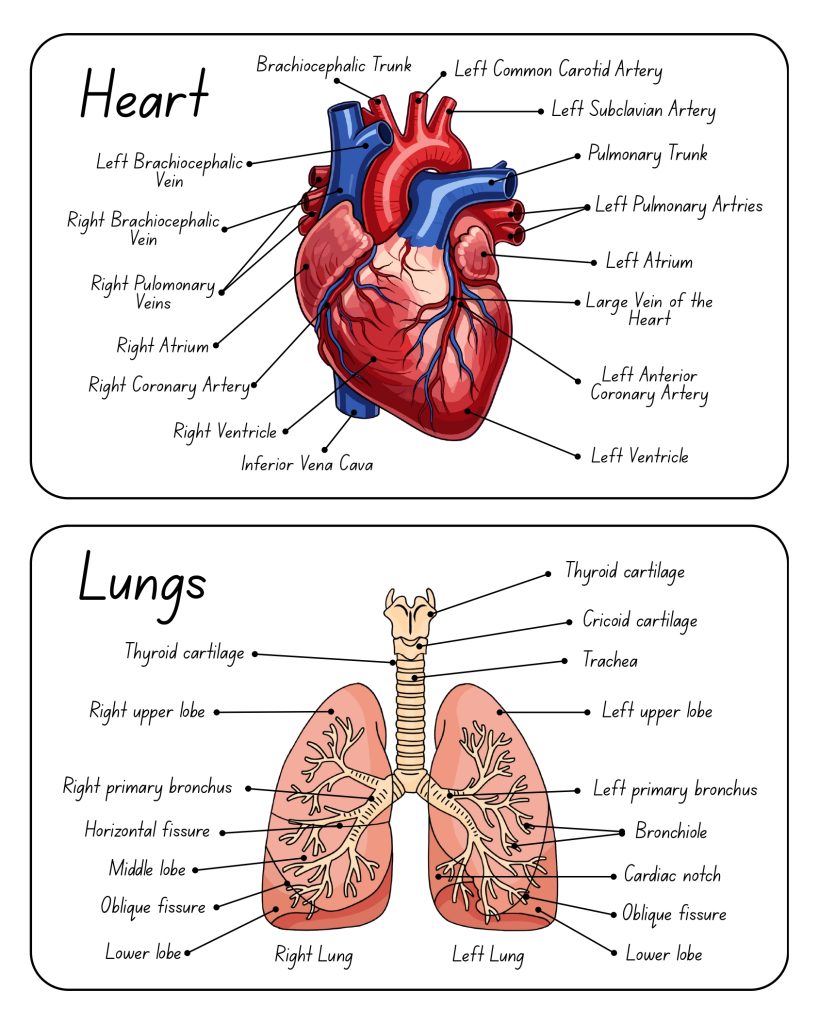
- Heart pumps blood through the entire body without stopping. Kids feel their hearts beating in their chests, especially after running around the playground. The heart has four chambers that work like doors, opening and closing to push blood where it needs to go. Those arteries and veins connect everything like highways carrying important supplies to every cell.
- Lungs fill with air every time kids breathe in and out. Two spongy organs sitting in the chest that grab oxygen from the air and get rid of carbon dioxide the body doesn’t want anymore. Kids feel their lungs working when they take big, deep breaths or when they’re gasping after chasing their friends around at recess.
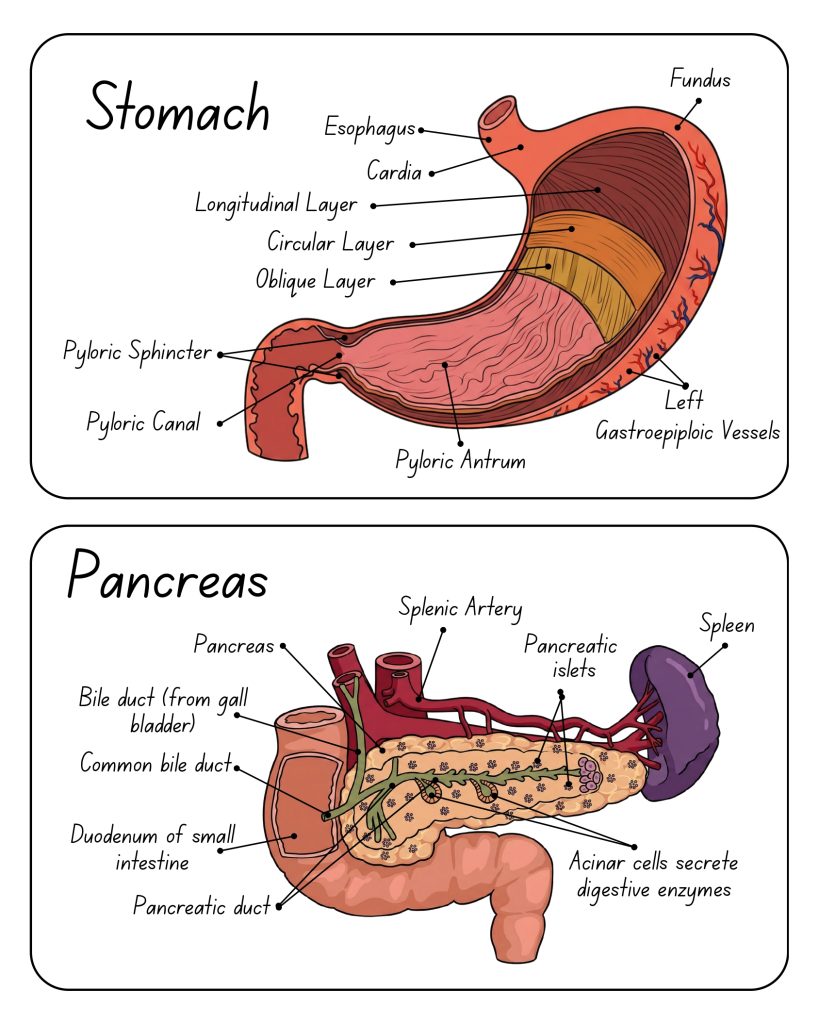
- Stomach breaks down all the food kids eat into tiny pieces that the body can actually use. It sits below the ribs and churns food around with strong muscles and special acids that dissolve everything. Kids definitely know their stomachs because they hear them growling when lunch is still an hour away or feel them cramping when they sneak too many cookies.
- Pancreas makes special juices that help digest food and keep blood sugar levels balanced. It hides behind the stomach, doing quiet work that kids never notice until something goes wrong. The pancreas communicates with other organs to make sure the body gets steady energy from breakfast, lunch, and dinner.
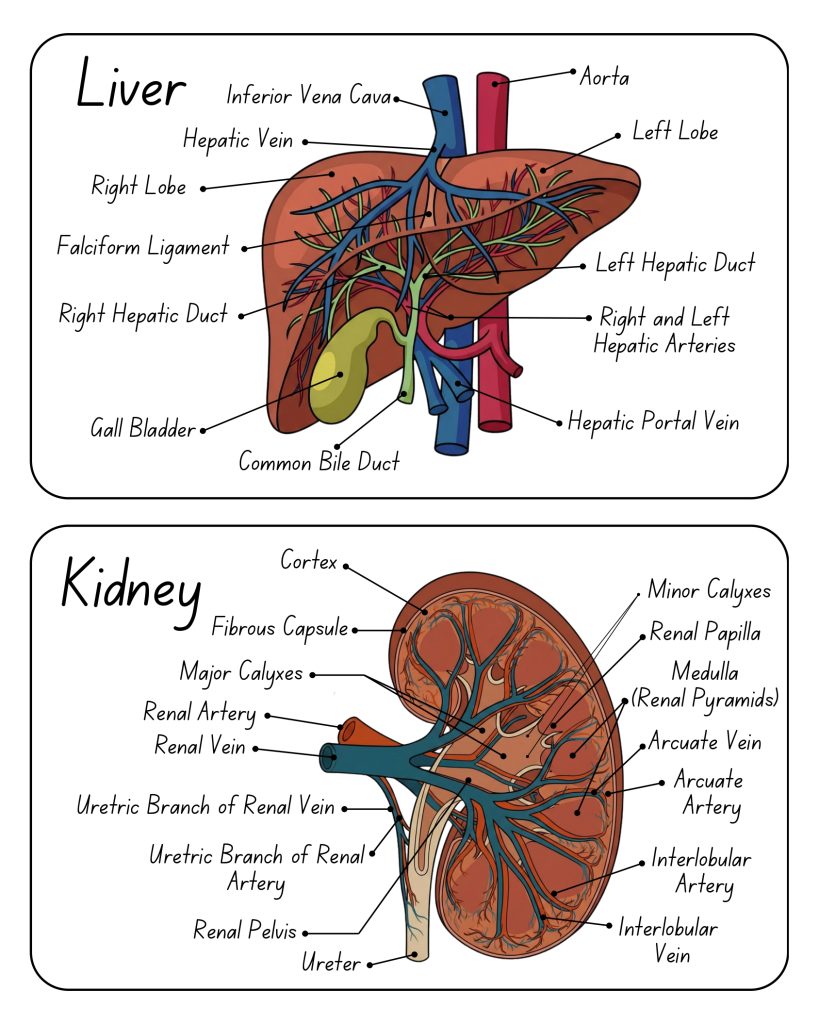
- Liver cleans the blood and stores vitamins and energy for later use. The biggest solid organ inside the body, sitting on the right side, tucked under the ribs. It does hundreds of jobs simultaneously, filtering out junk the body doesn’t need and producing things the body absolutely requires to function properly.
- Kidneys filter blood constantly and make urine to flush out waste products. Two bean-shaped organs positioned on either side of the spine that work like tireless cleaning machines. They balance water and minerals while catching stuff the body needs to eliminate through bathroom trips.
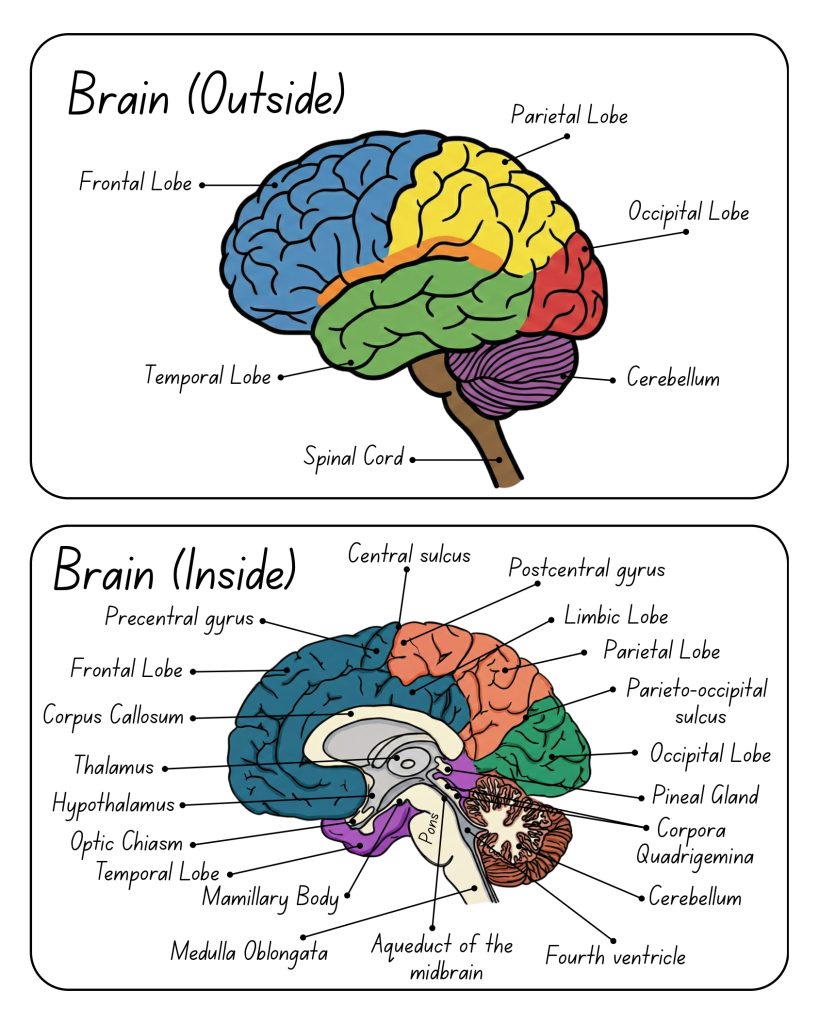
- Brain controls absolutely everything without exception. It thinks, remembers, feels emotions, and tells every other body part exactly what to do and when to do it.
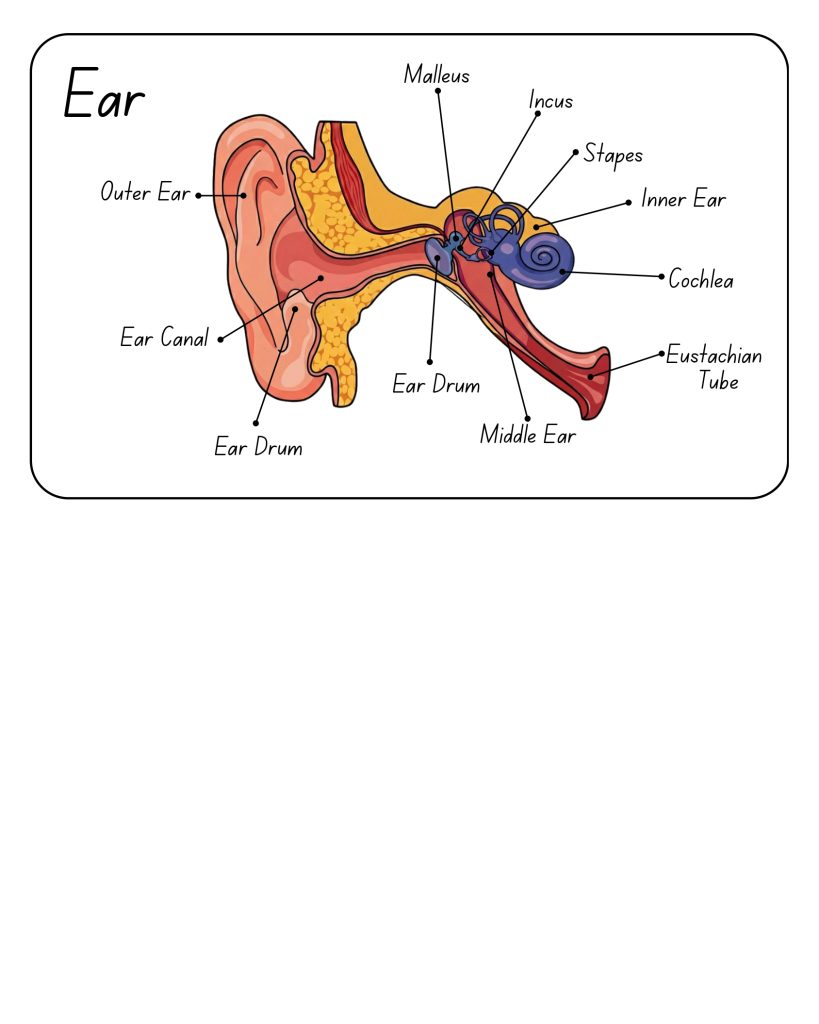
Similarly, eyes let kids see colors, shapes, movements, and everything else in the world around them. Ears hear sounds from whispers to fire truck sirens and help keep balance when kids walk or ride bikes. Intestines finish digesting food after the stomach starts breaking it down.
Bonus Human Anatomy Flashcards for Learners
The additional set anatomy flashcards help children explore more bones, muscles and organs. Each card introduces important body parts in a simple way. These flashcards create curiosity among learners to help them discover how the body works.
- Skull protects the brain like a hard helmet that kids carry everywhere without noticing. Made of several connected bones, it gives the head its shape. It also keeps the brain safe during bumps and falls. The skull holds the eyes, nose and mouth in place so children can see, smell, eat, and talk.
- Jaw Bone helps kids chew crunchy snacks, smile for photos and talk with friends nonstop. It is the only movable bone in the skull. It also works like a hinge opening and closing thousands of times daily. Strong muscles attached to the jaw make biting and chewing possible.
- Nasal Bone forms the bridge of the nose and gives the face its shape. These small bones protect delicate tissues inside the nose. They also help air move properly during breathing. Kids usually notice this area quickly because even tiny bumps on the nose can hurt a lot.
- Cheekbone gives structure to the face and creates those raised cheeks people notice when smiling. These bones also help protect the eyes and support important facial muscles. Kids can feel their cheekbones when they grin widely or press gently on their faces.
- Cranium acts like a protective case around the brain, shielding one of the body’s most important organs. It is formed by several fused bones that fit together tightly like puzzle pieces. The cranium keeps the brain safe while children run, jump, climb, and play.
- Vertebrae are the stack of small bones forming the backbone from neck to hips. They protect the spinal cord while helping the body bend, twist and stay upright. Without vertebrae, kids would not be able to sit straight, cartwheel, or dance around easily.
- Cervical Vertebrae are the seven small bones in the neck that support the head. They allow kids to nod yes, shake no, and turn around when someone calls their name. These vertebrae are flexible yet strong enough to balance the heavy skull all day long.
- Lumbar Vertebrae are the large lower back bones built for strength and balance. They carry much of the body’s weight while helping kids bend, twist and lift heavy school bags. These vertebrae are thicker than others because they handle extra pressure every day.
- Sacrum is a triangle-shaped bone near the hips that connects the spine to the pelvis. It acts like a sturdy base helping the body stay balanced while standing, walking and running. Strong muscles attach here to support movement and posture.
- Coccyx, often called the tailbone, sits at the very bottom of the spine. Even though humans no longer have tails, this small bone still helps support balance while sitting. Kids usually become very aware of their coccyx after falling backward onto the floor.
- Sternum is the flat bone in the center of the chest where ribs connect in the front. It helps protect important organs like the heart and lungs during everyday activities and accidents. Kids can feel the sternum by touching the middle of their chest carefully.
- Ribs form a curved cage around the chest to protect delicate organs inside. They move slightly whenever kids breathe in and out, helping the lungs expand with air. Without ribs, simple activities like running and laughing could easily injure the organs underneath.
- Clavicle, also called the collarbone, connects the shoulder to the chest and helps support arm movement. Kids can usually see or feel this thin bone near the top of their chest below the neck. Even though it looks delicate, it plays an important role in lifting and moving the arms.
- Scapula, known as the shoulder blade, sits on the upper back and helps the arms move freely in many directions. Strong muscles attach to it, making throwing, climbing and swinging possible. Kids use their scapula constantly during sports, playground games, and everyday movement.
- Humerus is the long bone in the upper arm connecting the shoulder to the elbow. It helps kids throw balls, lift backpacks, and swing across playground bars with strength. The humerus works closely with muscles to allow smooth arm movement throughout the day.
- Phalanges are the tiny bones in the fingers and toes that help with gripping, balancing and movement. Kids use them constantly while writing, drawing, typing, and tying shoelaces. Even though they are small, these bones are essential for many everyday activities.
- Radius is one of the two bones in the forearm located on the thumb side. It helps the hand rotate so kids can turn doorknobs, wave hello, or flip pages in books. The radius works together with the ulna to create flexible arm movements.
- Ulna is the longer forearm bone running from the elbow to the wrist on the little finger side. It acts like a stabilizer, helping the arm bend and straighten properly during movement. Kids depend on the ulna while pushing, pulling, and carrying objects.
- Carpal Bones are the small wrist bones that allow hands to move in many directions. These tiny bones work together like puzzle pieces, helping kids bend, twist and control their hands with precision. Activities like coloring, gaming, and catching balls all rely on strong wrist movement.
- Pelvis is the large hip bone structure supporting the upper body while connecting it to the legs. It helps children stand, walk, jump, and maintain balance during movement. The pelvis also protects important organs located in the lower abdomen.
- Femur is the thigh bone and the longest, strongest bone in the human body. It supports body weight and powers activities like running, climbing stairs, and kicking balls across the field. Kids use their femur constantly during sports and active play.
- Patella, commonly called the kneecap, protects the front of the knee joint during movement. It helps the leg bend smoothly while walking, running, and jumping around the playground. Kids often notice the patella quickly after bumping, or scraping their knees.
- Tibia is the larger lower leg bone often called the shin bone. It carries most of the body’s weight while helping kids stand, walk, and run comfortably. Because it sits close to the skin, bumping the tibia can feel especially painful.
- Fibula is the thinner lower leg bone located beside the tibia. Even though it carries less weight, it helps stabilize the ankle and supports leg muscles during movement. The fibula works quietly in the background while kids run, balance, and jump.
- Biceps are strong muscles at the front of the upper arm that help lift and pull objects. Kids use their biceps while carrying school bags, climbing monkey bars or picking up toys. When children flex their arms to “show muscles,” the biceps become easy to see and feel.
- Triceps are the muscles at the back of the upper arm that help straighten the elbow during movement. Kids use their triceps while pushing doors, throwing balls, and lifting themselves on playground equipment. These muscles work opposite the biceps to keep arm movements balanced and strong.
- Deltoid is the rounded shoulder muscle that helps lift and rotate the arms in different directions. It gives the shoulders their curved shape and supports movements like waving, reaching, and tossing objects. Kids rely on their deltoids during sports and climbing.
- Pectorals are the chest muscles that help move the arms forward and inward. They work during actions like hugging, pushing and doing push-ups on the floor. Strong pectoral muscles also support posture and upper body strength during active movement.
- Trapezius is the large muscle stretching across the upper back, neck and shoulders. It helps kids shrug their shoulders, turn their heads, and maintain posture while sitting or standing. The trapezius works constantly during carrying, lifting, and balancing activities.
- Abdominals are the stomach muscles located at the front of the body that support posture and balance. They help kids sit up, bend forward and stay stable while running or jumping. These muscles also protect internal organs and assist with breathing movements.
- Quadriceps are the strong muscles at the front of the thigh that help straighten the knee. Kids use them constantly while running, jumping, cycling, and climbing stairs. These powerful muscles provide speed and strength during sports and active play.
- Hamstrings are the muscles at the back of the thigh that help bend the knee and move the leg backward. They work together with the quadriceps to create smooth leg movement during walking and running. Kids depend on their hamstrings for balance, flexibility, and quick movement.
- Calf Muscles are the muscles at the back of the lower leg that help lift the heel and push the body forward. They make actions like tiptoeing, jumping, and sprinting possible during play and sports. Kids use their calf muscles every time they run across the playground, or climb stairs.
- Achilles Tendon is the strong band connecting the calf muscles to the heel bone. It helps kids walk, jump, run, and stand on their tiptoes. This tendon is powerful enough to handle the force created when the body moves quickly.
- Nose helps kids breathe, smell delicious foods, and detect different scents around them. Inside the nose, tiny hairs and mucus trap dust and germs before they enter the body. Children can notice how important the nose is whenever they catch a cold and breathing becomes difficult.
- Pharynx is the passageway behind the nose and mouth that carries both food and air. It helps direct swallowed food toward the stomach while guiding air into the breathing system. Kids use their pharynx constantly while eating, drinking, talking, and breathing.
- Larynx, often called the voice box, helps create sounds when air passes through it. It contains the vocal cords that vibrate to produce speech, laughter, and singing voices. Kids become very aware of their larynx when they lose their voice after shouting too much.
- Trachea is the windpipe carrying air from the throat down into the lungs. Strong rings of cartilage keep it open so breathing stays smooth and steady throughout the day. Kids depend on the trachea every second while running, sleeping, and playing.
- Bronchi are the two main air tubes branching from the trachea into the lungs. They spread air throughout the lungs like tree branches carrying oxygen deep inside the body. These tubes work harder when kids take deep breaths during exercise or sports.
- Mouth allows kids to eat, speak, smile, and taste their favorite foods every day. Teeth inside the mouth chew food while the tongue helps with speaking and swallowing. The mouth is also one of the first places children use to express emotions through laughter and smiles.
- Gallbladder is a small pouch under the liver that stores bile used to digest fats. It releases digestive juices into the intestines when kids eat foods like cheese, butter or fried snacks. Even though it is tiny, the gallbladder plays an important role in digestion.
- Pancreas makes special enzymes that help break down food and turn it into energy. It also helps control blood sugar levels so the body gets steady fuel throughout the day. The pancreas works quietly behind the stomach without kids ever noticing it.
- Small Intestine is the long twisting tube where most nutrients from food get absorbed into the body. It carefully takes vitamins, minerals, and energy from meals after the stomach finishes digestion. Even though it folds tightly inside the abdomen, it is much longer than most kids imagine.
- Large Intestine helps remove water from leftover food before waste leaves the body. It also stores waste temporarily until the body is ready to get rid of it. This organ works with helpful bacteria that support digestion and overall health.
- Latissimus Dorsi is the large back muscle helping the arms move, pull, and lift objects. Kids use it while climbing, swimming, throwing, and swinging across monkey bars. This muscle gives strength to many upper body movements during sports and active play.
- Gluteus Maximus is the biggest muscle in the body and forms the shape of the buttocks. It helps kids stand up, climb stairs, run fast, and jump high during physical activities. Strong glute muscles also support posture and balance while sitting or walking.
Interesting Anatomy Flashcards Games
- Body Part Hunt: Hide organ cards around the house and give kids clues about what each one does for the body. “Find the organ that pumps blood to your toes,” or “Where’s the one that helps you smell cookies baking?” Kids run around searching while actually learning what each part does instead of just memorizing weird names. The physical movement helps information stick in their brains way better than sitting still.
- Build a Body: Draw a simple body outline on a huge piece of paper taped to the wall or lying on the floor. Kids take turns placing organ cards approximately where they belong inside the outline. They discover that the heart sits slightly to the left in the chest, the stomach lies below the ribs on the left side, and the brain completely fills the head. This teaches spatial awareness of where everything actually lives inside them.
- Organ Charades: Pick a card without showing anyone, and act out what that specific organ does all day long. Pump your fists rhythmically like a beating heart, breathe in and out dramatically for working lungs, or rub your belly in circles for the digesting stomach. Other kids shout out guesses about which organ you’re pretending to be. The goofy acting makes the different functions stick in memory much longer.
- What Happens When: Describe an everyday activity, and kids identify which organs work hardest during it. “You’re sprinting in a race” means the heart and lungs kick into overdrive, pumping blood and oxygen. “You’re devouring pizza at a birthday party” gets the stomach, intestines, pancreas, and liver all actively involved in processing food. This connects abstract body parts to real life rather than treating them as concepts in a boring textbook.
- Doctor’s Office: Set up a pretend medical office where kids examine stuffed animals, dolls, or even each other. They use organ cards to explain what might be causing problems. “Your teddy bear’s heart needs to pump stronger,” or “Your doll’s stomach is upset from eating pretend candy.” Playing doctor helps kids grasp what real doctors think about when examining patients who feel sick.
- Memory Match: Make two identical sets of organ cards and play the classic memory matching game everyone knows. Flip two cards face up, trying to find matching pairs of the same organ. Kids have to remember where each organ card sits face down on the table, which builds recognition of different organs while also exercising their memory skills for school.
Want to explore the building blocks of everything around us? Check out our Periodic Table Flashcards for Kids to help children learn elements they encounter in daily life, from the oxygen they breathe to the iron in their cereal. You can also explore Country Flags Flashcards.
Why Flashcards Outshine Long Explanations
Kids grasp anatomy way faster from detailed pictures than from someone droning on describing organs they cannot possibly see with their own eyes. When they study a labeled heart diagram showing chambers and branching arteries, they immediately understand it pumps blood through branching tubes to everywhere. When they see intestines coiled inside a body outline, they finally get why their belly feels so full and heavy after Thanksgiving dinner.
These visual connections transform abstract concepts into concrete understanding.
Getting Started
Want to explore anatomy with your kid starting right now? Print these cards using standard printer settings in portrait orientation with fit to page selected, so everything prints correctly. Color printing shows different organs and their parts more clearly, with better contrast, but basic black and white honestly gets the job done fine too.
Use heavy cardstock paper or get the cards laminated at an office supply store so they survive curious kids constantly handling them with sticky fingers. Cut carefully along the printed borders and start discovering together how truly amazing the human body really is.