Once upon a time, long, long ago (165 million years ago, to be precise), there existed mighty dinosaurs. We humans (arrived just 300,000 years ago), in comparison, are just the new kids on the block! Yet the fascination with them never ends, especially for young children.
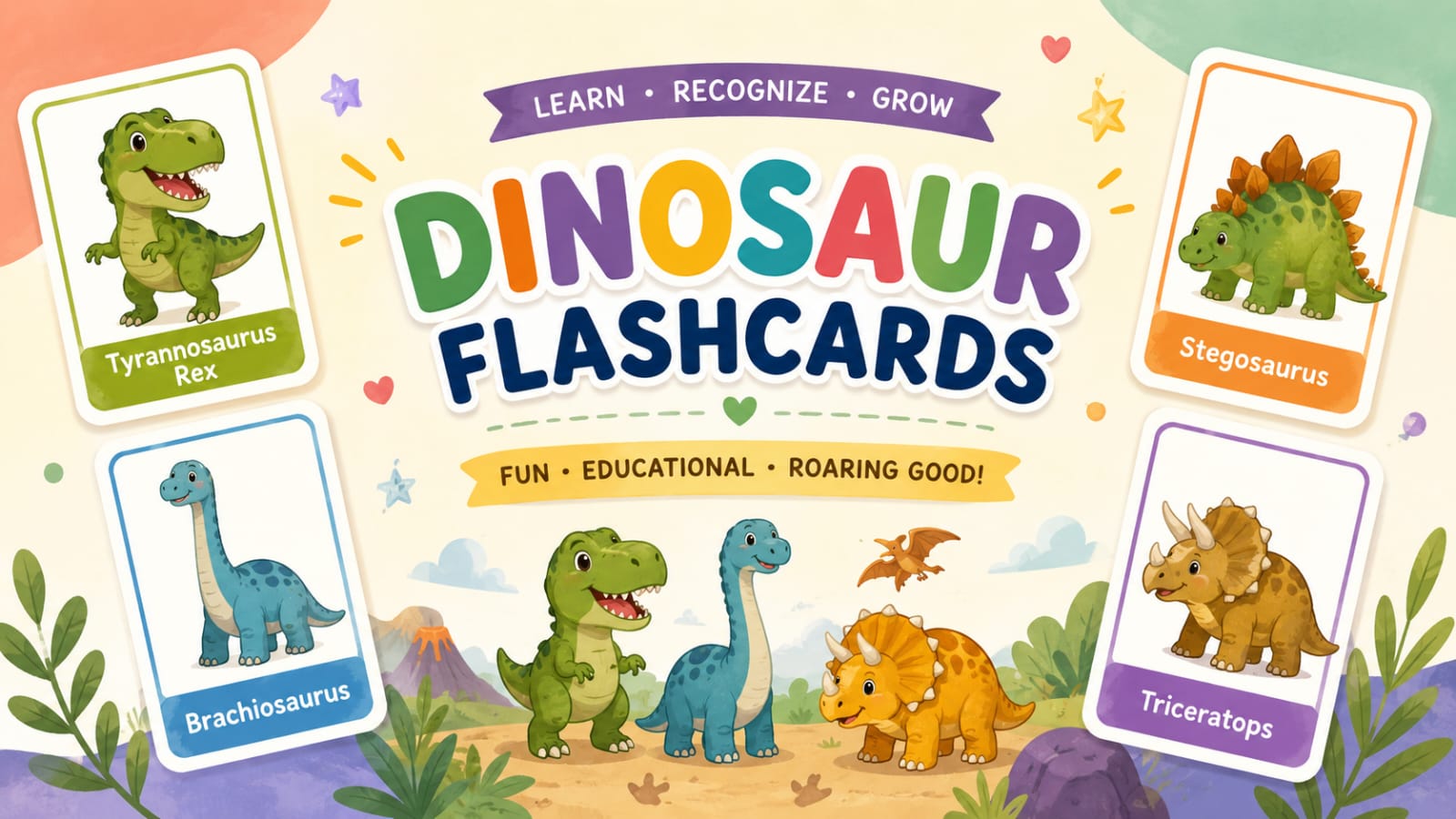
Kids may see dinosaurs in their textbooks, in cartoons, or even in interesting storybooks. So, why not put their curiosity to good use? You can use our carefully crafted dinosaur flashcards for little learners. Now is the time for kids to get well-versed in the majestic world of dinos.
Printable Dinosaur Flashcards: See What’s Inside
The printable dinosaur flashcards set features 15 popular dinosaur species, each with unique characteristics. It helps children learn about the diversity of dinosaurs that once lived on Earth.
Scientists have discovered thousands of dinosaur species through fossils. New discoveries continue to provide valuable insights into these fascinating prehistoric animals. So, children can play and learn creatively with the help of these flashcards.
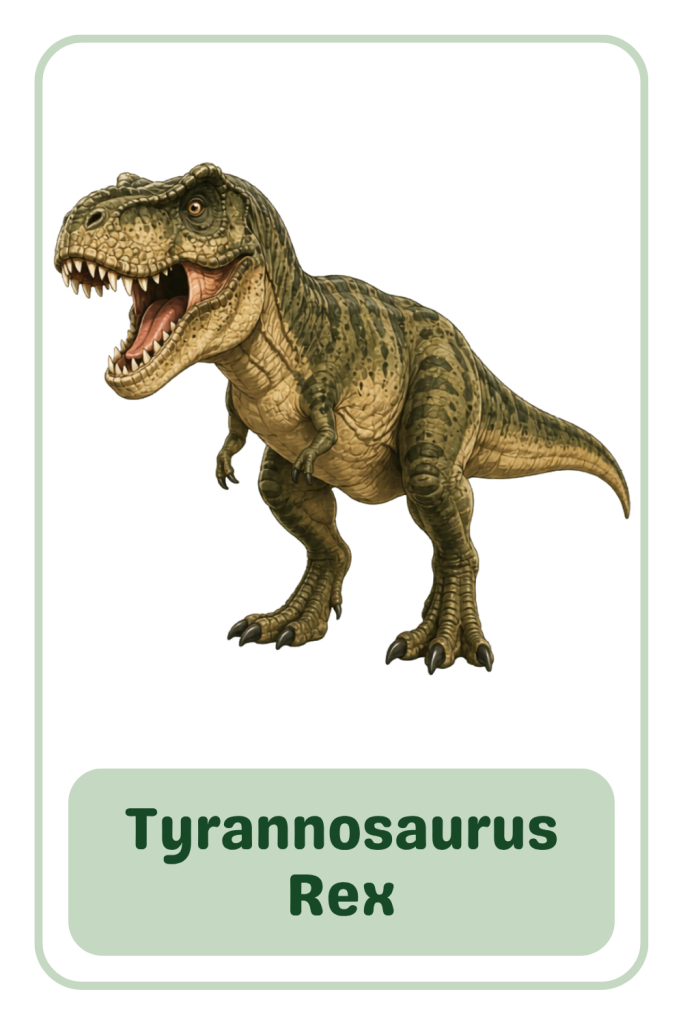
- Tyrannosaurus Rex: One of the biggest hunters ever! Its teeth were as long as bananas, but its arms were surprisingly tiny, almost useless!
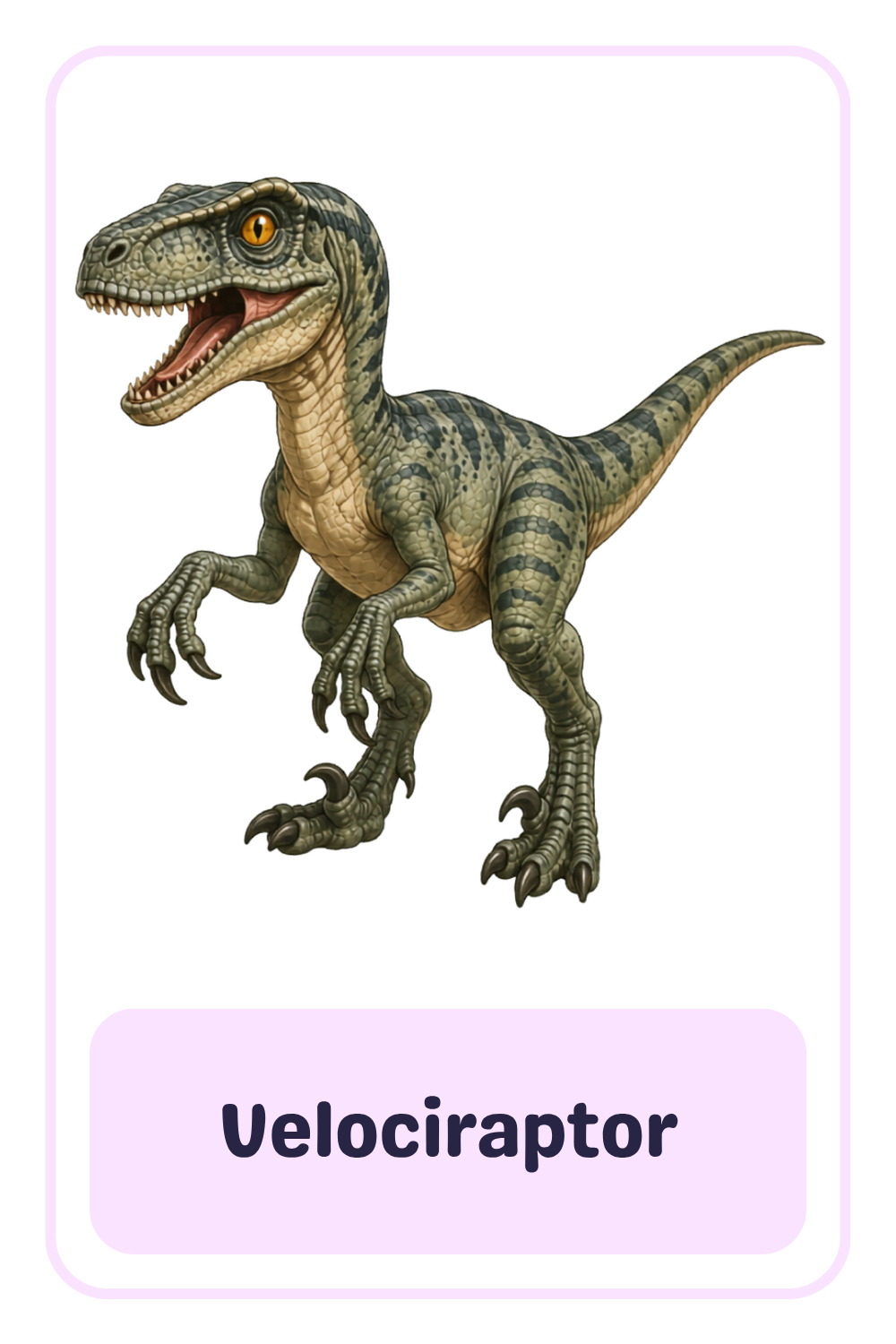
- Velociraptor: Much smaller than movies show, about the size of a turkey. But it was very smart and had a giant curved claw on each foot.
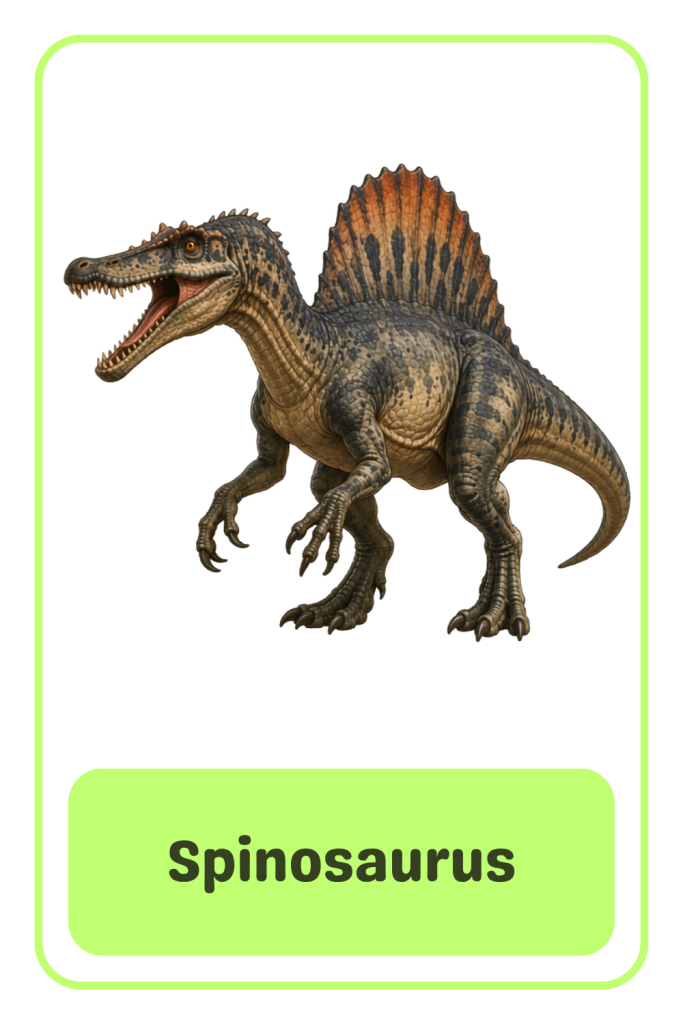
- Spinosaurus: Even bigger than T. rex! It had a huge sail on its back and loved to swim and catch fish, like a giant crocodile.
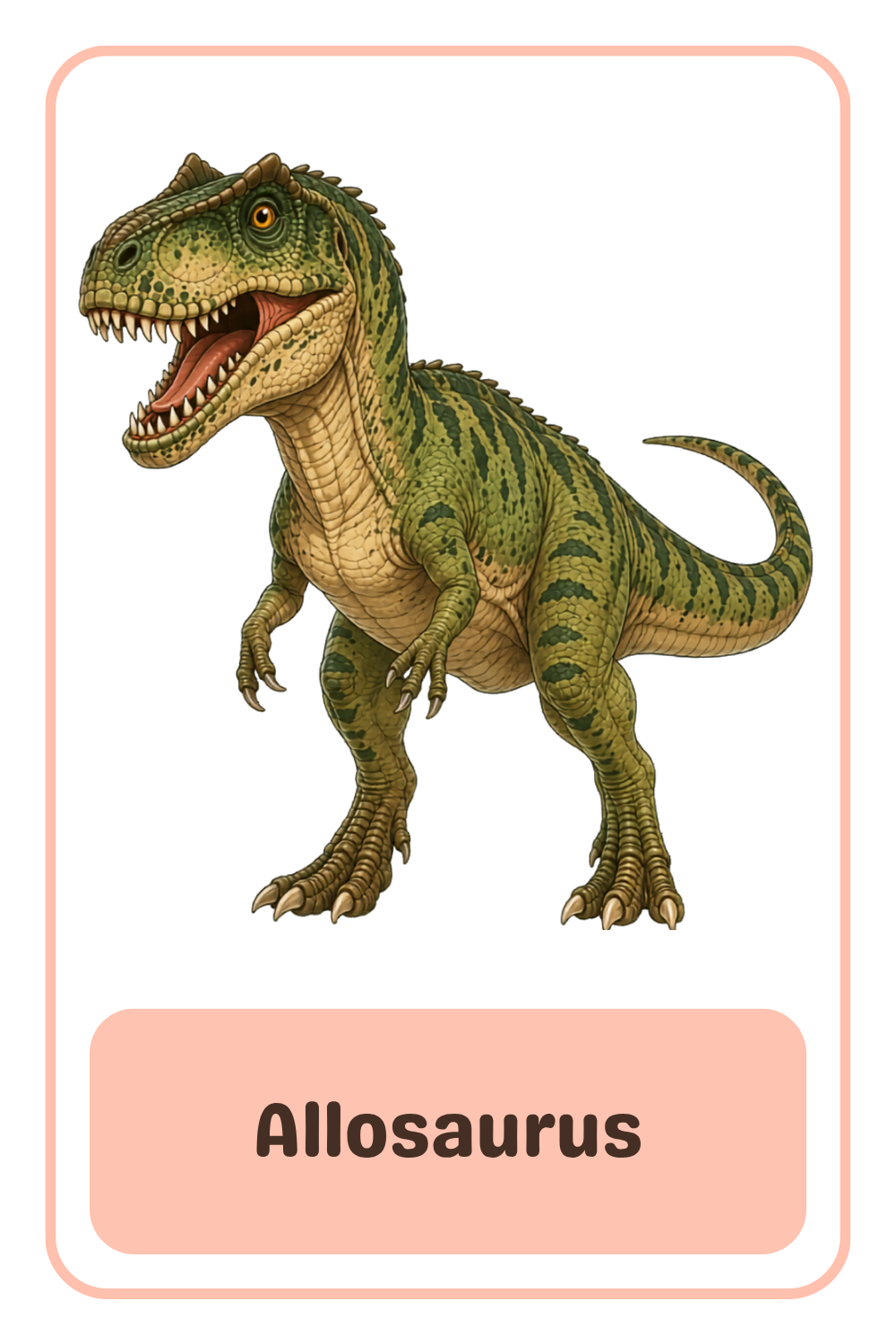
- Allosaurus: The T-Rex of the Jurassic period. It hunted huge plant-eaters and had ridges above its eyes like built-in sunglasses.
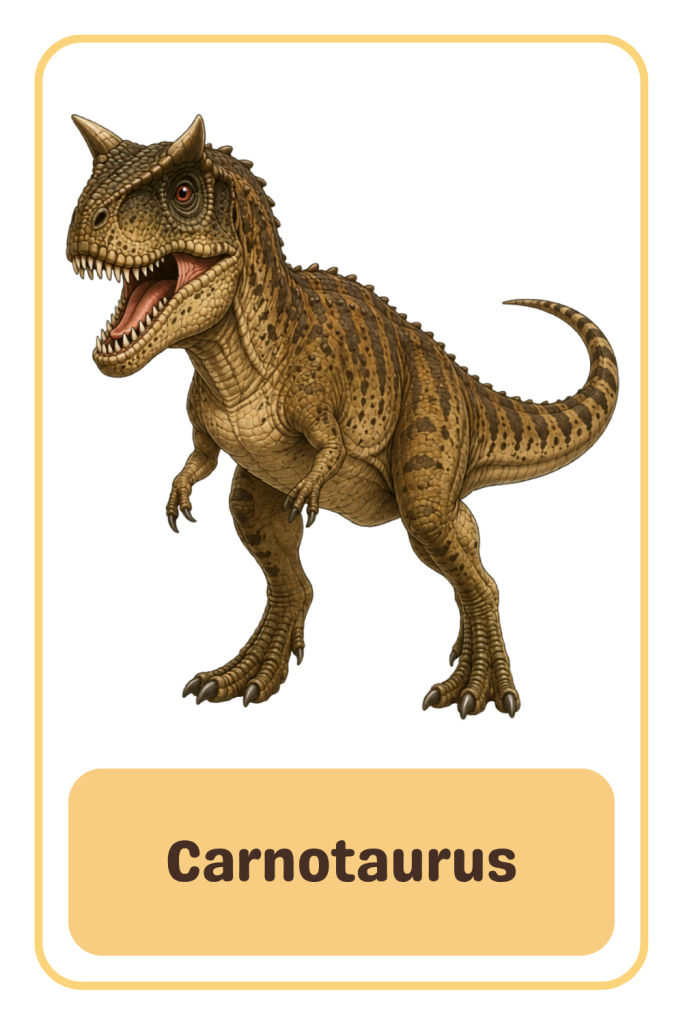
- Carnotaurus: This fierce dino had two horns on its head like a bull. Scientists think it may have been one of the fastest big hunters!
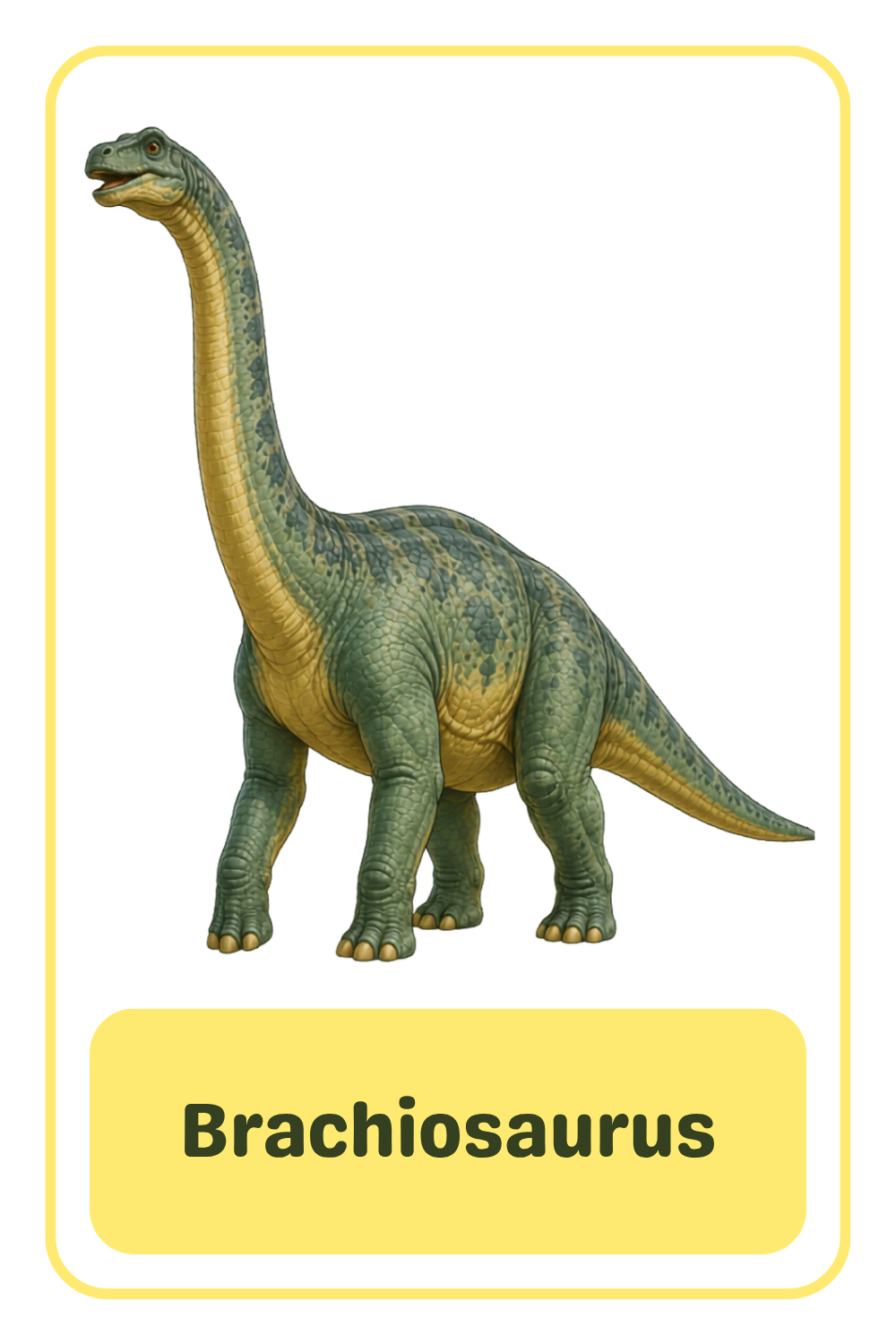
- Brachiosaurus: As tall as a four-story building. Its super-long neck helped it eat leaves from the tallest trees, like a giant giraffe.
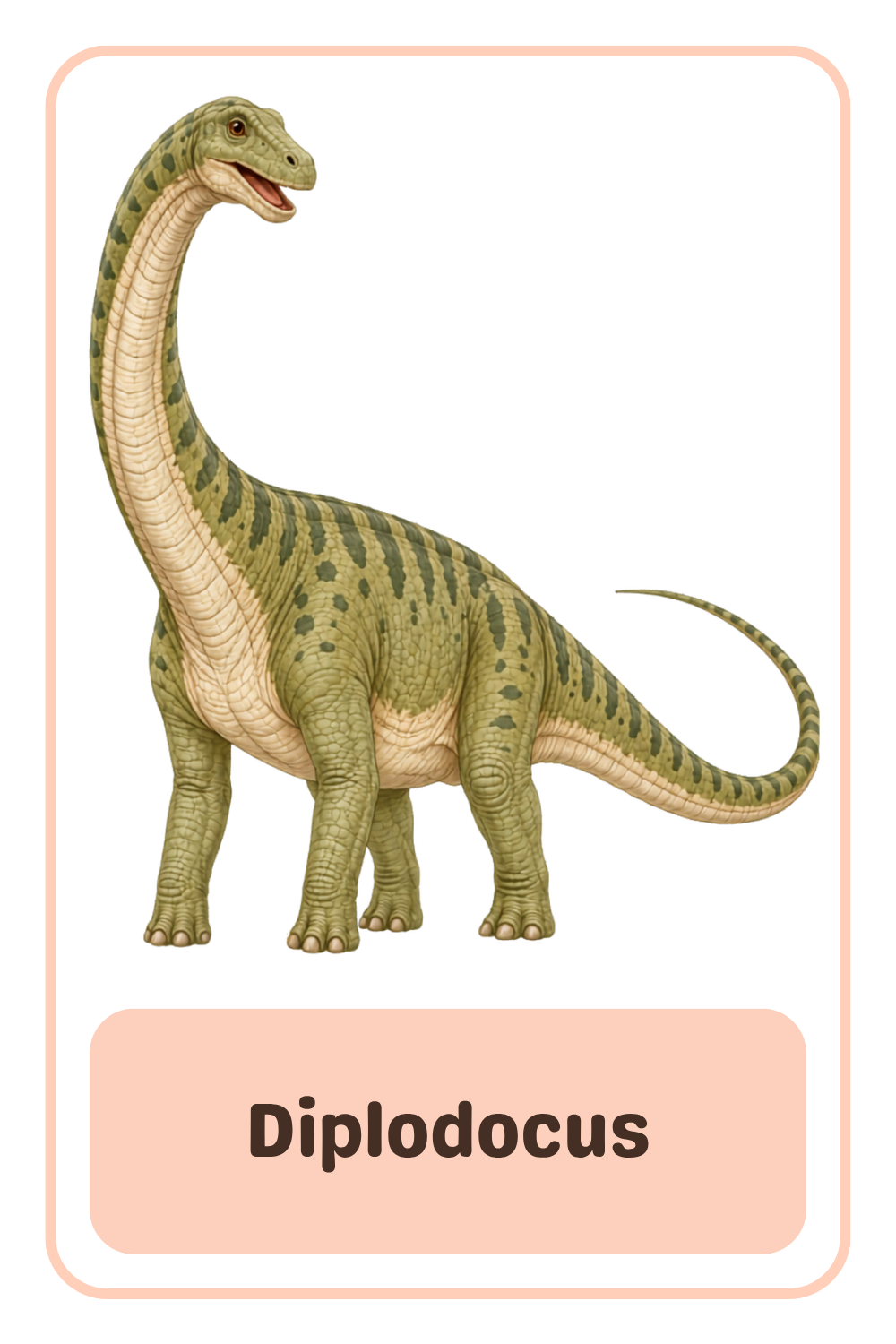
- Diplodocus: One of the longest dinosaurs ever, over 25 meters. Its whip-like tail could crack like thunder to scare off predators.
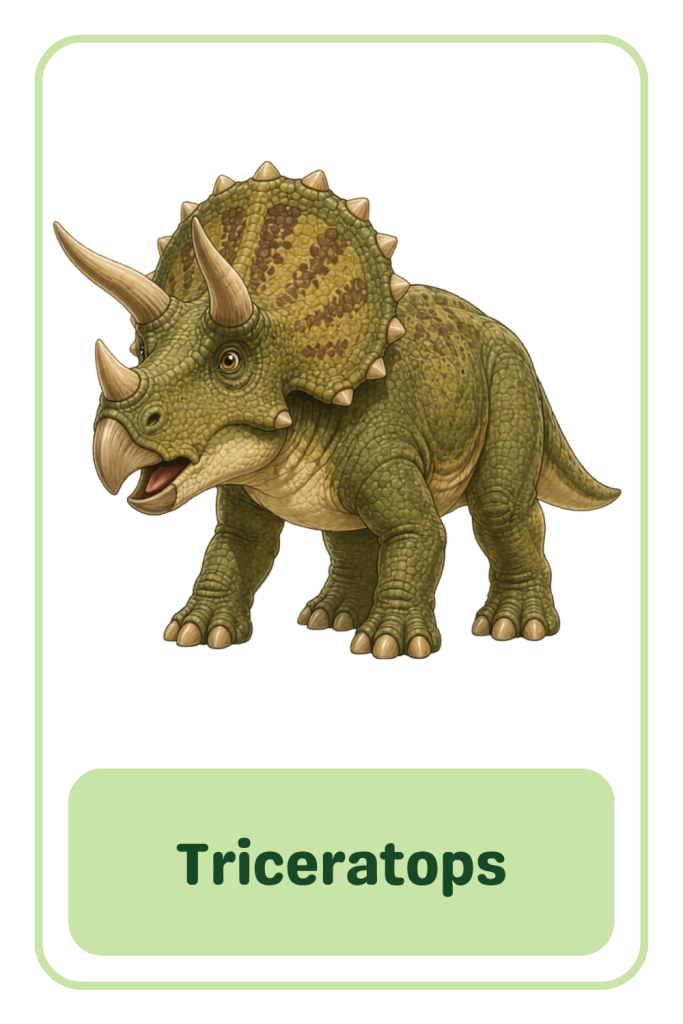
- Triceratops: Three horns and a huge frill on its head made it look scary. It used its horns to fight off T. Rex; what a battle that must have been!
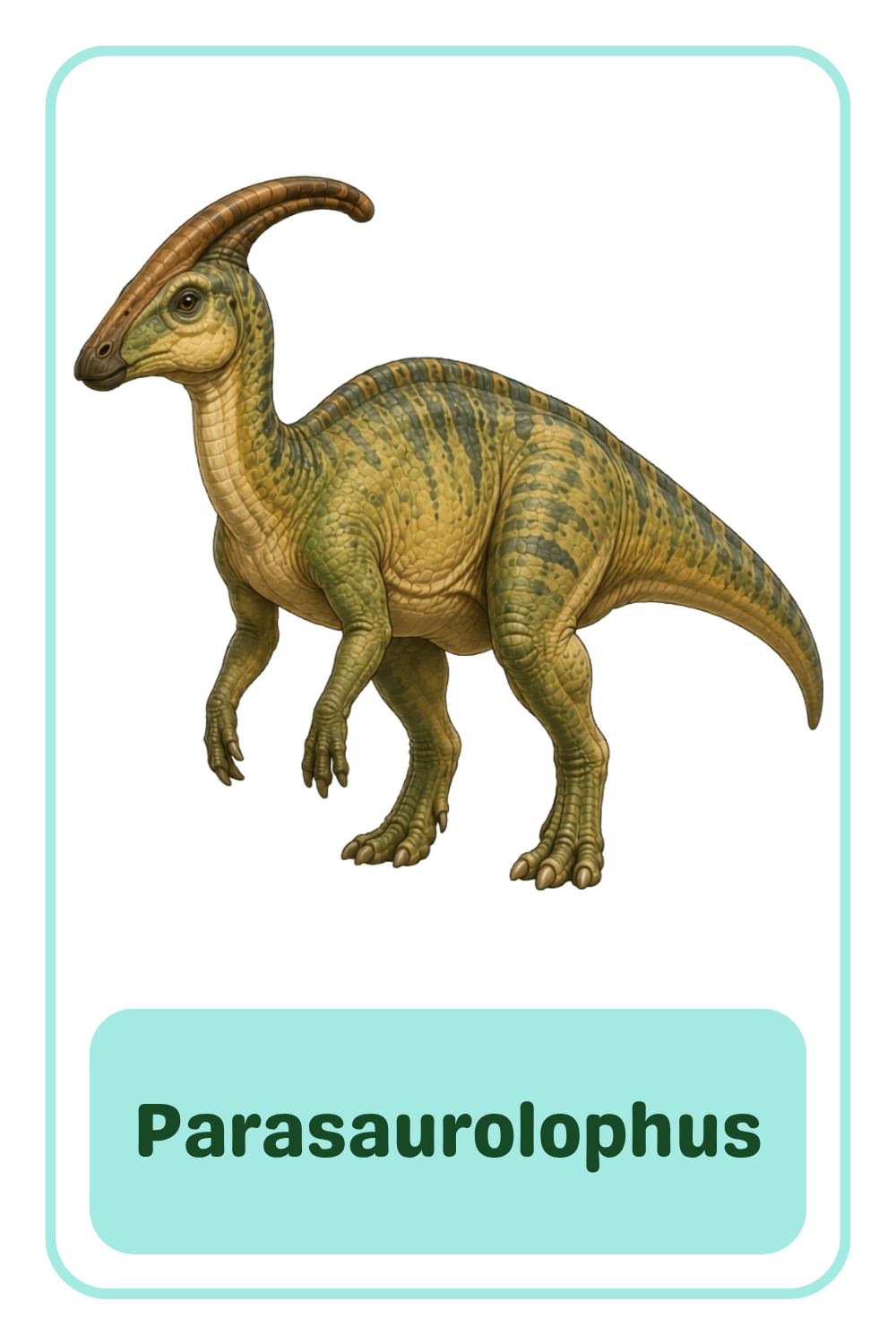
- Parasaurolophus: This dinosaur had a long, hollow crest on its head, resembling a musical instrument. It is believed that it is used to produce loud honking sounds.
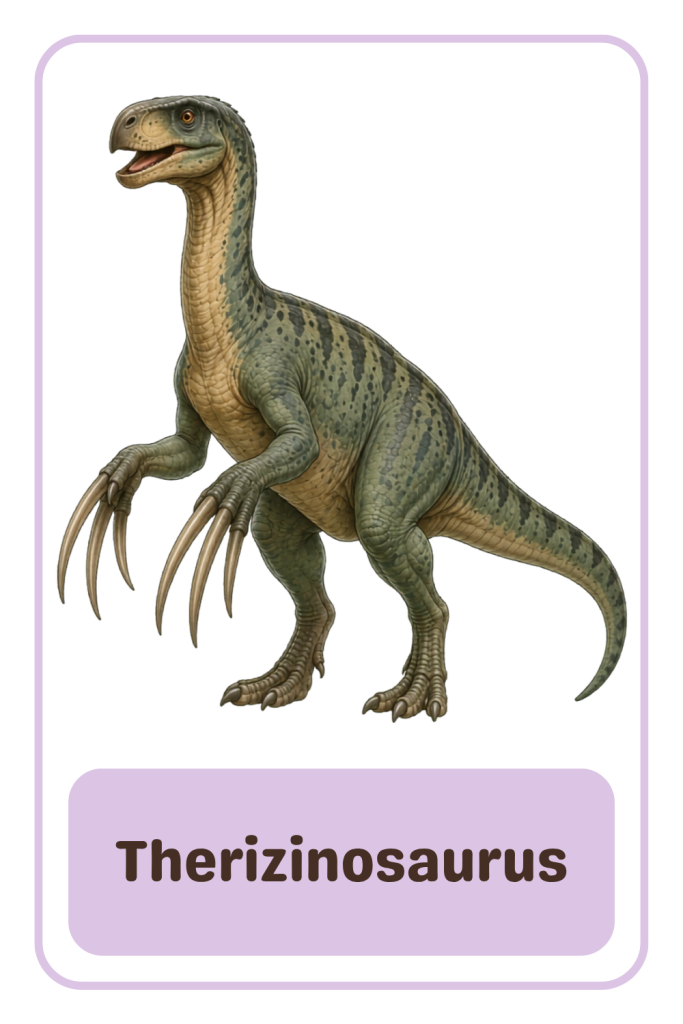
- Therizinosaurus: It had the longest claws of any animal ever, up to 1 meter long! But don’t worry, it only used them to pull down branches to eat.
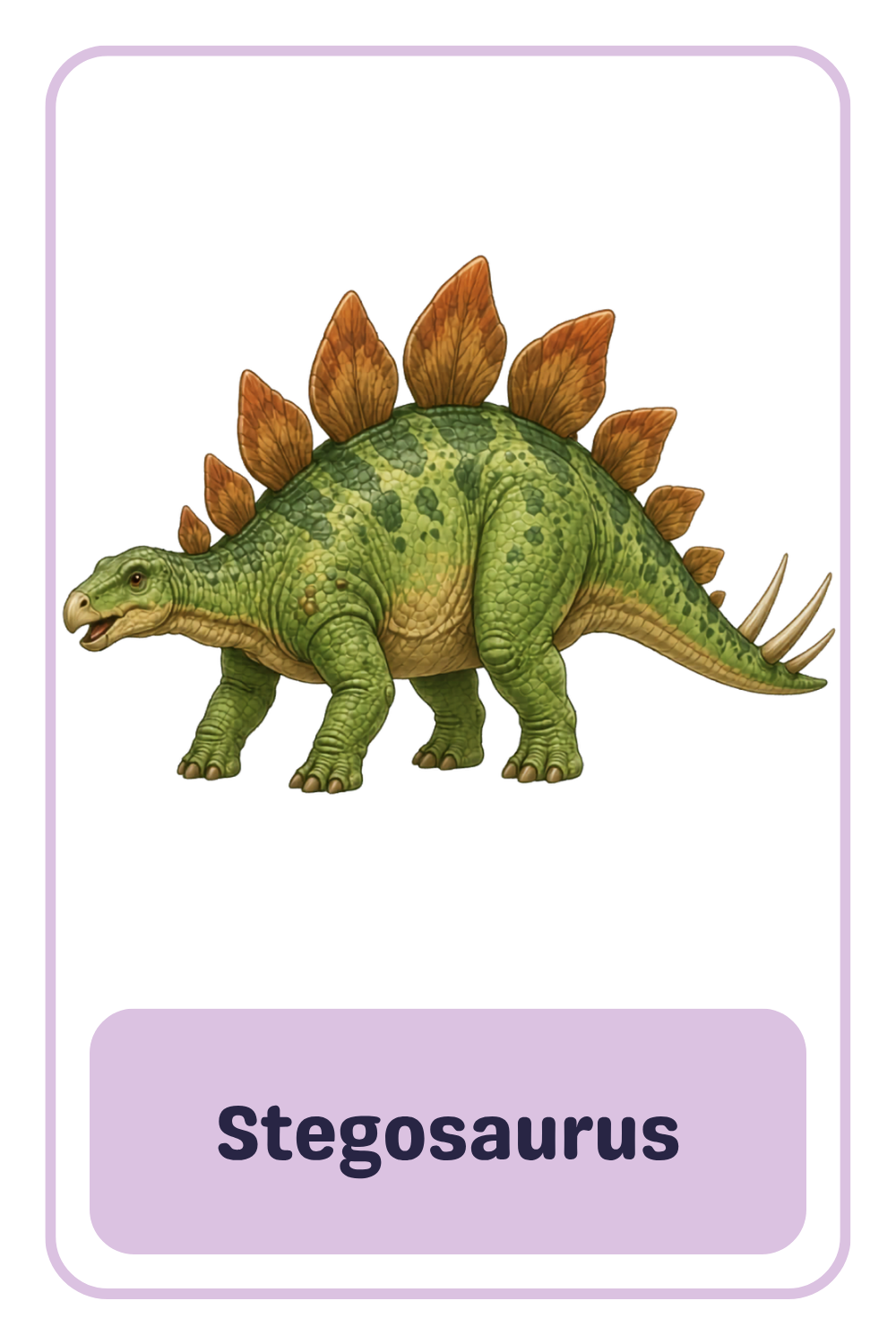
- Stegosaurus: Those big plates on its back may have been used to show off to friends or control its body temperature, like a living solar panel.
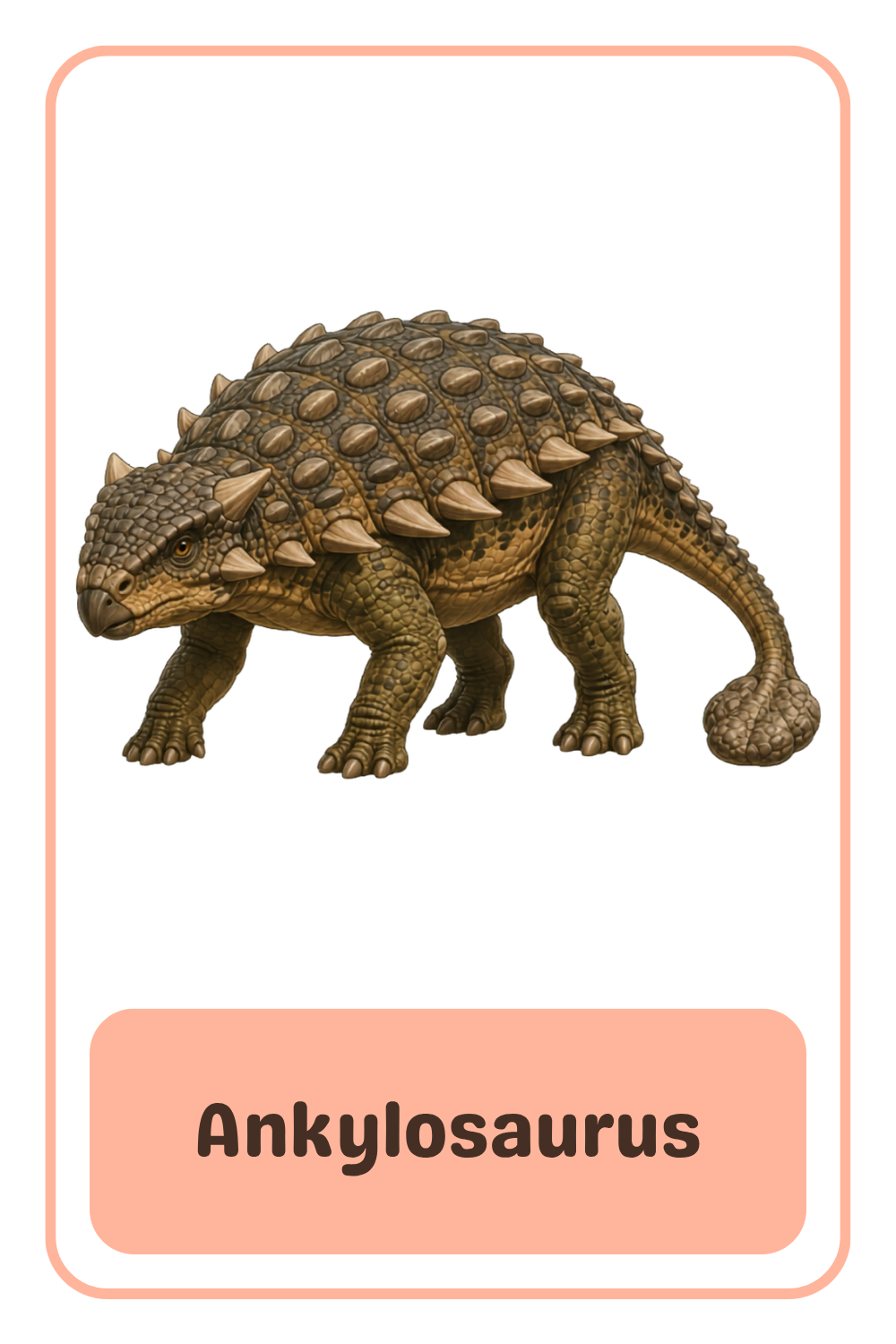
- Ankylosaurus: Nature’s tank! Its whole back was covered in bony armor, and its tail ended in a club that could smash bones. Even T. rex was afraid.
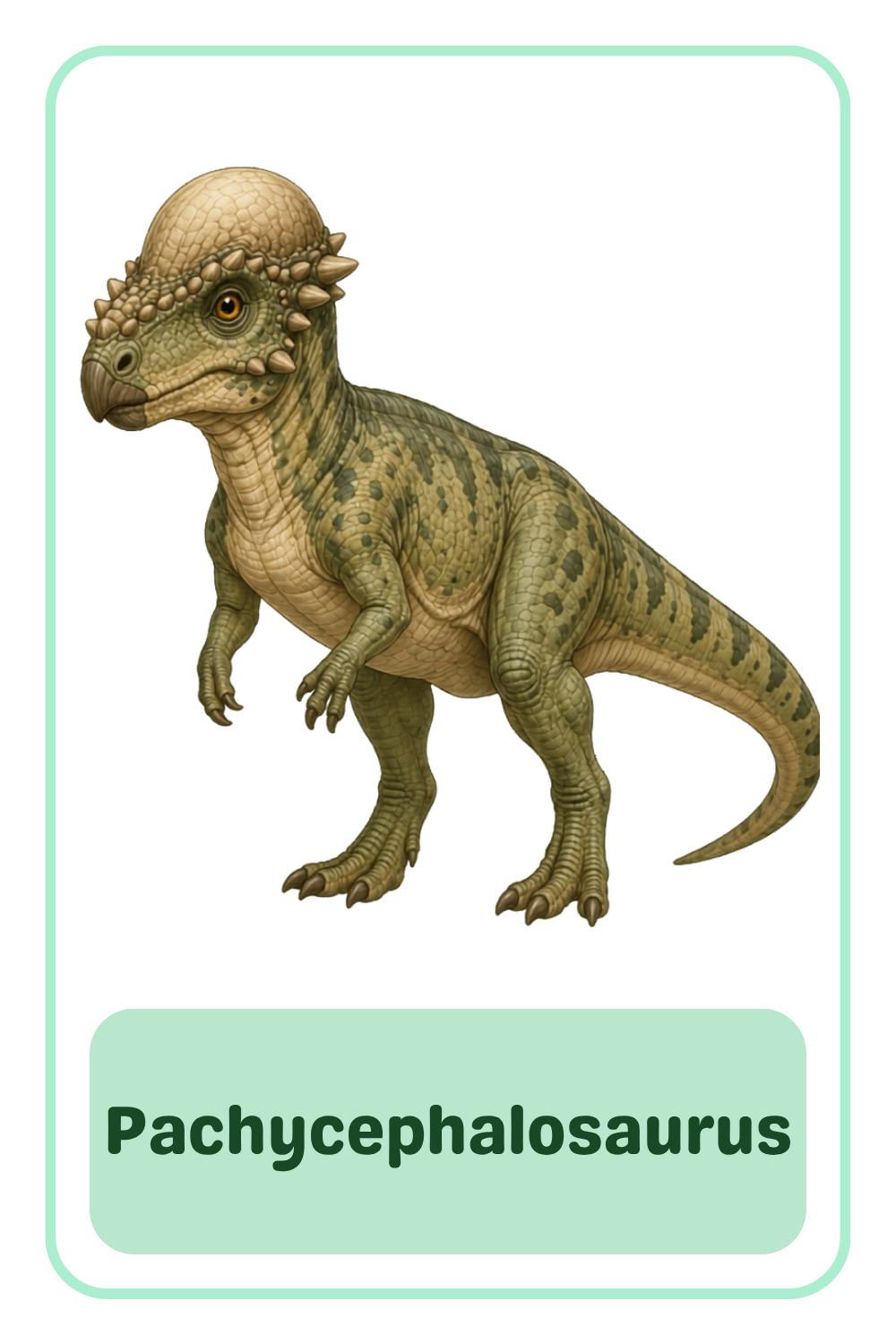
- Pachycephalosaurus: The head-banger of the dinosaur world! Its skull was 25 cm thick. So, it would charge and crash heads with rivals, just like bighorn sheep do today.
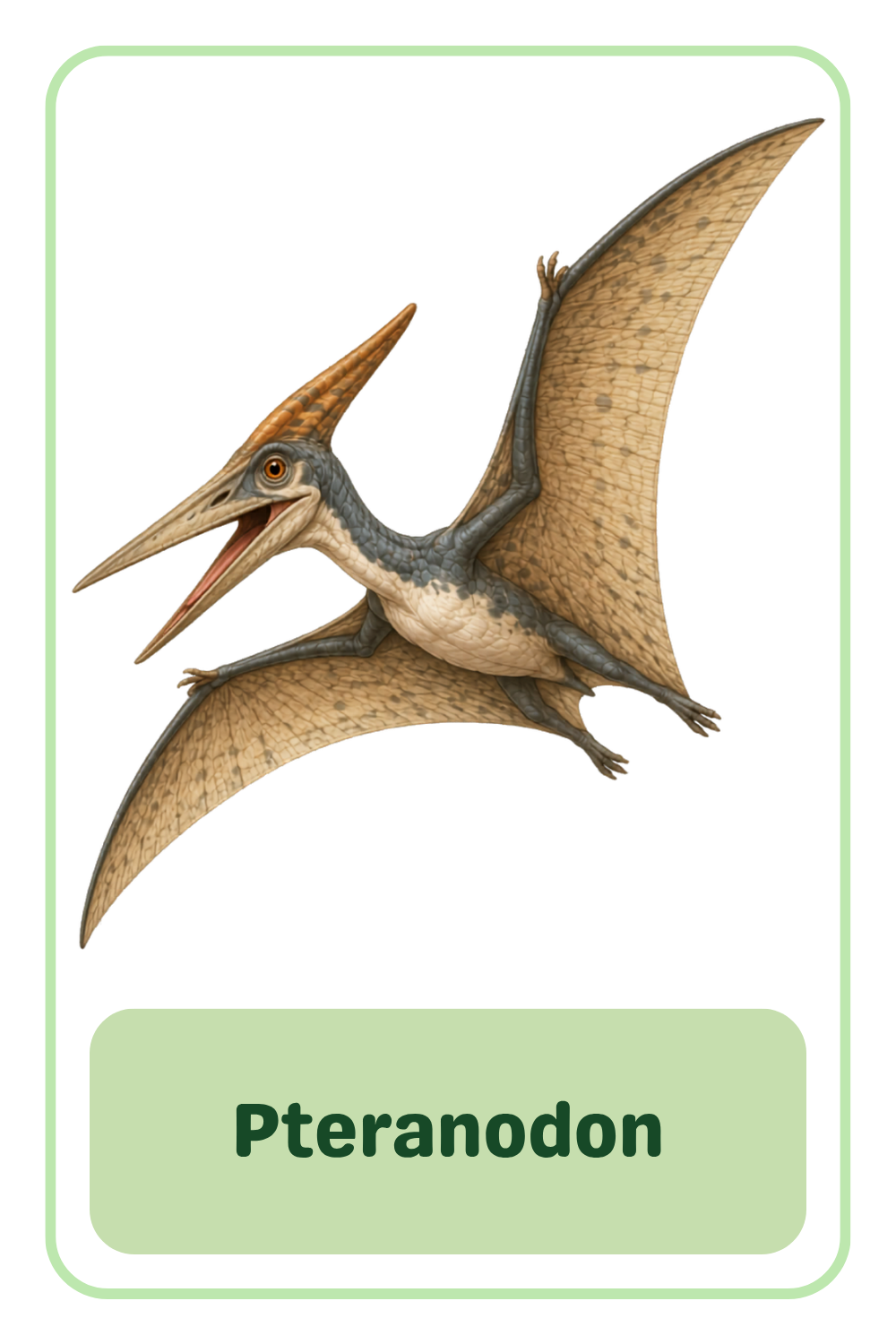
- Pteranodon (The Sky Ruler): Its wings stretched wider than a small plane, and it had no teeth, just a huge beak.
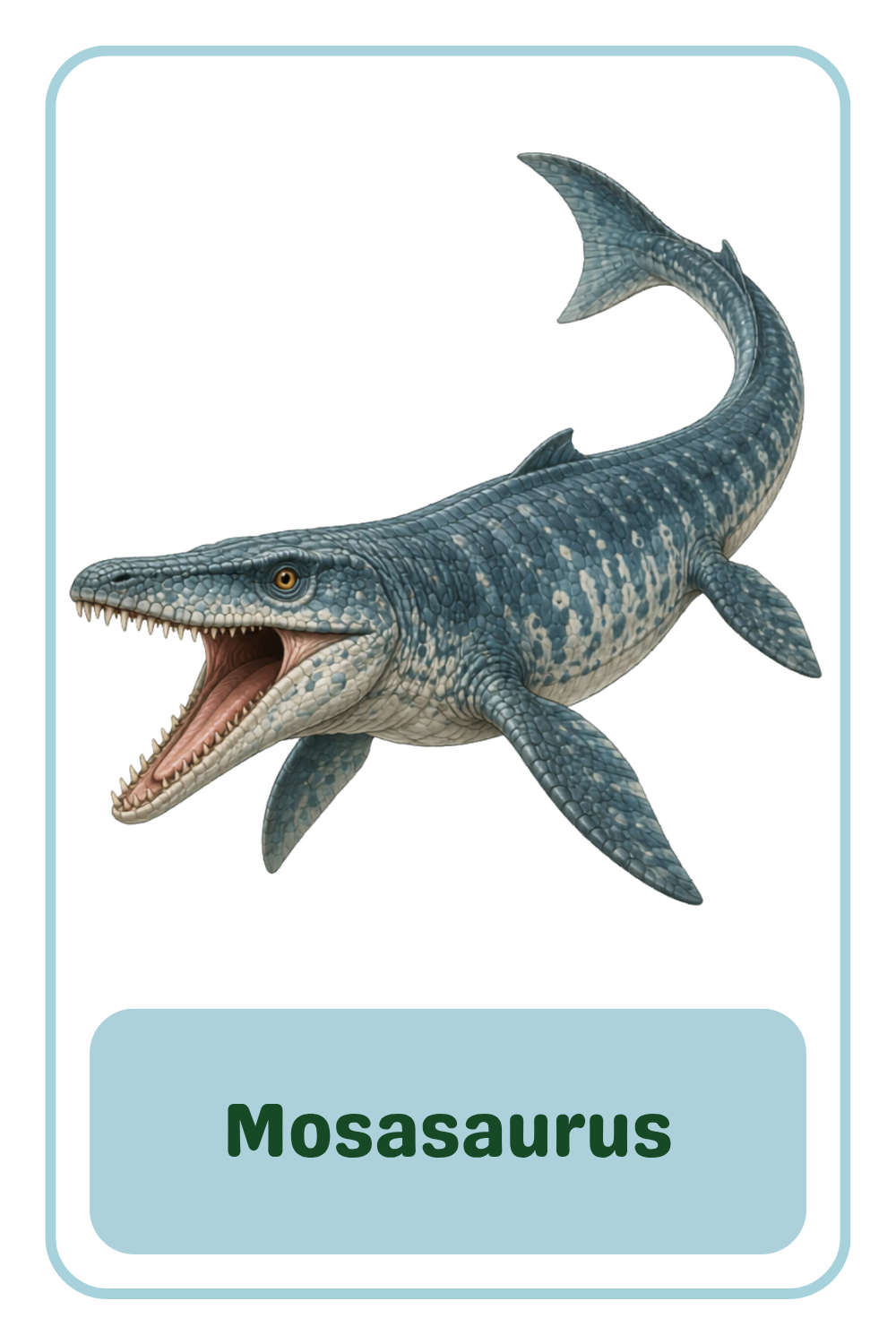
- Mosasaurus (The Sea Ruler): It was as long as a school bus and was the top predator of the ancient ocean.
Dinosaurs Flashcards: A Helpful Educational Tool
Dinosaurs are one of the best entry points into science for young children. Learning about dinosaurs naturally introduces concepts like extinction, evolution, geology, and ecosystems. Hence, big ideas are made accessible through creatures that feel exciting and a little magical.
It is also an excellent way to build vocabulary. Once your child can start trying to pronounce Pachycephalosaurus and Pteranodon (even if they get it wrong initially), other words will seem like a gentle river flow. Research in child development consistently shows that following a child’s interests accelerates literacy and general learning.
After they become comfortable with the process, you can use these flashcards to play a categorization game with your kid. You can sort the flashcards into Meat Eaters/Plant Eaters or Sky Ruler/Sea Ruler. This helps in early organizational skills and critical thinking.
As they grow more confident, you can ask them questions like, “What do you think Brachiosaurus ate?” or “How tall do you think Diplodocus was?” This will help enhance both their critical thinking and memory skills.
But most importantly, dinosaurs help teach the kids that nothing can be taken at face value. Birds are the closest living relatives of dinosaurs. So every time you look at a pigeon, you are looking at a tiny dinosaur!
Dinosaurs teach children that the world is far older, stranger, and more wonderful than it first appears. That’s a mindset that serves them well for life.
Wrapping Up
Our dinosaur flashcards are sure to ignite the curiosity in your child to dinosaur-sized proportions. A mind thirsty for knowledge and new discoveries can wander anywhere. Maybe to discover a new language? Leaving you with these Printable Spanish Vocabulary Flashcards, or if they are feeling more adventurous, these Vietnamese Alphabet Flashcards for kids might be perfect.