
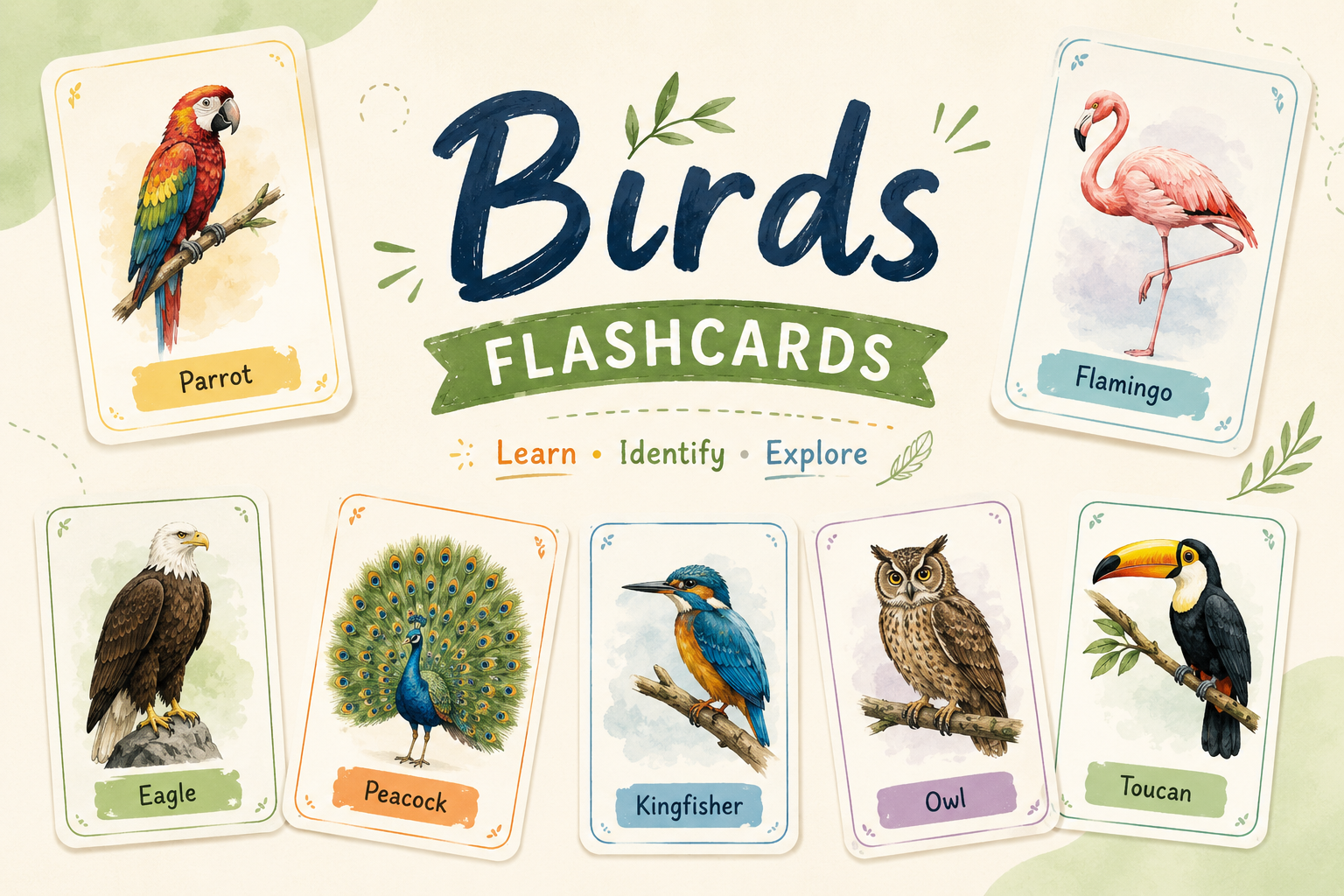
Have you ever noticed how often birds appear around children? Even though they adore them, they might not know a lot about these creatives. They can spot birds sitting on balconies, the ones flying across the sky, and the ones simply seen only near some places.
To learn them better, birds flashcards can become the perfect tool. With well-illustrated images and their names, everyday sightings of birds can be engaging. The flashcards help children notice details and recognize patterns. They also get a chance to connect what they see in real life with what they explore through learning.
Birds Flashcards for Learning: See What’s Inside
Birds are an important part of our surroundings. They can be spotted in gardens, parks, skies, and water bodies. This set of birds flashcards has a set of ten pages with four cards on each page. The structured set makes it easy to teach, plan activities, or simply use in the free time.
Page 1: Common Birds
The first page introduces birds children see in their everyday surroundings. It begins the learning journey simple and relatable. Kids can easily spot a sparrow near homes or gardens, while a pigeon is found in parks. The page also has a crow, showing its clever nature while searching for food.
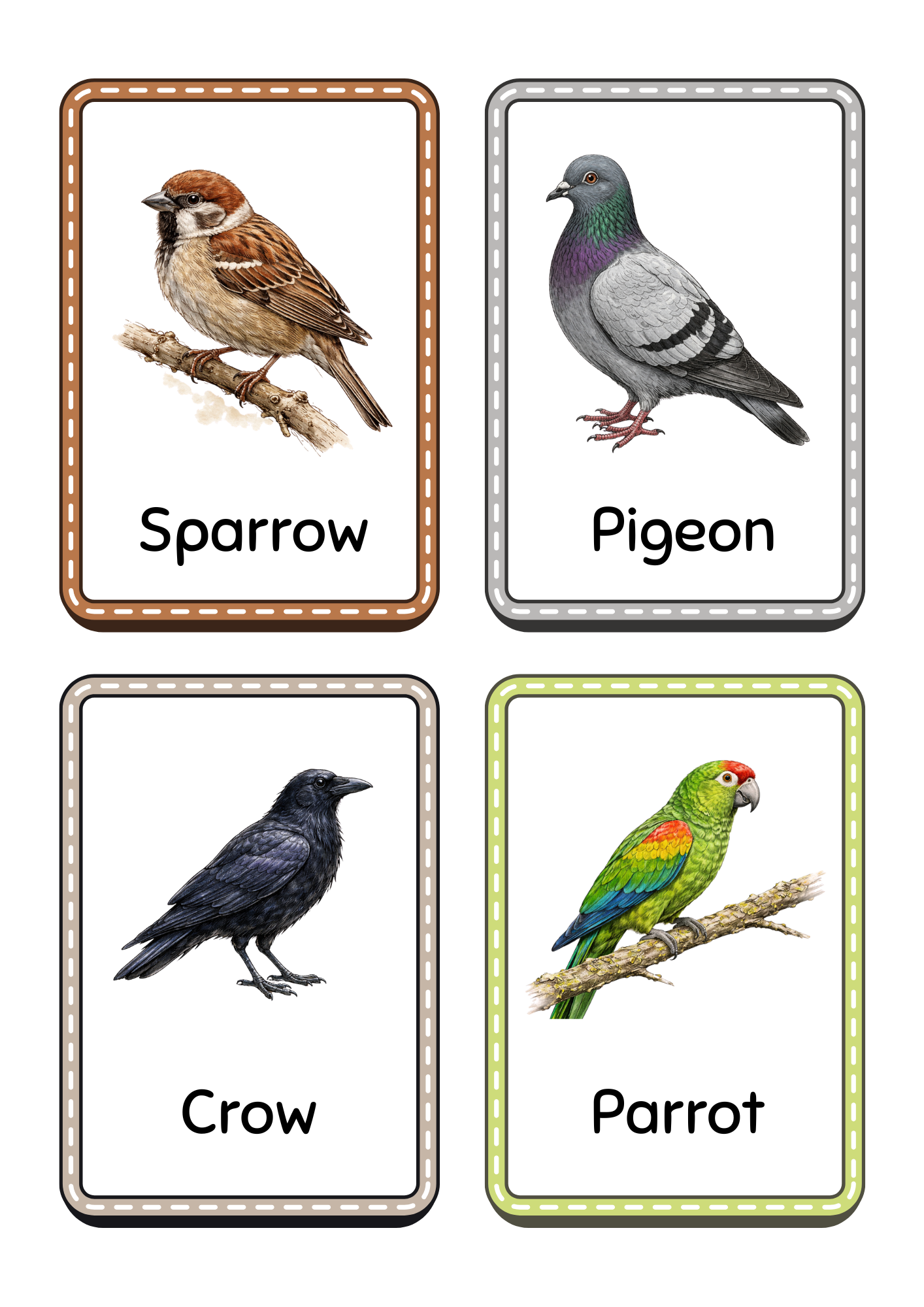
The last one is a parrot, known for its vibrant colours. These flashcards help children recognize birds and spot them in real life. They can instantly connect learning with real-life observations. Make sure to show them flashcards whenever you spot a bird around.
Page 2: Farm and Water Birds
The second page in the set of birds flashcards introduces children to four common birds. With simple and visually clear images, kids can spot Hen, Rooster, Duck, and Goose. These cards are ideal for kids who are just starting to recognize birds.
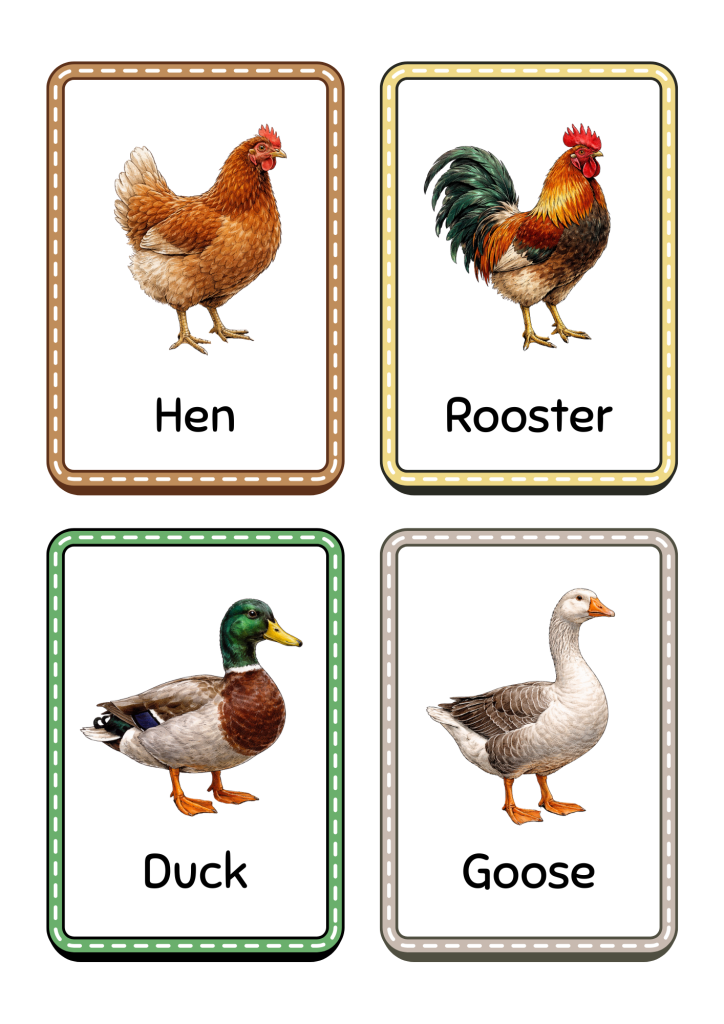
You can easily use these cards to explain the difference between farm birds and water birds. Children also learn how male and female birds can look different. Kidd can also remember the names of the birds quickly with easy-to-read text. Lastly, it helps build confidence in early vocabulary.
Page 3: Colorful and Large Birds
This page features four birds that help children notice differences in size, color, and appearance. It has images of turkey, peacock, robin, and bulbul. The set of birds flashcards are great for visual learning, especially for little learners.
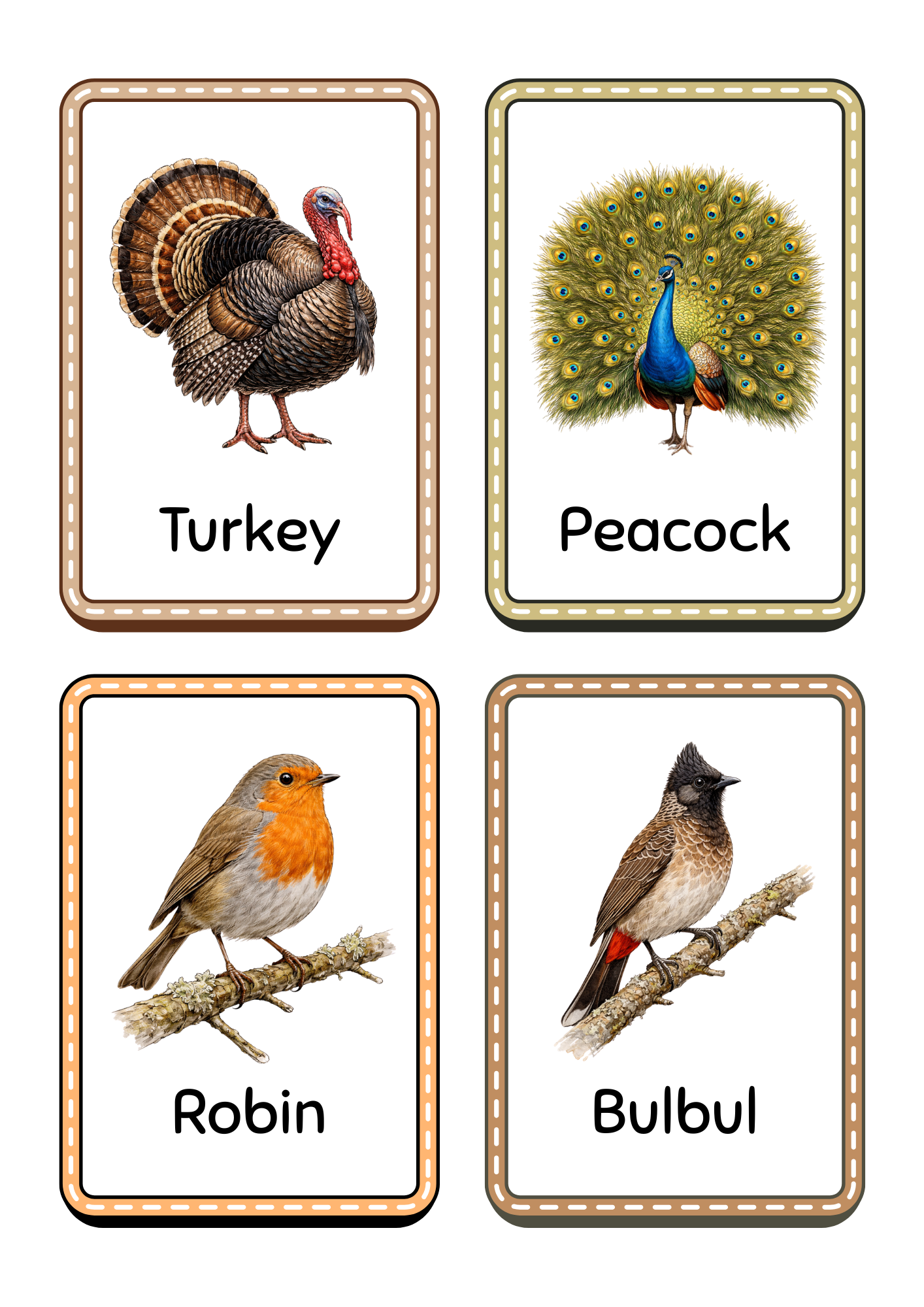
It helps kids understand how each bird looks different from the other. Even teachers can use this page to show that some birds are large while others are small. As children begin to notice feathers and beaks, it improves their observation skills.
Page 4: Small Garden Birds
This next page focuses on small birds that children may notice in gardens. They can see the sunbird, finch, swallow, and wren. These birds flashcards are perfect to showcase the birds found in the surroundings.
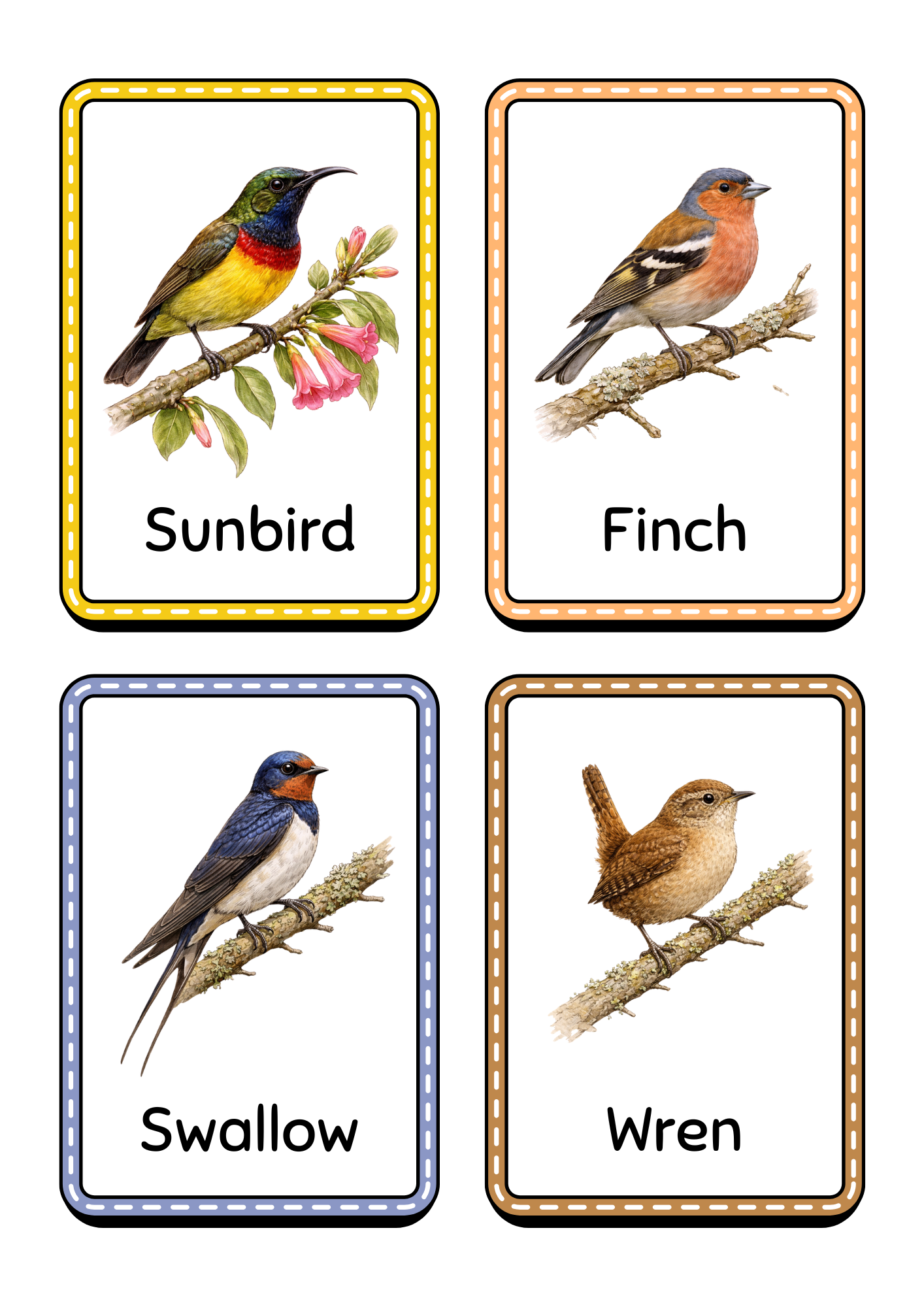
What’s more? You can turn this into a fun outdoor activity where kids try to spot similar birds. You might also love to club printable activity flashcards for a fun learning time. In this way, children can improve attention span and memory.
Page 5: Unique and Interesting Birds
The next page takes kids on a special journey. It shows birds that are different from the usual ones children see every day. The page has the warbler, tit, flamingo, and toucan. These cards are useful for expanding a learner’s knowledge beyond common birds.
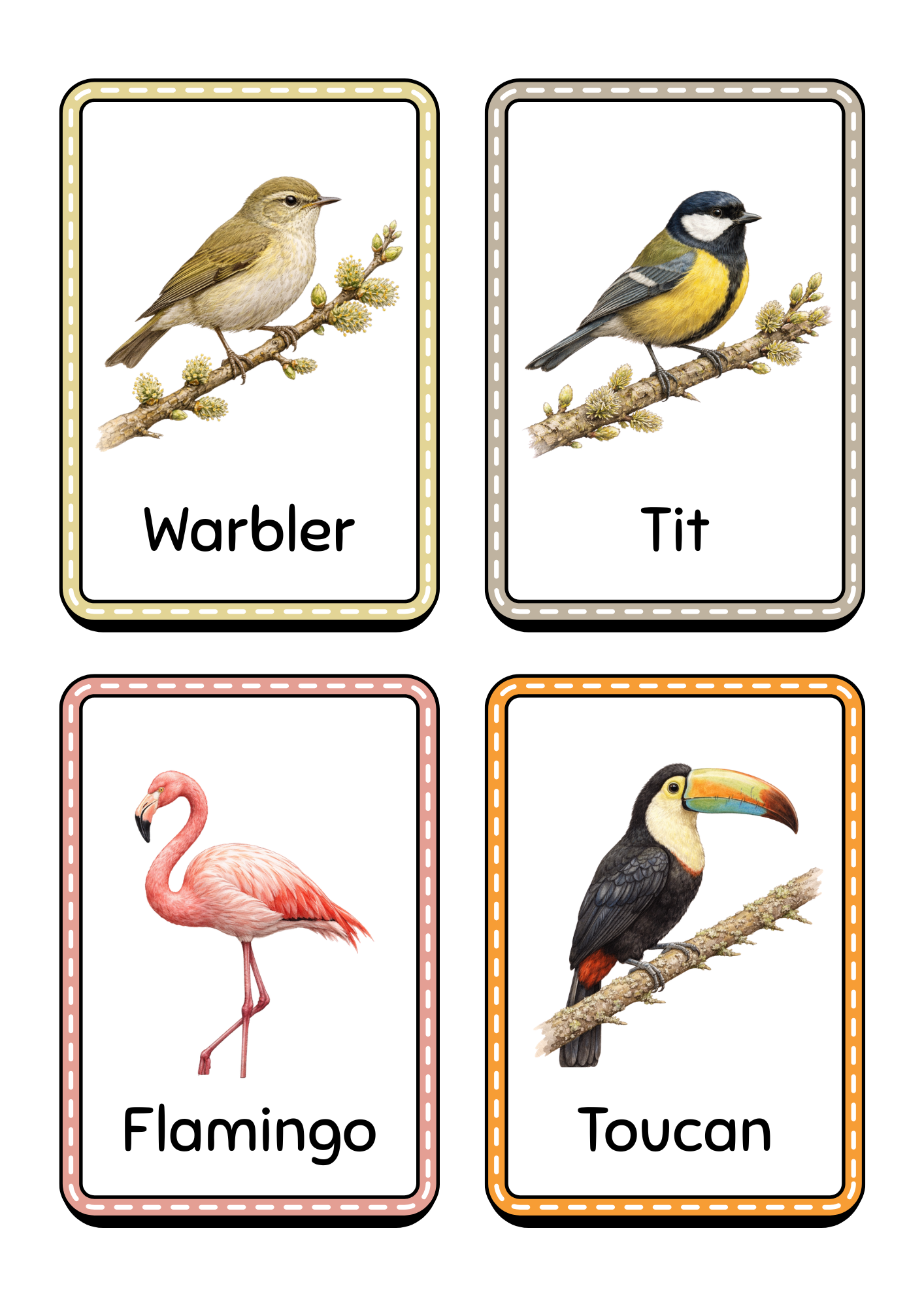
The page can be used to start simple conversations about habitats and different parts of the world. It truly builds curiosity among young learners. Due to the diversity in images, children then become naturally interested in the learning process.
Page 6: Bright and Exotic Birds
Have you noticed how some birds are bright and easy to spot while others blend into trees? That is exactly what this page focuses on. It has flashcards representing a macaw, a kingfisher, a hummingbird, and the paradise bird. Children understand how birds come in many colors and sizes.
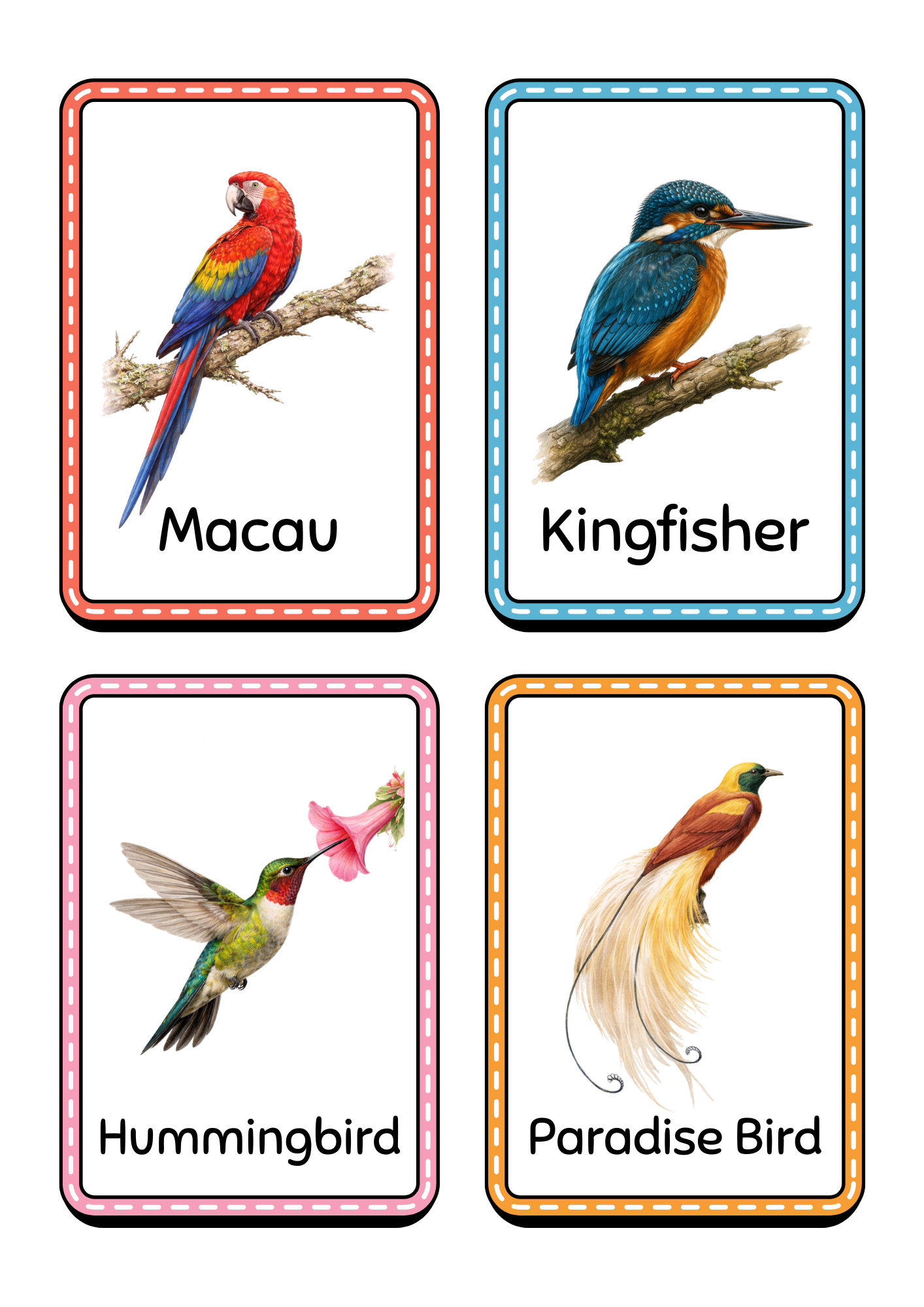
With such a page, you can inspire young learners to compare them with the ones they see on a daily basis. It improves imagination, vocabulary, and visual memory. You can also use wild animals flashcards for challenging activities to test memory.
Page 7: Powerful Flying Birds
As you move ahead, the page shows strong and powerful birds. They look extremely different from the colorful tropical ones. The Lorikeet adds brightness. It helps children recognize colorful parrots. The eagle introduces one of the most fierce birds.
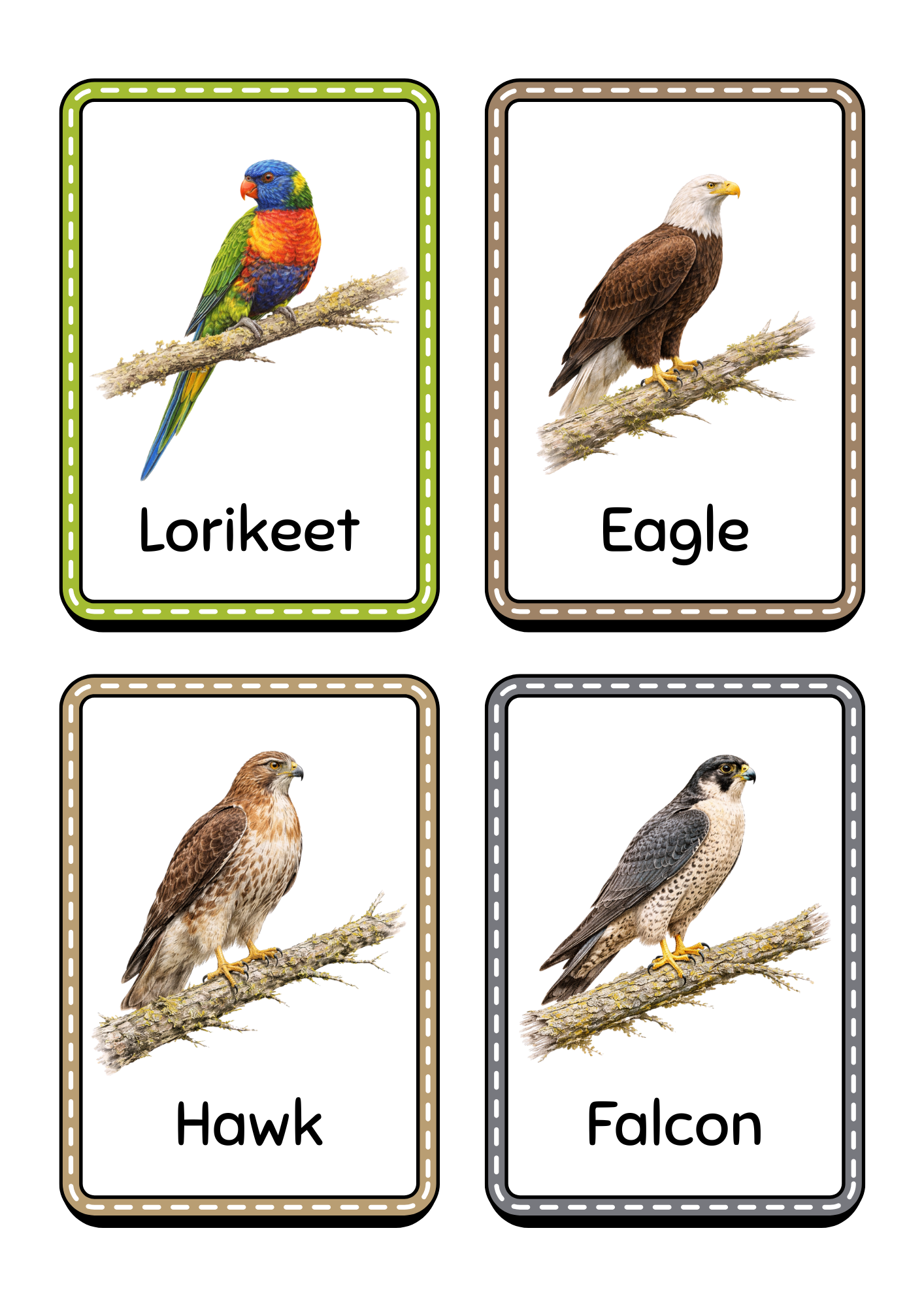
The Hawk and Falcon help children learn about speedy and strong birds. This page is useful for teaching the difference between colorful birds and strong hunters. Children can use binoculars to spot these birds on trips and holidays.
Page 8: Night and Peaceful Water Birds
This page introduces birds that are calm and observant. Children can recognize them due to their unique appearance. The owl is known for its large eyes and being nocturnal. Vultures show that not all birds hunt for food.
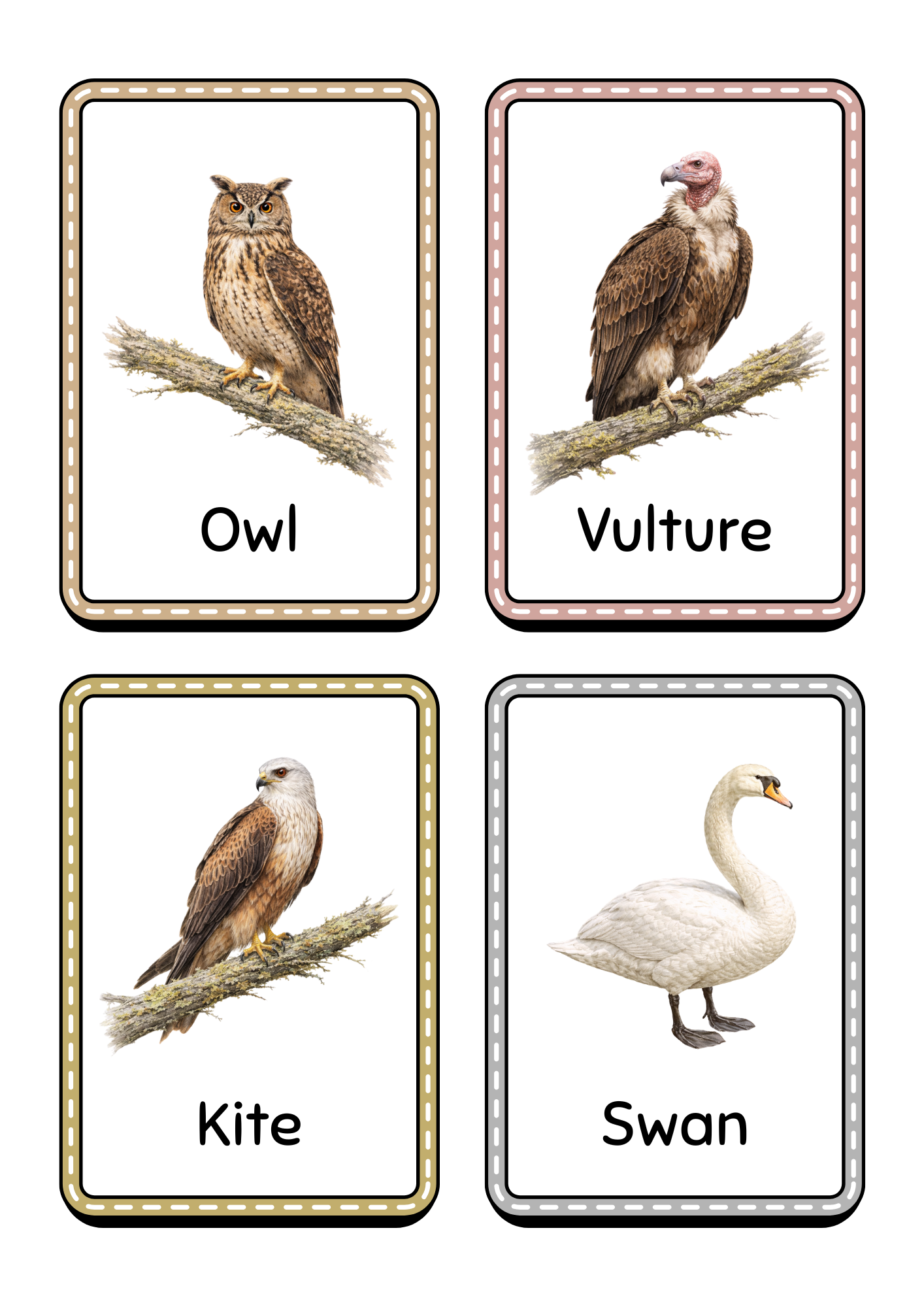
It also features a kite and swan, adding variety to learning. They show how strong flying birds can also enjoy peaceful waters. It truly helps children understand several species of birds. Lastly, it increases their general knowledge about nature.
Page 9: Water and Shore Birds
Kids must have noticed how some birds are always seen near water or standing in open spaces. Hence, this page focuses on birds mostly seen near the shore. The pelican stands out because of its long beak, while the seagull helps children connect birds with the sea.
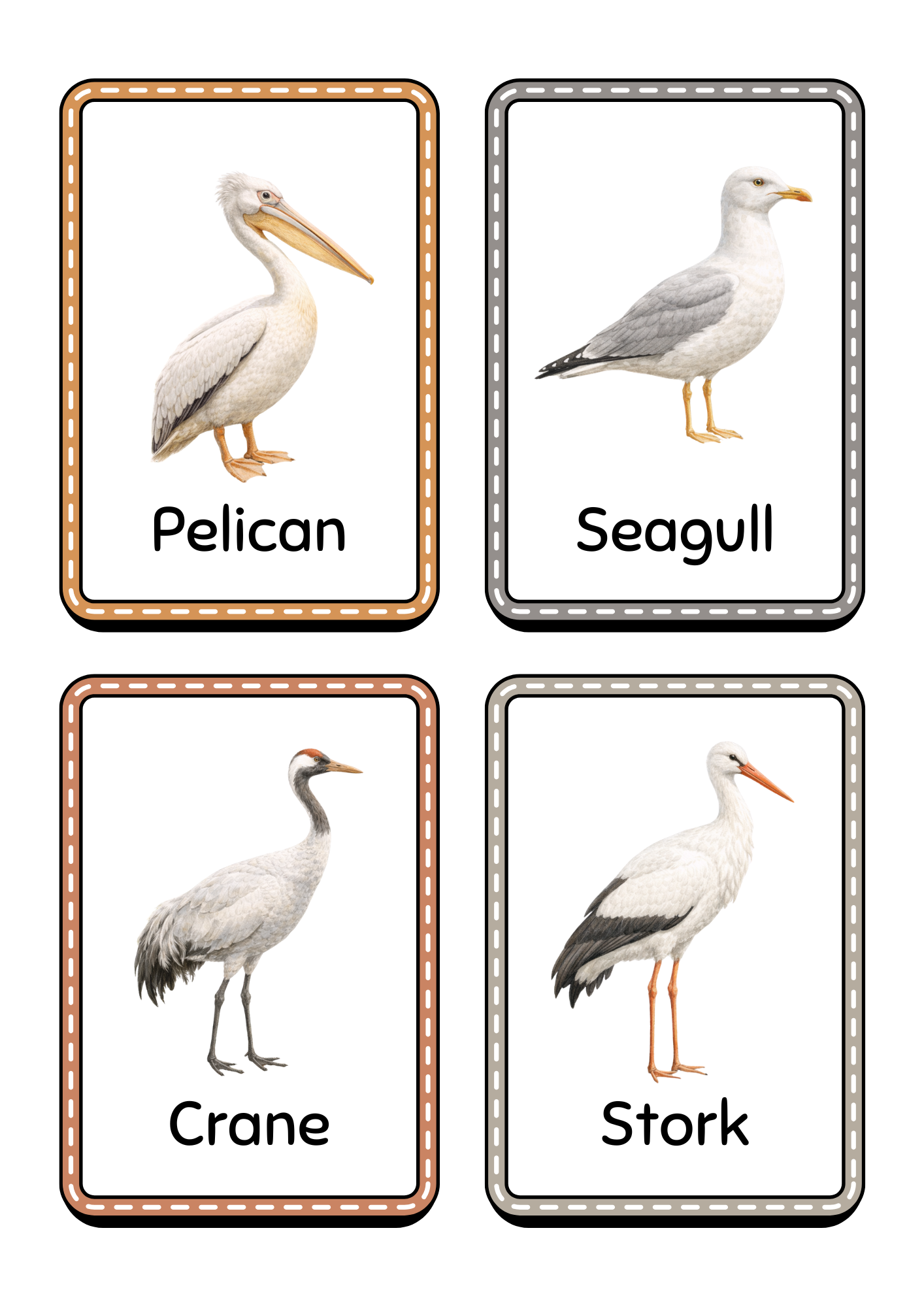
The crane and stork show how some birds have long legs and necks. In this way, children can learn about shapes, habitats, and sizes of birds. It is best to take children near a water source and challenge them to spot the birds they learn through these flashcards about the shapes.
Page 10: Unusual Birds
Have you ever wondered if all birds can fly or live in the same kind of place? This page answers that in an interesting way by showing very different birds together. Children can often see Heron near water. At the same time, they learn how ostriches cannot fly at all.
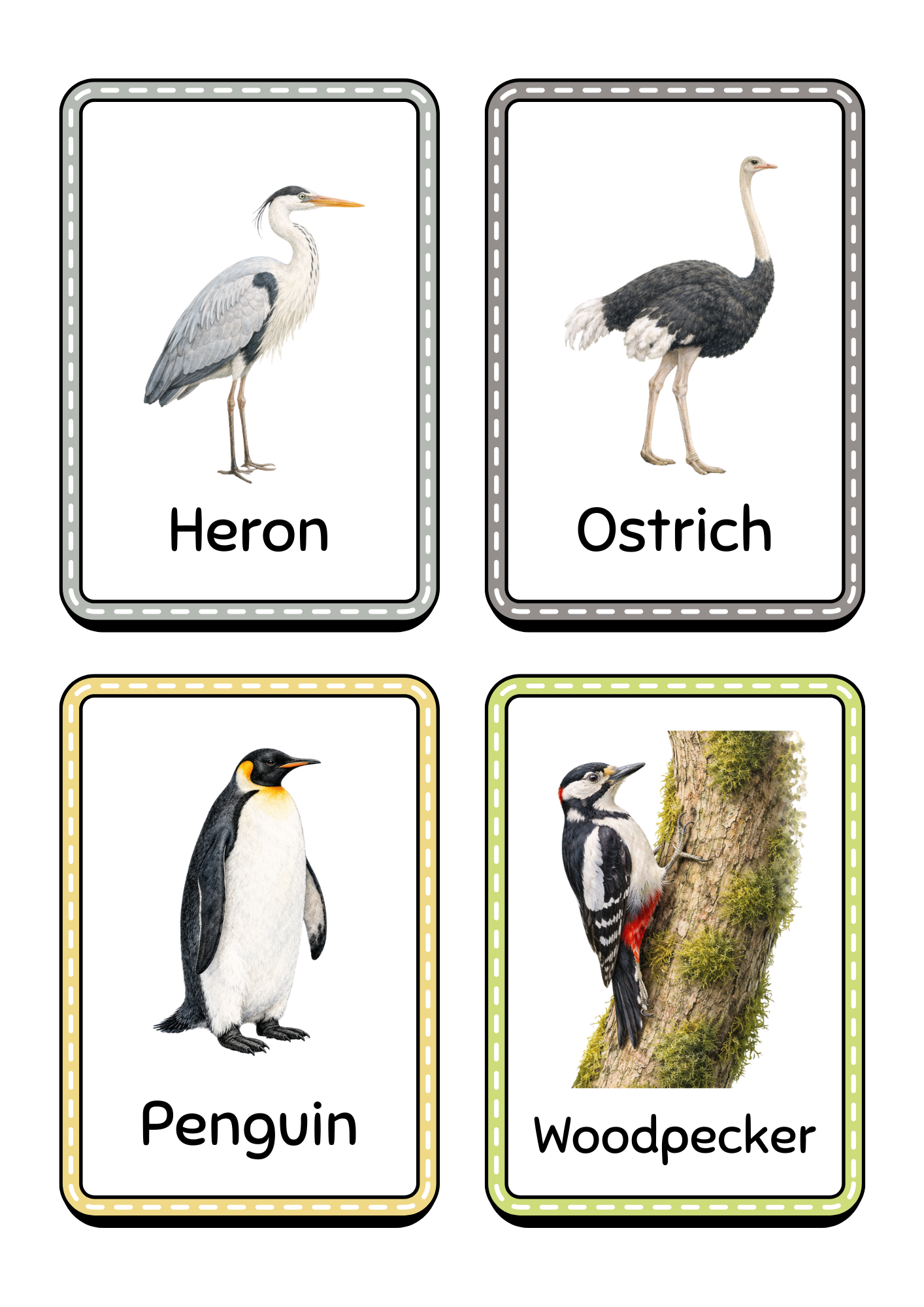
It also has a penguin that shows how birds live in cold regions. The last is the woodpecker, spending most of its time on trees. This variety helps children understand the habitats and behavior of birds. You can always ask them to spot or compare with others.
Wrapping Up
When children learn first and then go out in the world to spot birds, they might be great at recognizing multiple species. By grouping different types of birds across pages, learners get gradual exposure without overwhelming the process. They not only create awareness but also spark curiosity. The combination of colors, sizes and habitats ultimately helps children independently explore, raise questions, and learn in a fun manner.