
When Albert Einstein got stuck in a physics problem, he drew inspiration from an unlikely source – the violin! He had started playing the instrument when he was six. Also, he kept playing it till the right answers came to his mind.
He was not the only brilliant scientist who combined his passion for science with his longing for music. Max Planck also played the cello while Charles Darwin loved his piano. Let’s not forget that Carl Sagan could not do without his guitar.
Far from being opposites, science and music seem to share the same creative spark. That is how you must know the importance of introducing musical instruments into the life of little learners. With the help of musical instrument flashcards, you can begin a rhythmic journey of learning for children.
Musical Instruments Flashcards: Check What’s Included
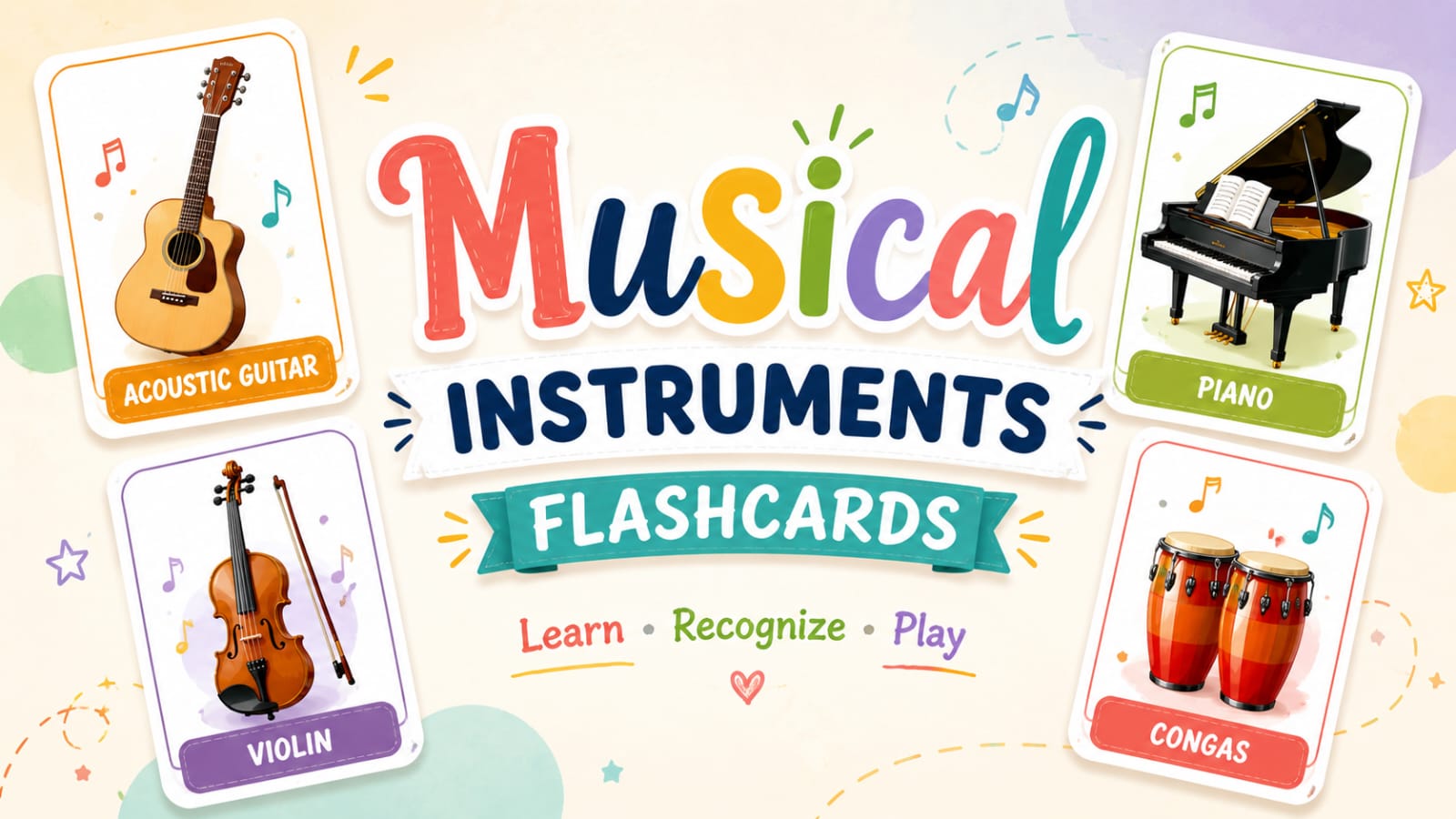
- Acoustic Guitar – It is a stringed instrument made of wood. This produces soft and serene music. Did you know that it can only make music when musicians stroke its strings using their fingers? Acoustic guitars are often used to perform songs in camps, classrooms, and other occasions.
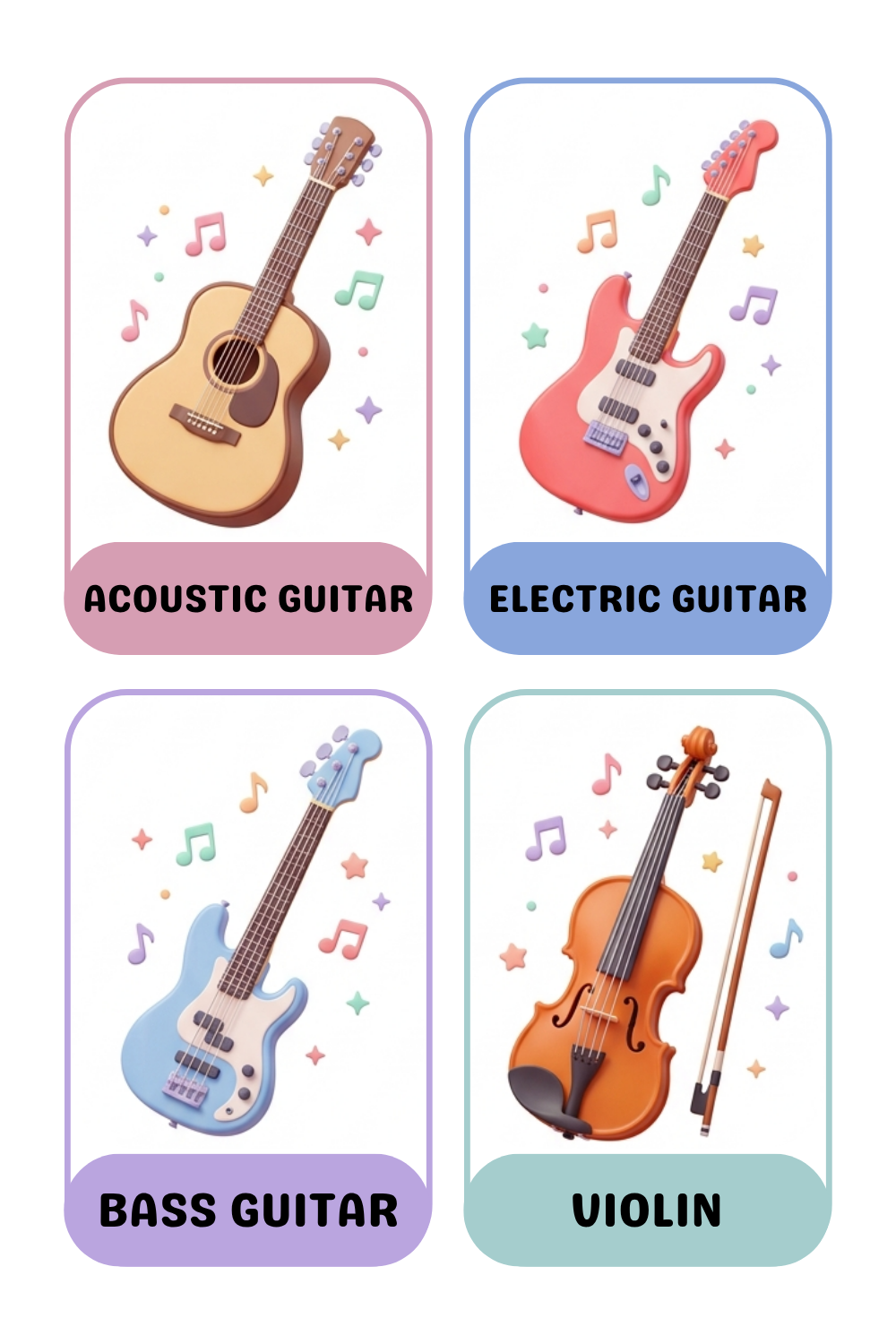
- Electric Guitar – The electric guitar is an example of a modern musical instrument that produces high-volume sound. Such an instrument cannot be used without electricity. It is commonly used in the creation of pop and rock music. The instrument generates very lively music, thus making great dance music. Kids can easily identify such an instrument at large venues.
- Bass Guitar – The bass guitar is a large string instrument that makes deep and low sounds. It helps keep the beat and rhythm of a song steady. So, the music sounds fuller and stronger. It usually has thick strings, ideal for bands and music groups.
- Violin – This one is a small string instrument played with a bow that moves across the strings. It creates sweet and smooth melodies. The music generally sounds happy, exciting, or emotional. It is commonly used in orchestras and classical music.
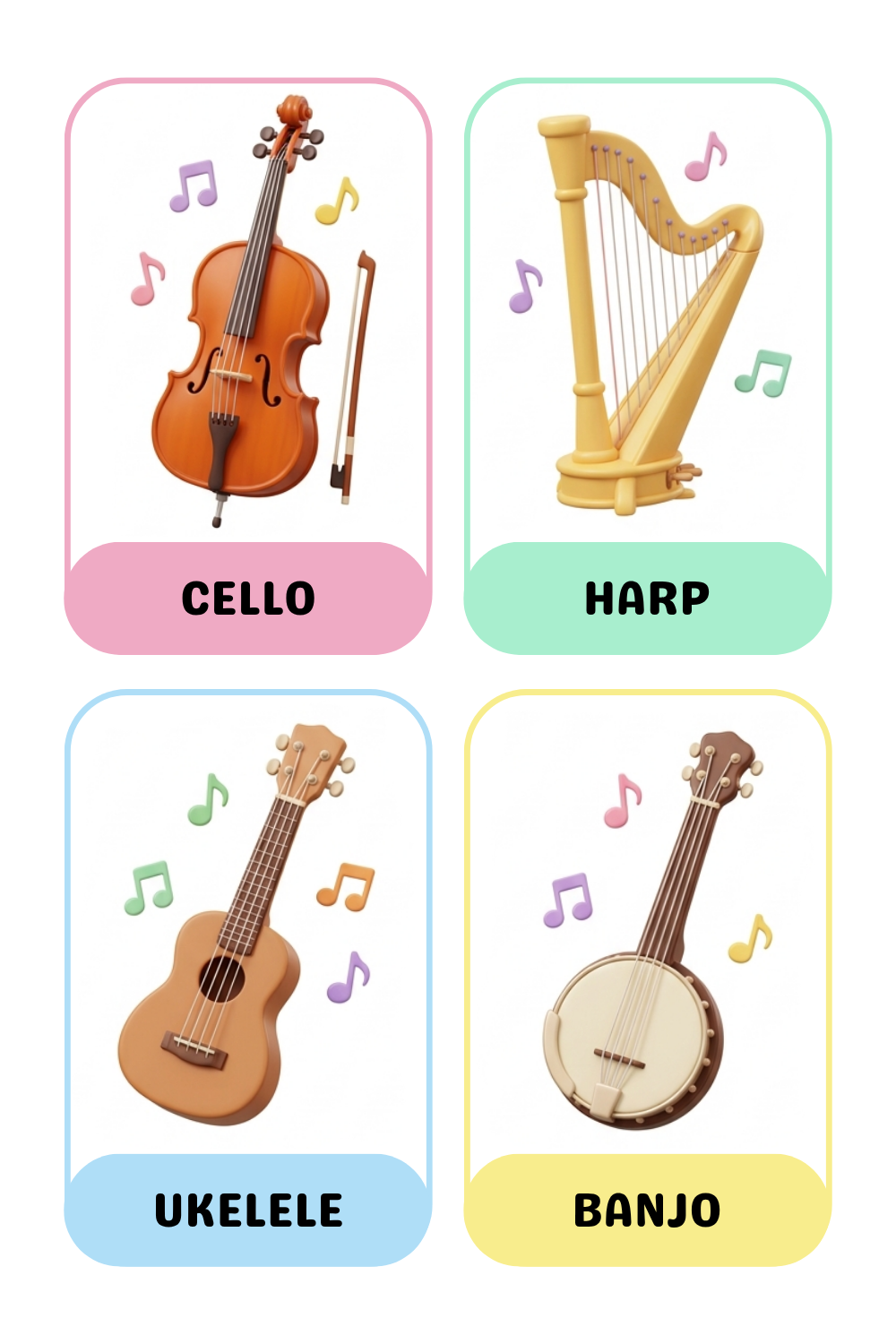
- Cello – Do you know cello is a larger member of the violin family? It produces rich, deep, and soothing music. The cello is played while sitting down and the instrument resting on the floor. The warm sound is often used in orchestras and movie music to create calm feelings.
- Harp – Harp is an instrument that is very tall and has lots of strings. These strings are played with fingers so as to produce soft tones. They are among the oldest musical instruments used in classic music.
- Ukulele – The ukulele is a small four-string instrument that comes from Hawaii. It creates cheerful and happy music. Children can also sing along when playing or listening. Because of its lightweight size and simple design, the ukulele is perfect for beginners and kids.
- Banjo – The banjo is a string instrument with a round body and a twangy sound. It is commonly used in folk and country music to create lively and fun tunes. The banjo’s unique sound makes songs feel energetic and playful.
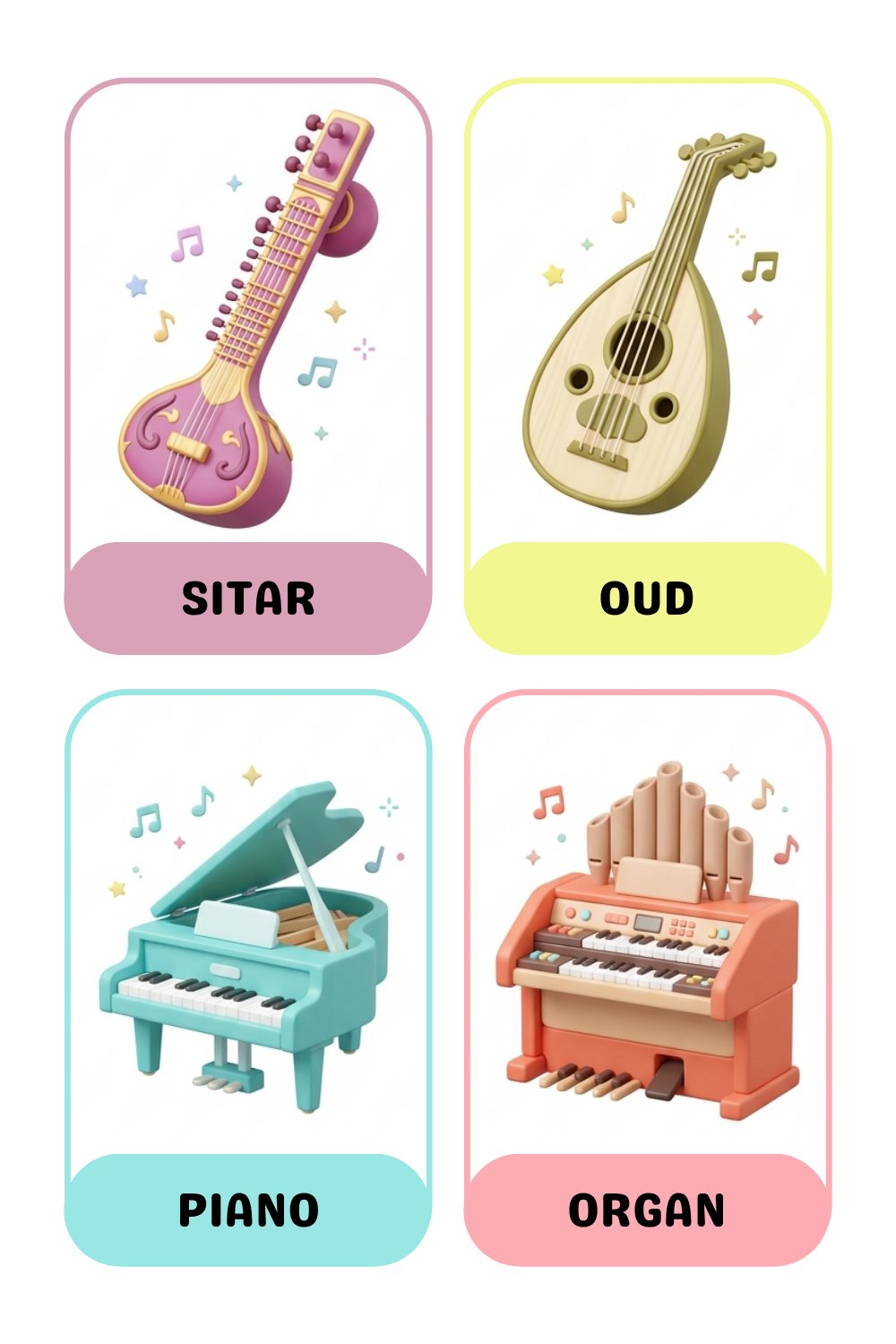
- Sitar – The sitar is a traditional Indian string instrument with a long neck. It has many strings that create peaceful melodies. It is often used in classical Indian music. The instrument is known for its beautiful design and cultural heritage.
- Oud – Oud is a stringed musical instrument that has existed in the Middle East for ages. Its body has been made round for producing smooth music. The musical instrument is widely used in making soothing music. It has gained immense popularity, especially among Arabs and Turks.
- Piano – The piano is a keyboard instrument with black and white keys that are pressed using fingers. It can play both melody and rhythm at the same time. No wonder it is a versatile instrument in the music industry. Children often enjoy learning songs and simple tunes on the piano.
- Organ – The organ is a large keyboard instrument that produces grand and powerful sounds. It is commonly found in churches, concert halls, and special performances. The organ can fill a large room with music. It is also known for its strong and majestic notes.
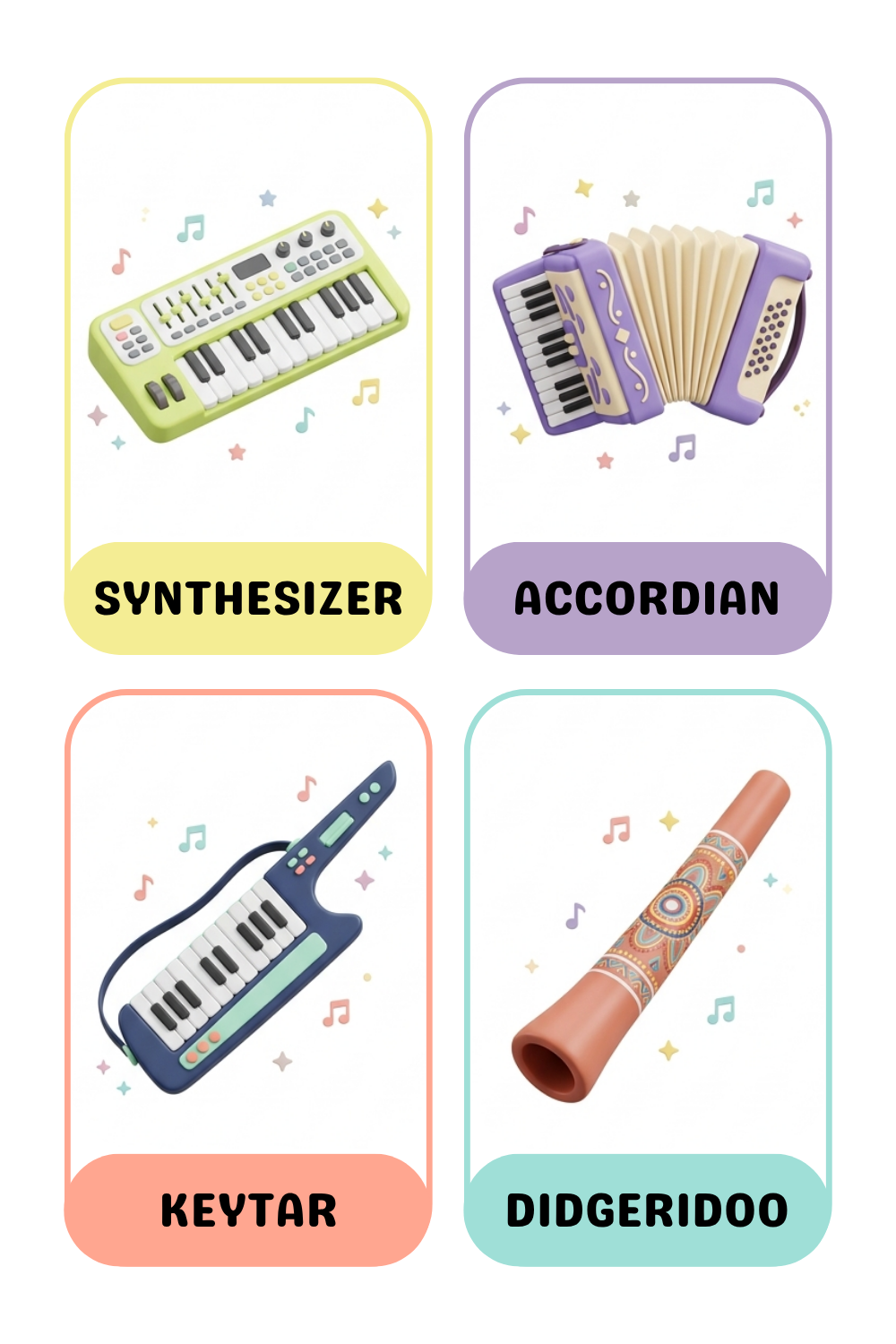
- Synthesizer – The synthesizer is an electronic instrument that can create many different digital sounds and effects. It can sound like drums, pianos, or even space-like noises. This instrument is widely used in pop, dance, and electronic music.
- Accordion – The accordion is a fun musical instrument that makes sound when it is stretched and squeezed. Musicians press keys or buttons while moving the instrument back and forth. Its lively music is often heard in folk and traditional celebrations.
- Keytar – The keytar is a keyboard instrument designed to be worn like a guitar. It allows musicians to walk around and perform freely while playing music. Its stylish look makes it popular in stage performances and pop concerts.
- Didgeridoo – The didgeridoo is a long wind instrument traditionally played by Indigenous Australians. It creates deep humming sounds when air is blown through it. This ancient instrument is known for its extraordinary sound.
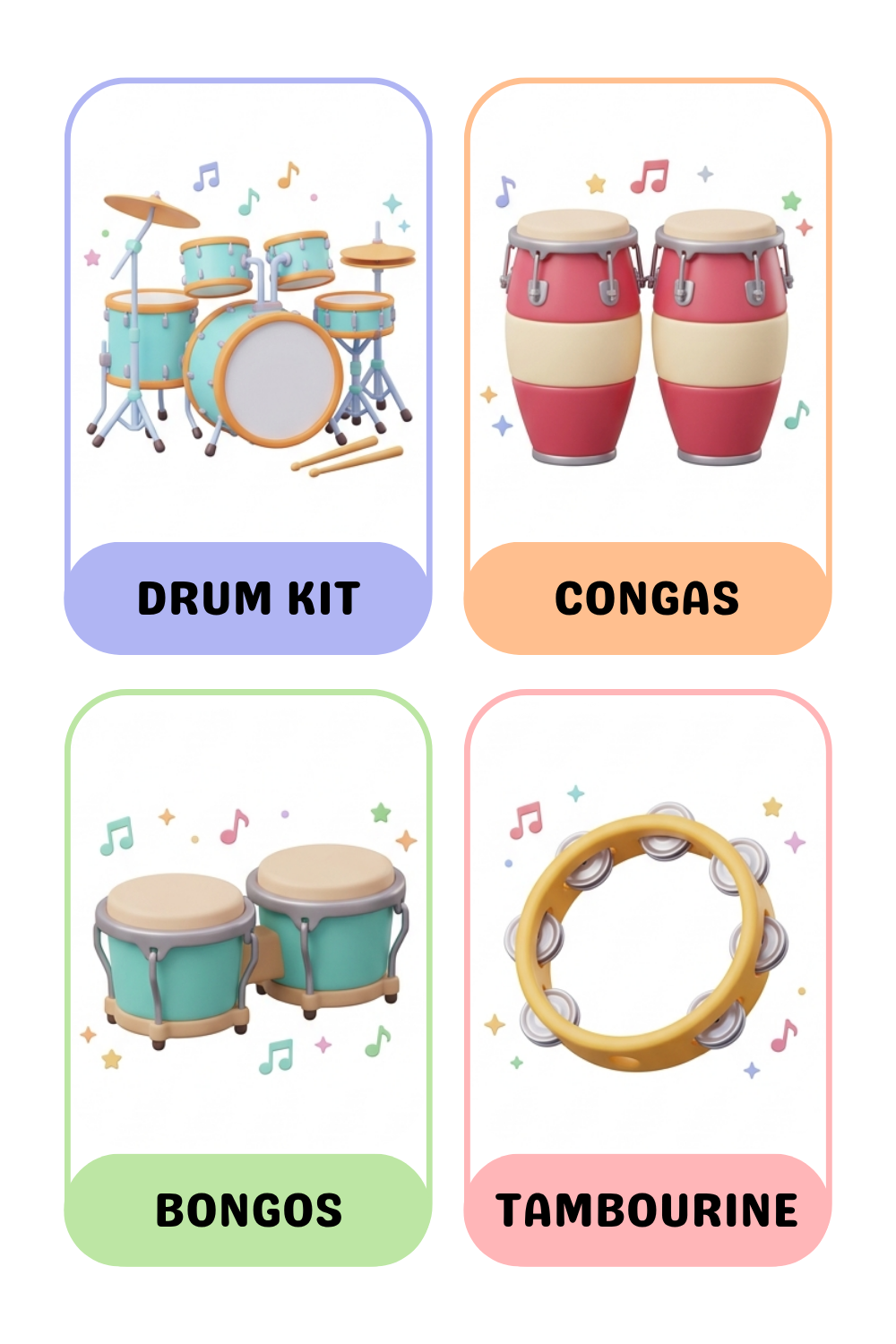
- Drum Kit – The drum kit is a group of drums and cymbals played together using drumsticks. It creates strong beats and rhythms that help keep music exciting and energetic. Drum kits are commonly used in rock, pop, and jazz bands.
- Congas – Congas are tall hand drums that produce warm and rhythmic sounds. They are played using hands instead of sticks. Also, they are commonly used in Latin and dance music. Their lively beats make people want to move and dance.
- Bongos – Bongos are small connected drums played with fingers and palms. They create quick and playful rhythms. One can often hear them in tropical and Latin music. Their compact size and fun sounds make them easy for children to enjoy.
- Tambourine – This is a small handheld instrument with tiny metal jingles around its frame. It creates cheerful shaking and tapping sounds. The tambourine is simple to play and very popular in classroom music activities.
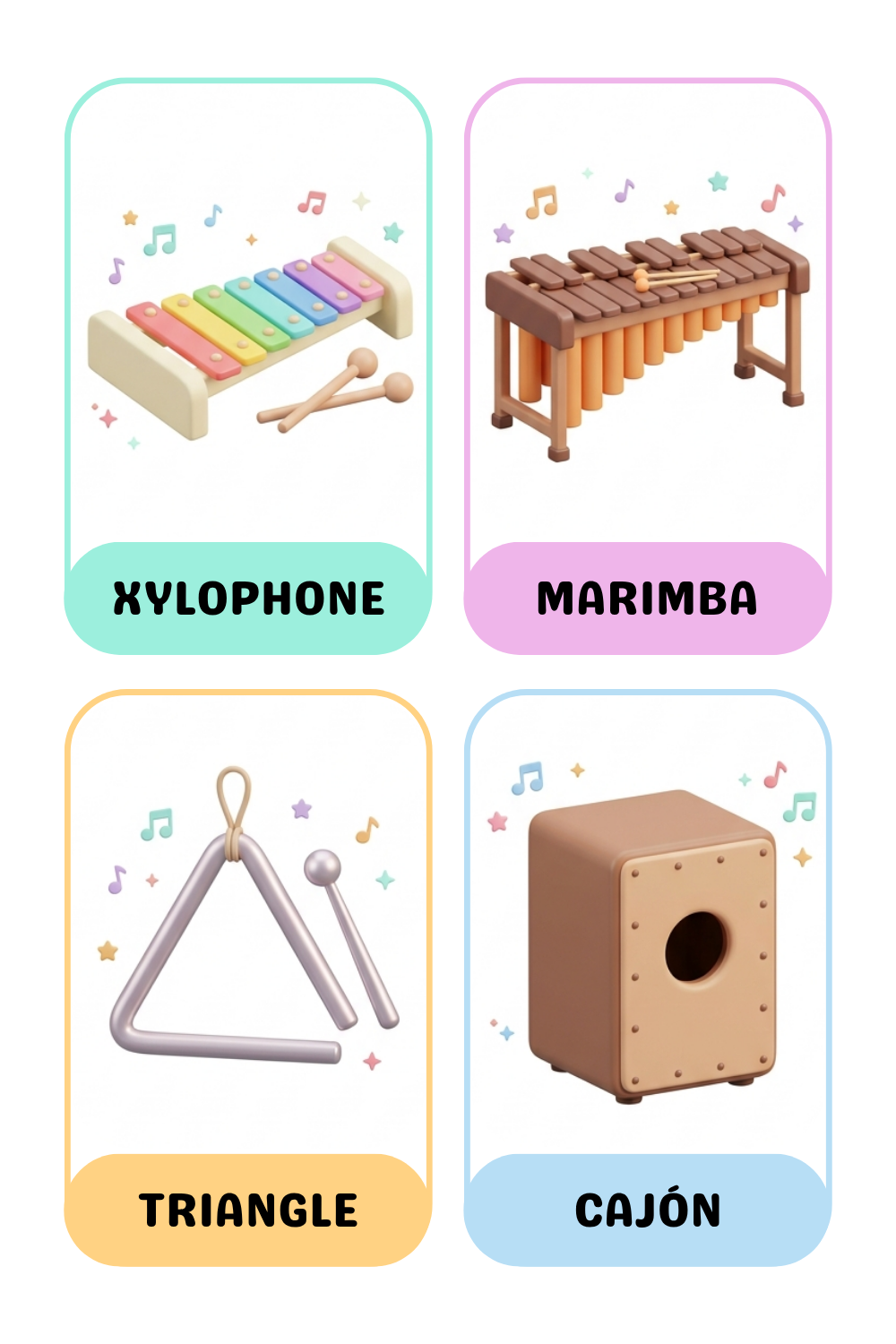
- Xylophone – The xylophone is made with wooden bars of different sizes. Players use mallets to tap the bars and create cheerful sounds. It is a fun way for children to learn rhythm and melody.
- Marimba – The marimba is a large instrument with wooden bars played using mallets. It produces warm and rich sounds that can be soft or lively. It is often used to play beautiful melodies.
- Triangle – The triangle is a small metal instrument shaped like a triangle. It is struck with a metal beater to create a ringing sound. It adds sparkle and excitement to music.
- Cajon – It is a box-shaped drum that is played with the hands. Different parts of the box create different sounds. It is generally used to keep a steady rhythm and can be seen in music bands.
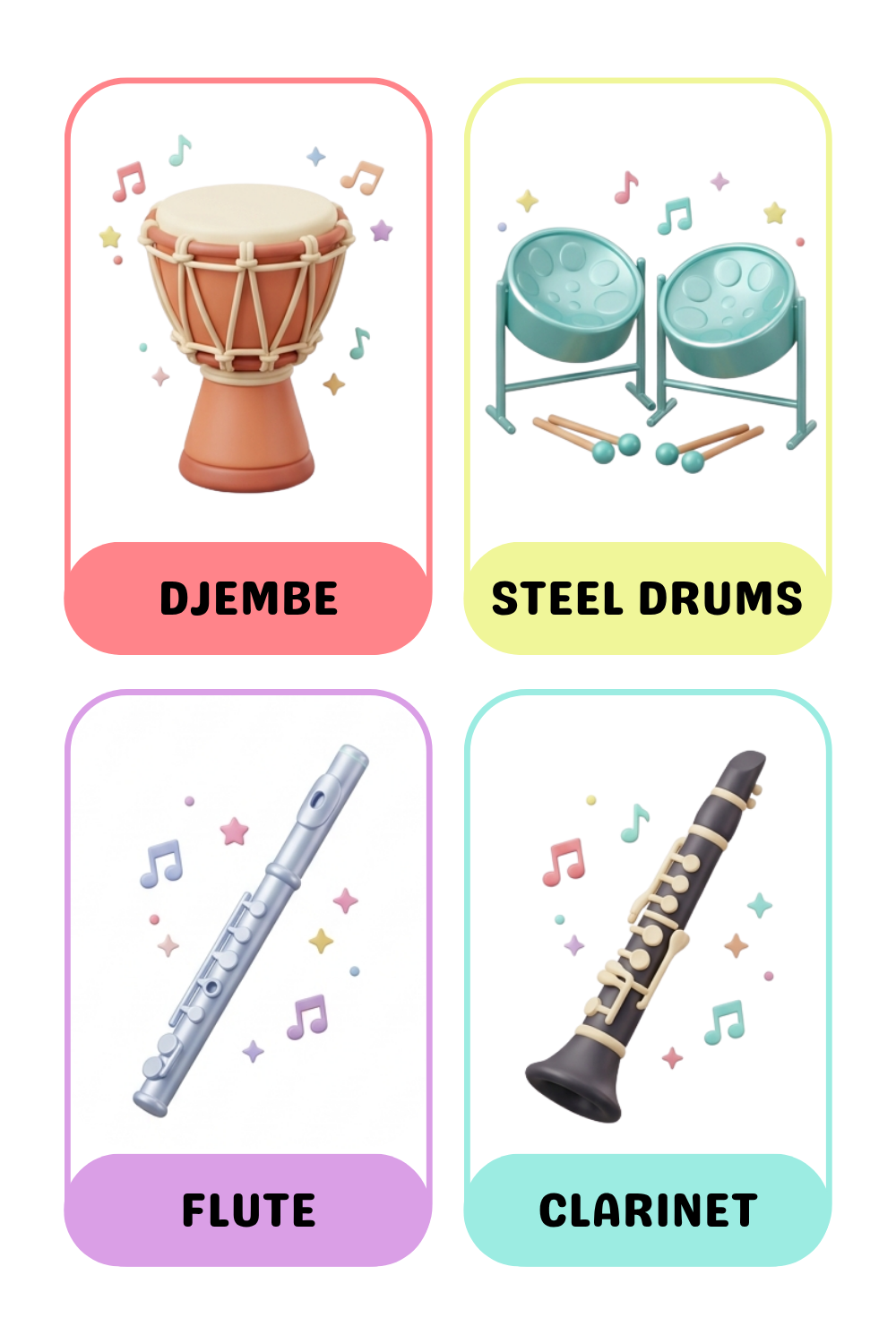
- Djembe – The djembe is a hand drum from Africa. It can make both deep and high-pitched sounds. It brings energy and excitement to music.
- Steel Drums – They are made from metal barrels and create bright sounds. They are often linked to tropical island music. Their unique tones make music feel festive.
- Flute – The flute is a slender instrument played by blowing air across an opening. It produces soft and beautiful sounds. The flute is used in many types of music and can also be played by children.
- Clarinet – It is a woodwind instrument with a reed and several keys. The instrument creates smooth and expressive sounds. So, it is popular in classical and jazz music.
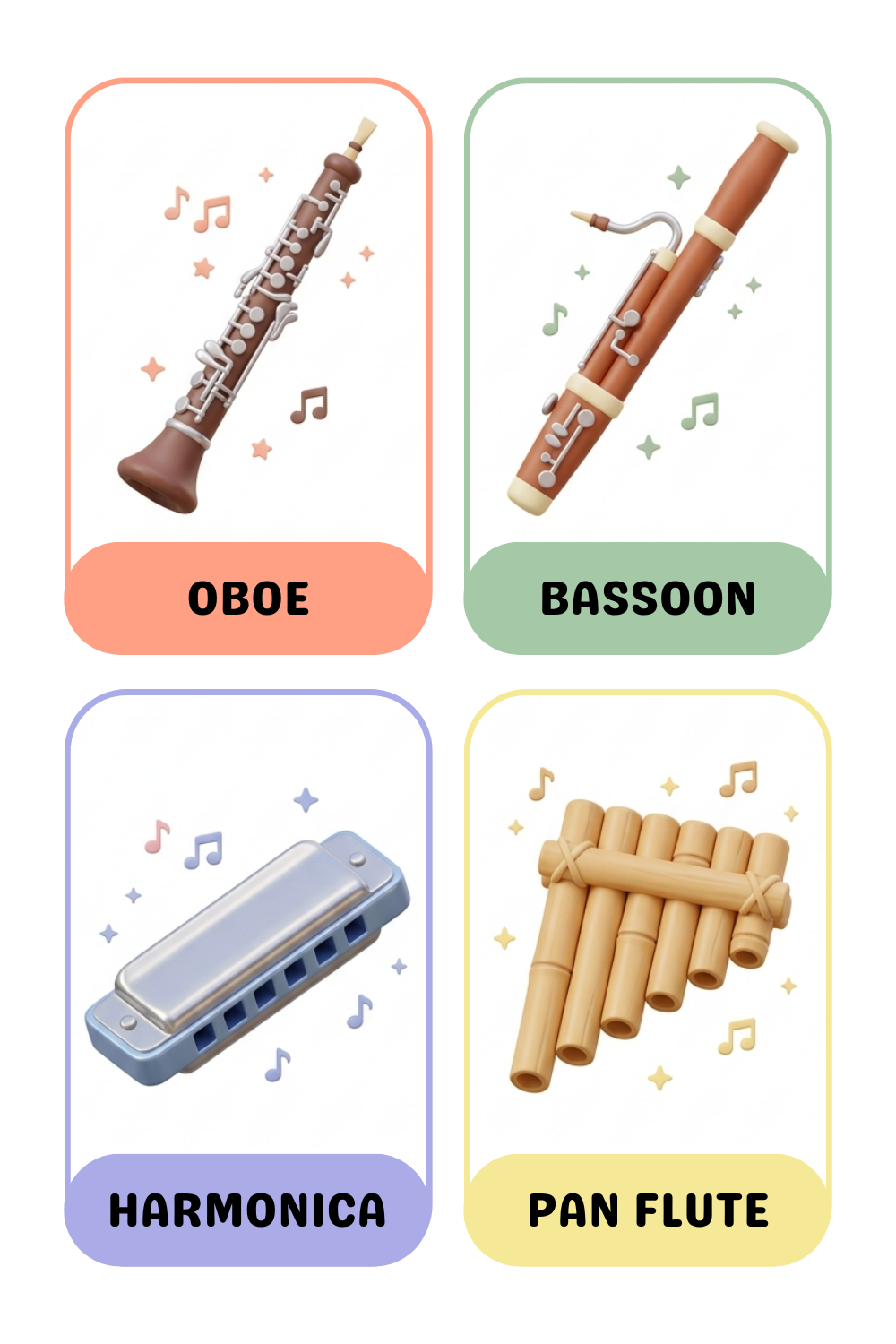
- Oboe – The oboe is a woodwind instrument that uses a double reed. It produces a clear and bright sound. Children can easily spot this one in orchestras.
- Bassoon – This one is a large woodwind instrument with a deep and rich tone. It adds warmth to musical performances. Similar to the oboe, it is an important part of many orchestras.
- Harmonica – It is a small instrument played by blowing and drawing air through holes. The instrument creates lively tunes and is easy to carry. Many beginners enjoy learning it.
- Pan Flute – The pan flute is made of tubes of different lengths joined together. Players blow across the tops of the tubes to create gentle sounds. It is one of the oldest musical instruments.
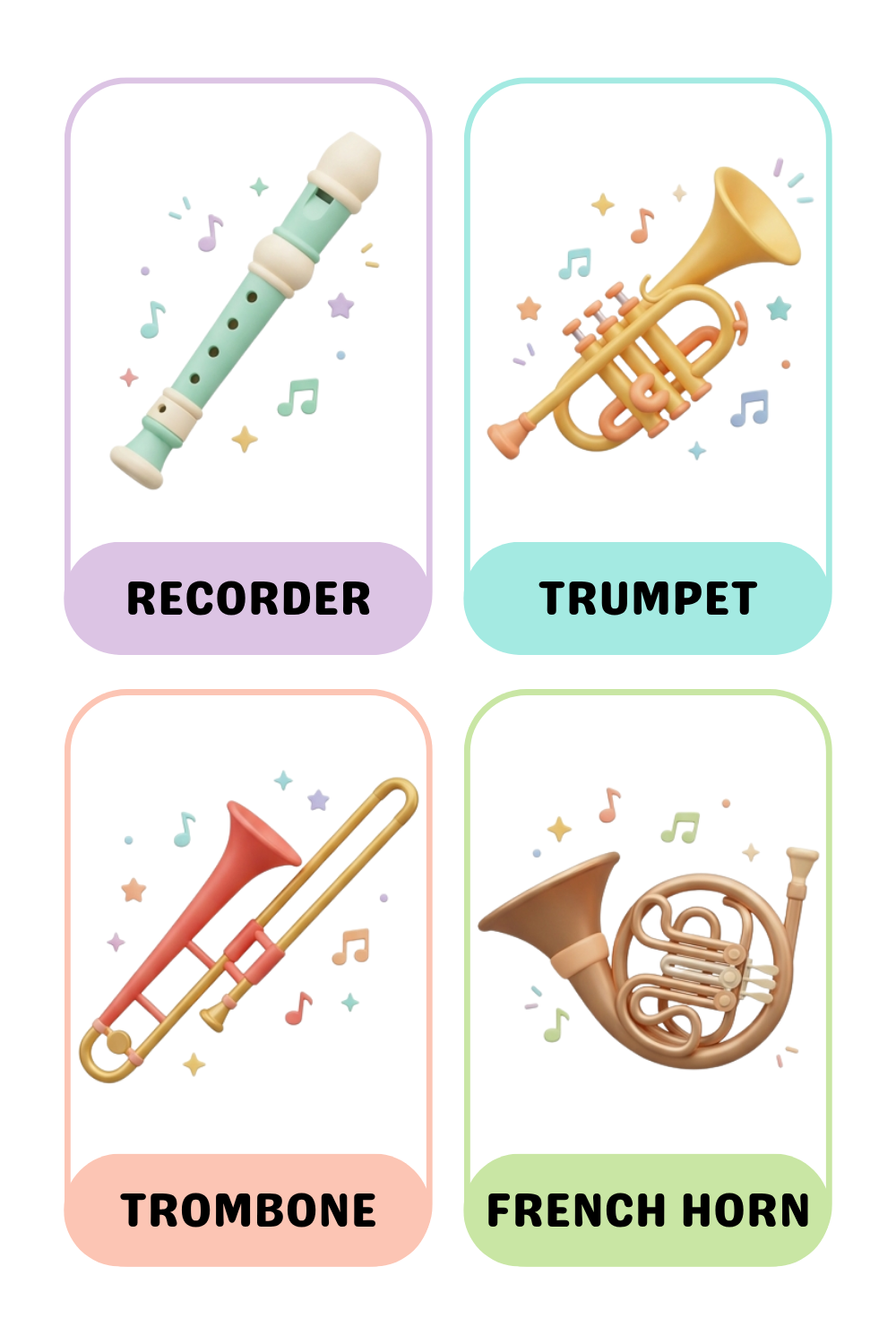
- Recorder – This is a simple wind instrument often used by children. It is played by blowing into a mouthpiece and covering holes with the fingers. Children can create clear and pleasant sounds using it.
- Trumpet – The trumpet is a brass instrument known for its bright and powerful sound. Players use their lips and valves to create music. It is generally used for creating exciting melodies.
- Trombone – This one is a brass instrument with a long slide. It can produce both powerful and smooth sounds. Trombone is commonly used in bands and orchestras.
- French Horn – The French horn is a brass instrument with a coiled shape. It creates warm and smooth sounds that blend well with other instruments. Hence, it can be easily spotted in orchestras.
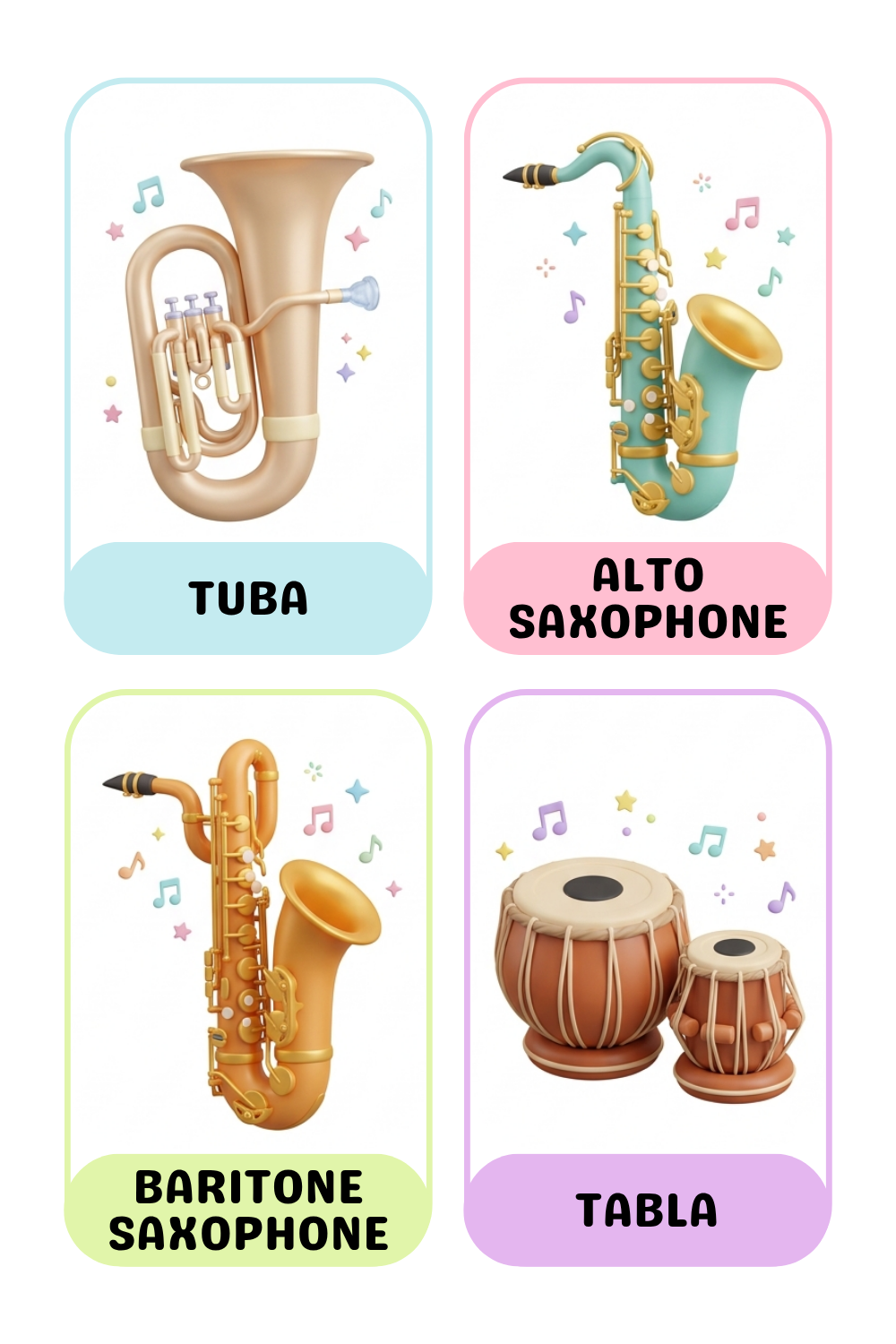
- Tuba – The tuba is the largest brass instrument. It produces deep, low sounds that support the music. The instrument plays an important role in large music bands.
- Alto Saxophone – It is a curved woodwind instrument with a warm and expressive tone. Do you know you can often hear it in jazz and band music? Many musicians enjoy its smooth sound.
- Baritone Saxophone – The baritone saxophone is a large saxophone with a deep, rich tone. It adds strength and depth to music. You can commonly spot it in bands or ensembles.
- Tabla – The tabla is a pair of traditional Indian drums played with the hands and fingers. It creates a variety of rhythms and sounds. The instrument tabla is widely used in Indian classical music and different festivals.
Benefits of Introducing Children to Musical Instruments
Introducing children to musical instruments at an early age can open the door to new experiences. It encourages them to explore sounds, rhythms, and self-expression. Before you use flashcards, let’s understand how children can benefit from them.
1. Higher IQ Scores
Research shows that children who take music lessons (even for a year) tend to have higher IQ scores than those who don’t. Musical training sharpens the brain’s ability to distinguish between sounds. So, it directly improves reading ability, phonological awareness, and language processing.
2. Better Emotional Regulation
Playing a musical instrument can be a wonderful way to manage emotions. The act of creating music helps reduce stress, lift your mood, and promote a sense of calm. No matter if children play it only for minutes of practice or a longer session, it is a healthy way for self-expression.
3. Promotes Social Cohesion
Playing musical instruments together, or “jamming together” strengthens social bonds. It also teaches cooperation and builds a teamwork mindset. Children also learn to participate in groups in a band setting.
4. Teaches Patience and Perseverance
Learning a musical instrument isn’t something that happens overnight. It takes patience, practice, and the willingness to make mistakes along the way. Every small improvement comes with time and effort. It teaches an important lesson that meaningful achievements rarely happen instantly.
Ways to Inspire a Musical Journey in Children
- Show them YouTube videos of the instrument or take them to live instrument-playing sessions. If possible, let them speak to kids who play any instrument. If the interest persists for weeks, it is worth investing in!
- Start with a rental instrument before making any heavy investments and find a recognized teacher to help your child.
- Embrace the messy phase when their fingers will hurt from the guitar strings, the drums’ noise will be too loud, or the piano recital will be too squeaky. They are just experimenting!
- Keep practice sessions short and learn to embrace progress, not perfection. At this stage, we are not raising professional musicians but developing their lifelong relationship with music.
Winding Up
Musical instruments flashcards open the world of music and rhythm in the lives of little learners. They learn to recognize tones, usage of instruments, and where they are used. Not every child is musically gifted. So, they may put the instrument to rest.
However, the joy and creativity music brings stays forever with them. If that happens, here are our printable yoga flashcards to help them experiment with mindfulness, till they find their true calling in life.