Your toddler bounces off the walls at 7 AM while you’re still trying to remember where you left your coffee. They point at everything, grunt at half the stuff they want, and throw themselves on the floor when you don’t understand what “dat” means. They know what they want to do. They just can’t tell you yet.
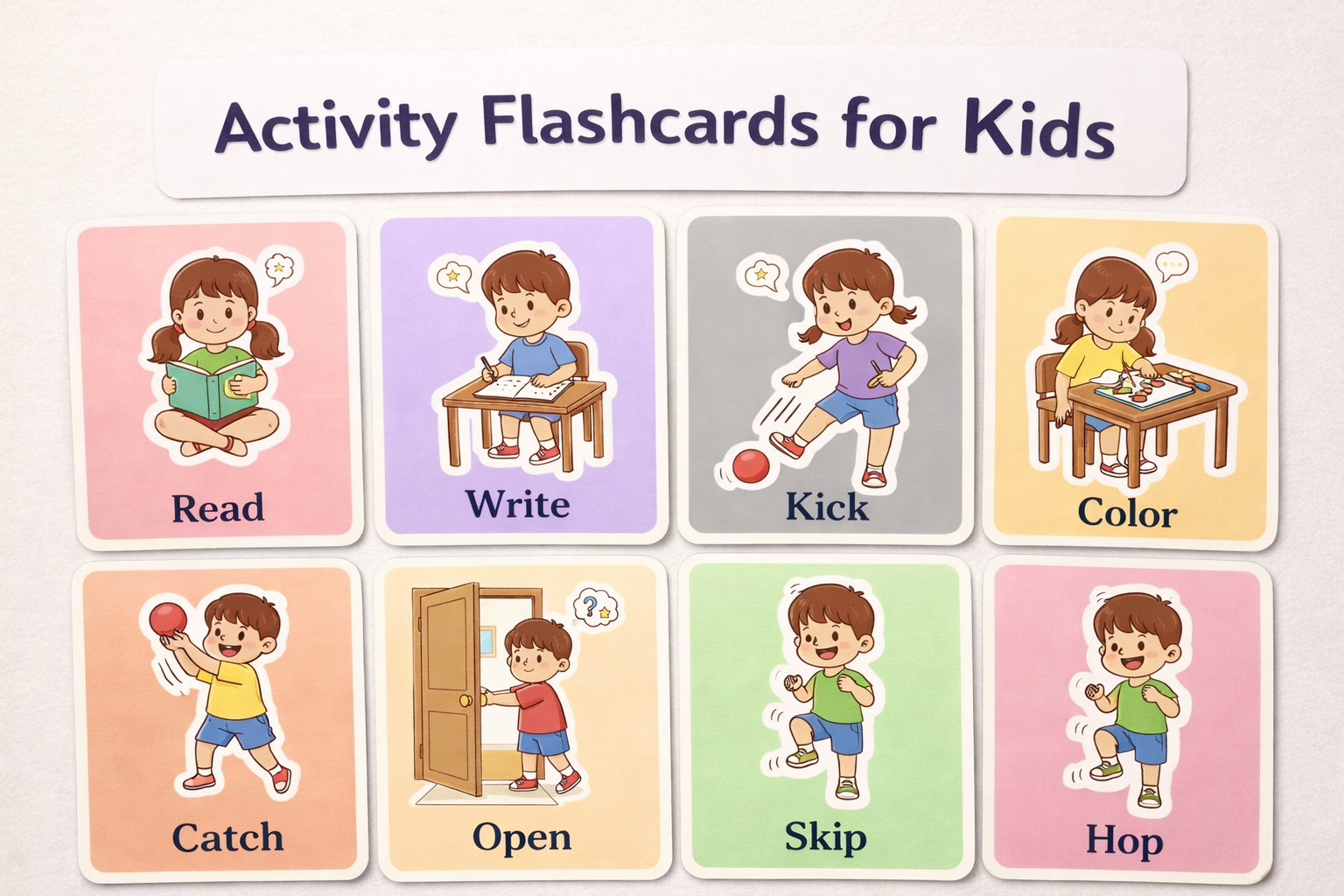
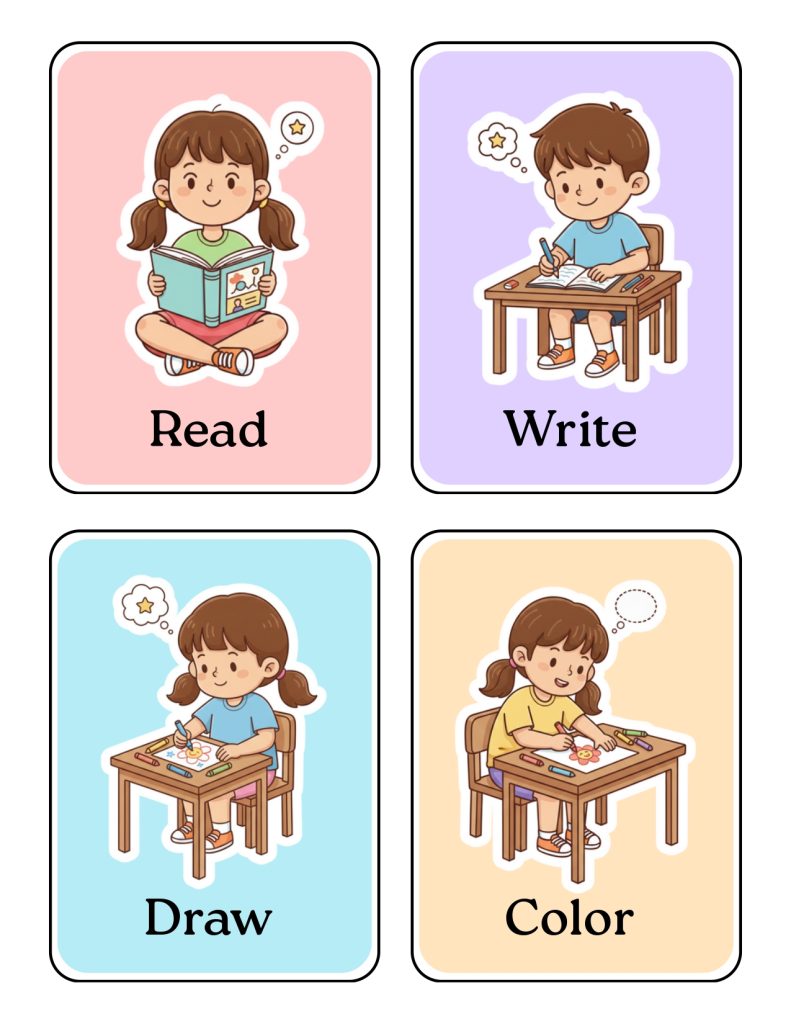
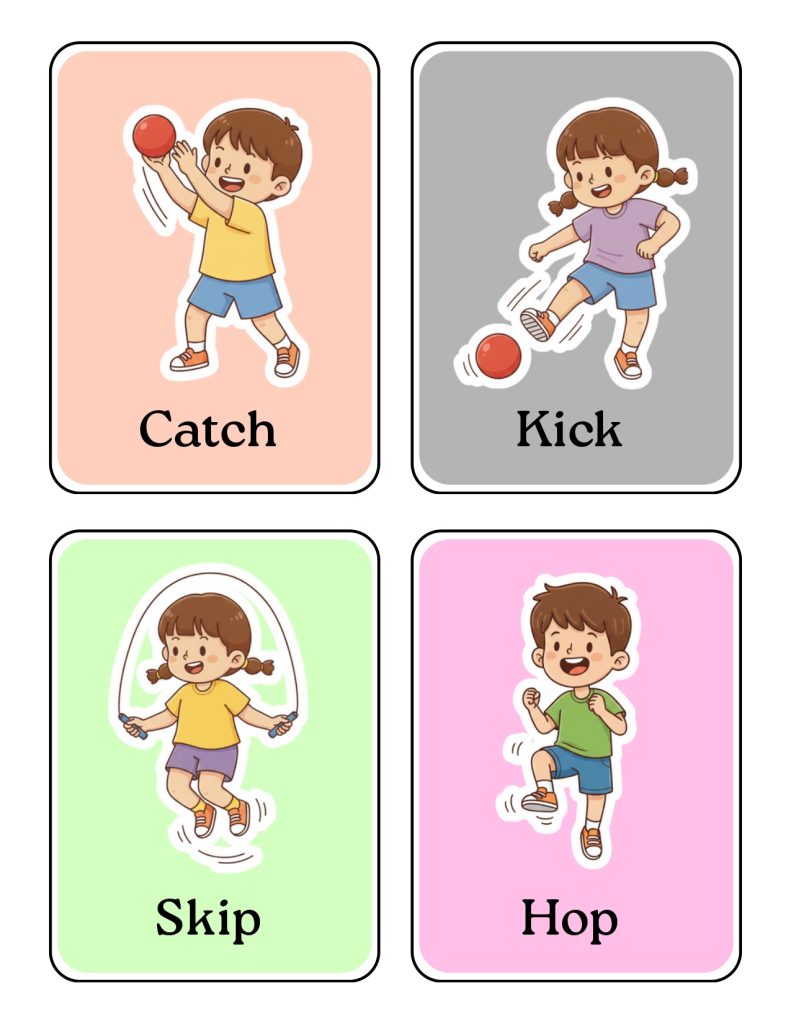
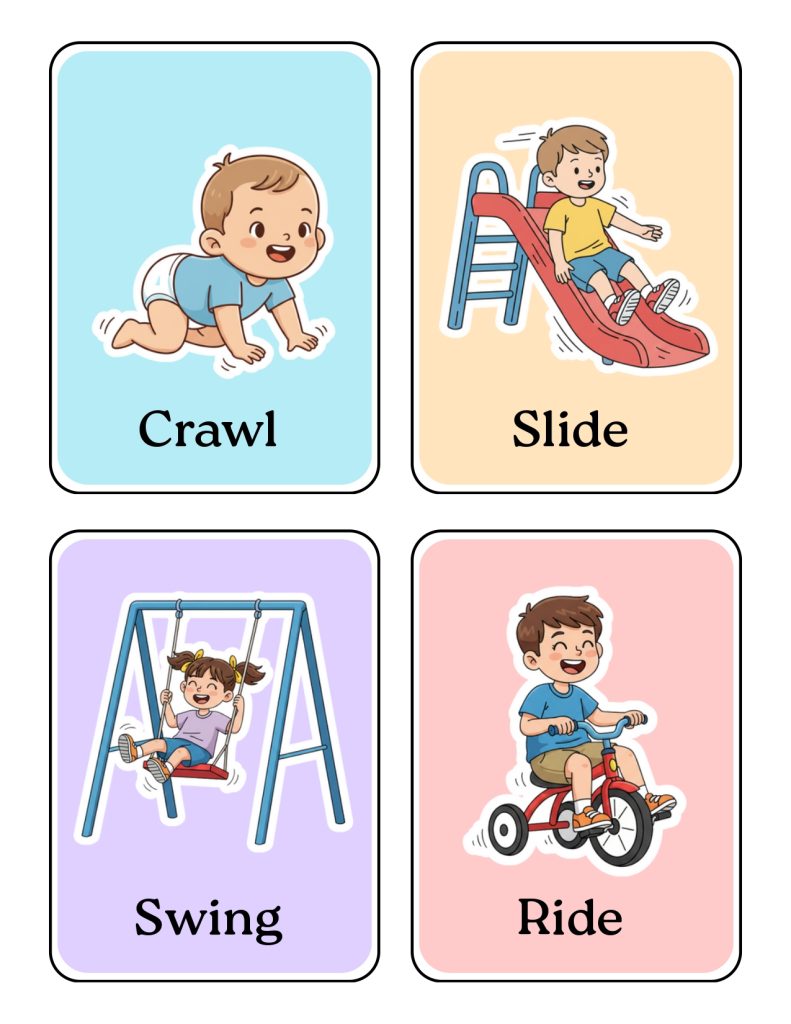
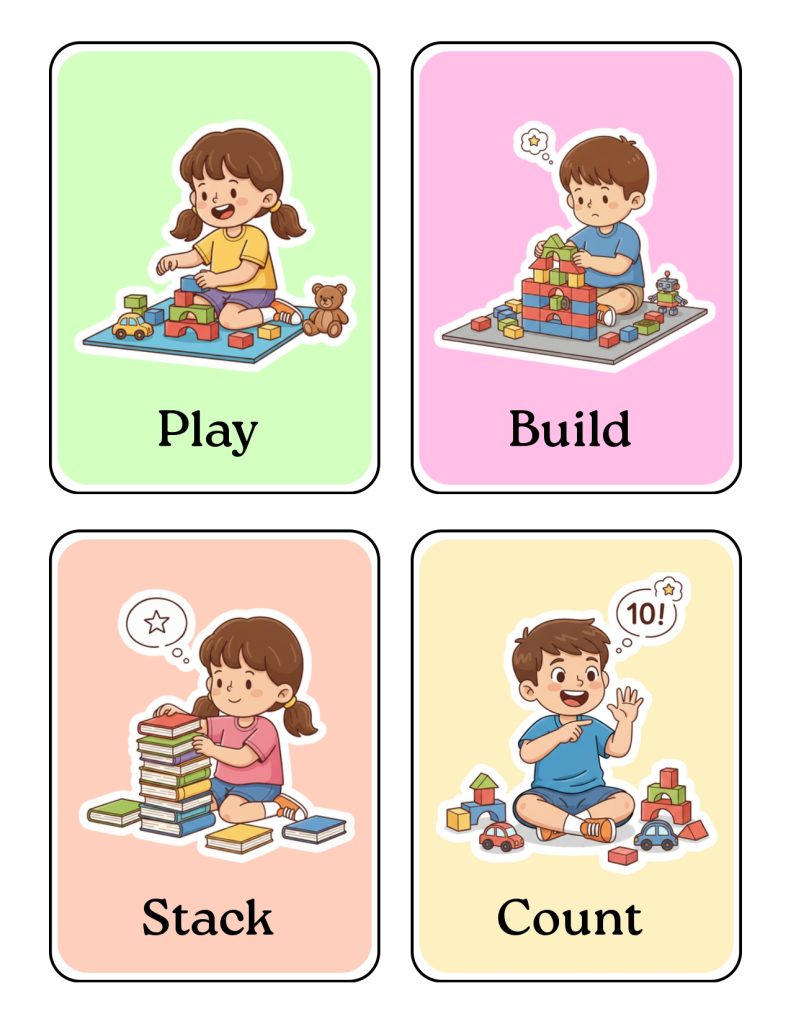
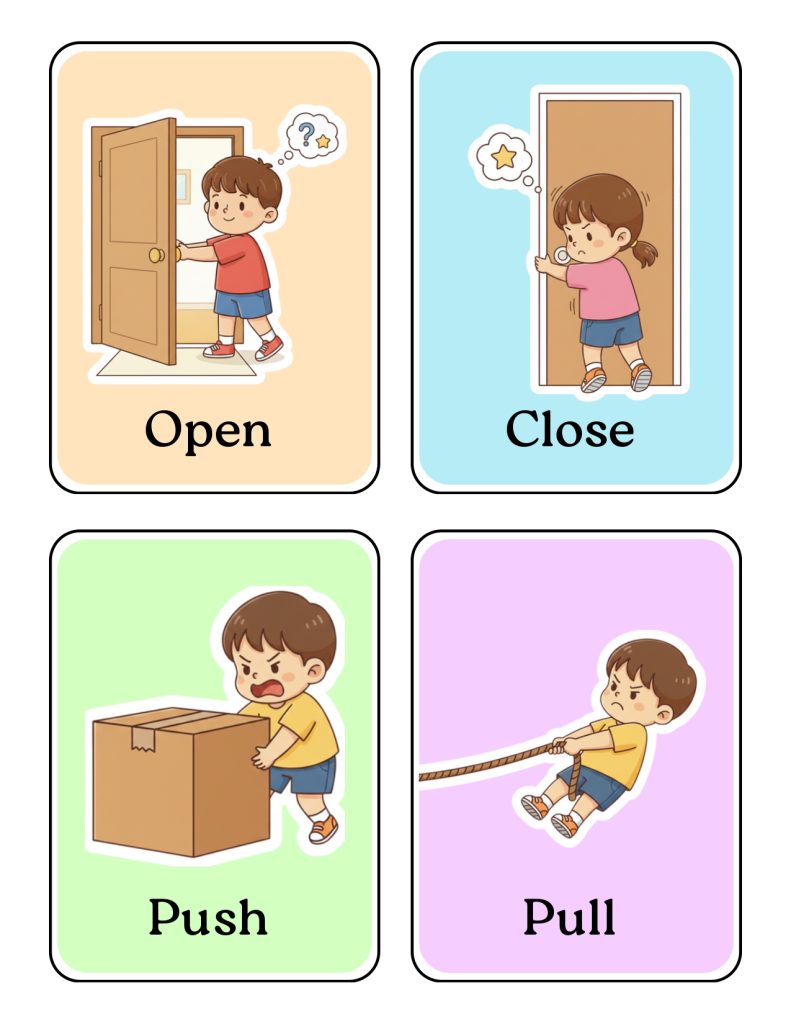
These Activity Flashcards give kids the words for what their bodies already know how to do. Thirty-two action cards showing kids running, jumping, eating, sleeping, and doing all the everyday movements that fill their days. Clear pictures of actions they recognize instantly because they do them constantly.
When children can name what they’re doing, frustration drops. Instead of pointing and whining, they can show you the card or say the word. Oh, you want to go outside and swing. You’re asking to paint, not pointing randomly at the art supply cabinet. Words for actions turn chaos into communication.
Images



Actions Kids Do Every Single Day
The cards cover movements and activities that actually happen in regular life. Not obscure verbs nobody uses. These are the actions filling up childhood from morning until bedtime. The running around the backyard. The jumping off couches despite being told not to. The sitting for exactly twelve seconds before getting up again.
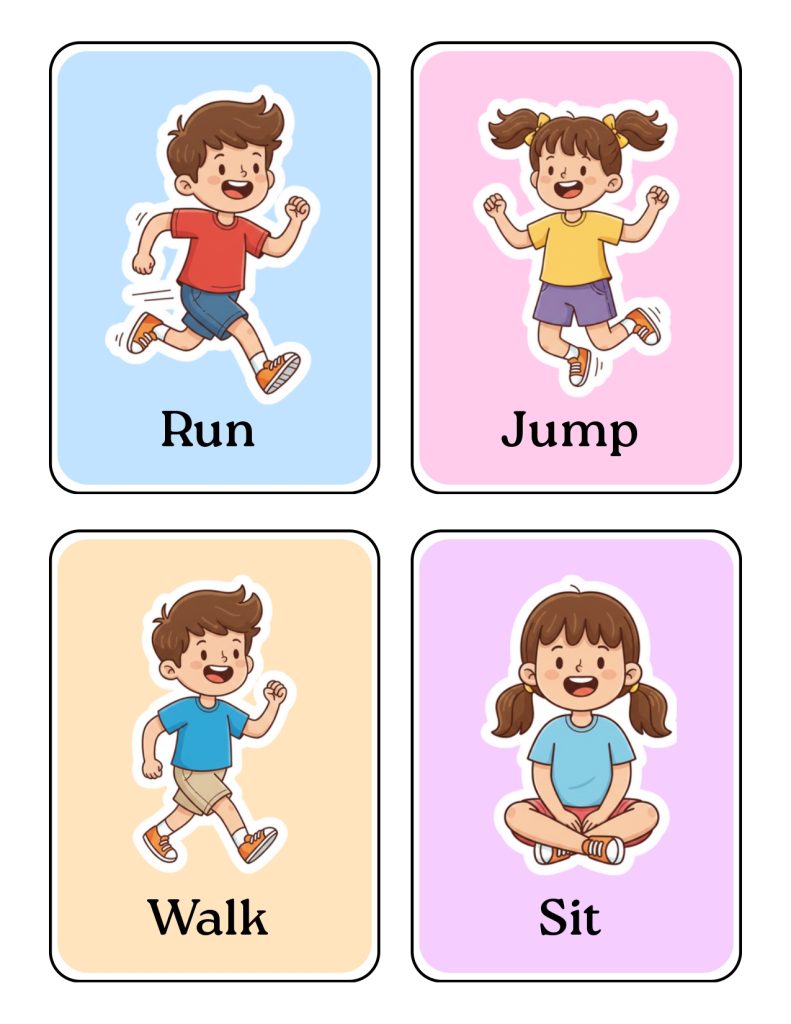
- Run – Fast movement with both feet leaving the ground. Every kid runs everywhere instead of walking like a normal person. They run to the car, through the house, away from bedtime. Constant motion that burns energy and occasionally ends in scraped knees.
- Jump – Launching off the ground with both feet. Kids jump off stairs, beds, couches, and anything else that gives them height. They jump in puddles, on trampolines, over cracks in sidewalks. The world is just one big jumping opportunity.
- Walk – Slow, controlled steps from one place to another. Kids hate walking when they could be running, but they walk when holding hands in parking lots or when they’re too tired to run anymore. Walking is what happens between running sessions.
- Sit – Putting your bottom on a chair, floor, or any surface. Kids sit for meals, stories, and car rides. They sit in shopping carts and at desks. Sitting still for more than three minutes counts as a miracle in most households. Want to teach the difference between sitting down and standing up? Grab those Opposites Flashcards and show them how opposite actions work.
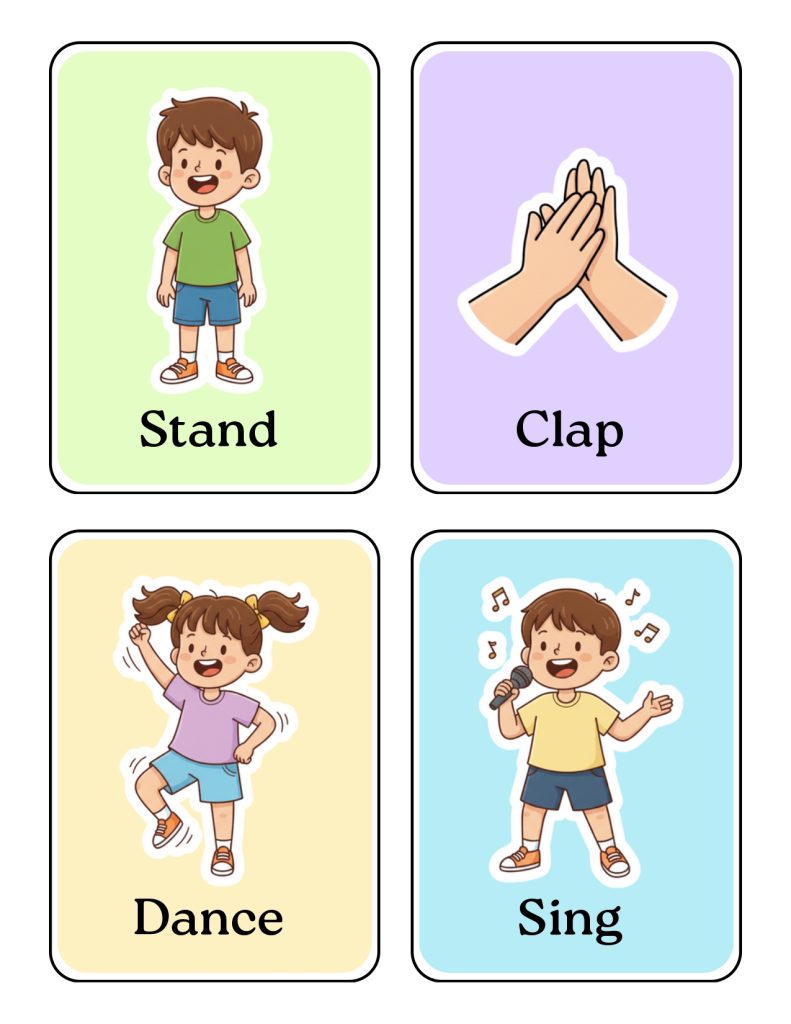
- Stand – Being upright on two feet without moving. Kids stand in line, stand to reach high shelves, and stand when they’re being measured. Standing happens before running starts and after sitting ends.
- Clap – Smacking hands together to make noise. Kids clap when they’re happy, when they hear music, when someone does something cool. Clapping happens at birthday parties, during songs, and randomly for no reason except it makes a satisfying sound.
- Dance – Moving your body to music or just because moving feels good. Kids dance in living rooms, grocery store aisles, and anywhere music plays. Dancing is unstructured, weird, and completely unselfconscious in the best way.
- Sing – Making musical sounds with your voice. Kids sing the alphabet, theme songs from shows, made-up songs about their day, and the same three lines of one song over and over until parents lose their minds. Singing happens in cars, bathtubs, and beds.
- Read – Looking at books and understanding the story or words. Little kids read pictures before they read actual text. They flip pages, point at pictures, and memorize favorite stories. Reading happens before naps, at bedtime, and whenever they shove a book in your lap.
- Write – Making letters, numbers, or marks on paper. Early writing looks like scribbles, then wobbly letters, then actual words. Kids write their names, notes to family members, and random letters they’re proud of forming.
- Draw – Creating pictures with crayons, markers, or pencils. Kids draw people as stick figures with huge heads. They draw houses, suns with faces, and abstract chaos, they insist is the family dog. Drawing happens at tables, on walls when unsupervised, and in coloring books.
- Color – Filling in spaces with crayons or markers. Coloring inside the lines is advanced skill most kids ignore. They color pictures in books, printouts parents give them, and occasionally furniture. Coloring keeps kids busy for blessed quiet minutes.
- Paint – Using brushes and paint to make colorful pictures. Painting is messier than coloring, which is why it happens less often and requires old clothes. Kids paint at easels, on paper taped to tables, and sometimes on themselves. The cleanup takes longer than the actual painting.
Games That Get Kids Moving
- Action Charades: Pull a card and act it out without talking. Other players guess the action. Kids love exaggerated movements, so jumping becomes giant leaps and walking becomes silly slow-motion steps. This burns energy while teaching vocabulary.
- Freeze Dance Actions: Play music and pull cards while kids dance. When music stops, everyone freezes in whatever action the card shows. Pull “sit”, and everyone freezes sitting. Pull “stand”, and everyone freezes standing. Combinesthe following directions with movement.
- Morning Routine Race: Line up cards showing the morning sequence. Brush, eat, drink, wash. Kids follow the card order, getting ready. Makes boring routines into games that they can complete independently. Add Vegetable Flashcards during breakfast to practice identifying what they’re eating.
- Outdoor Scavenger Hunt: Take action cards outside. Kids perform each action in the yard. Run around the tree. Jump over the crack. Sit on the bench. Fresh air plus vocabulary practice.
- Bedtime Countdown: Use cards to show the bedtime routine. Read, brush, drink water, sleep. Kids can see what’s coming next, reducing bedtime battles. They know sleep comes after the other activities.
- Action Sort: Separate cards into categories. All the moving actions in one pile. All the sitting-still actions in another. All the art activities in a third pile. Sorting builds categorization skills while reviewing vocabulary.
- Build a Story: Draw three random cards and create a story using those actions. Drew run, paint, and eat? Maybe someone runs to art class, paints a picture, then eats lunch. Stories make actions memorable.
Getting Your Activity Flashcards Ready
Want kids who can tell you what they want to do instead of melting down when you don’t read their minds? These flashcards build the action vocabulary that reduces frustration and increases independence.
Download the PDF and print on regular settings. Portrait orientation on standard paper works perfectly. Color printing helps kids recognize actions faster through visual clarity and detail.
Use cardstock for durability since these cards will get handled constantly. Laminate them to survive spills, sticky hands, and being shoved in bags for car trips. Cut along borders and you have thirty-two action cards ready for daily use.
Keep one set accessible at home for morning and bedtime routines. Add another set in the diaper bag for restaurant waits and doctor’s office visits.
Start building the vocabulary that helps kids communicate what they want and understand what you’re asking them to do. These flashcards turn physical energy into language skills that make daily life smoother for everyone.