Your three-year-old spends all day asking “Why?” about everything. Why is the sun hot? Why is ice cold? Why are some people tall and others short? Kids notice opposites everywhere because that’s how their brains make sense of the world.
These Opposites Flashcards work with that natural curiosity instead of against it. Sixteen cards showing clear opposites that kids see every day. No confusing abstract concepts or weird cartoon characters. Just simple, real things that make sense.
When your child learns that hot means something because cold exists, they’re not just memorizing words. They’re figuring out how language actually works. How things relate to each other. How to describe what they see with words that mean something.
Images



What Makes These Cards Different
Most flashcards try to teach fifty words at once. Kids get overwhelmed and give up. These focus on eight pairs (sixteen cards) of opposites that children actually encounter daily. Each pair shows something they can touch, feel, or experience in their own life.
The pictures aren’t random cartoon nonsense. They show real situations kids recognize. A tall person and a short person. A campfire and an ice cube. A full toy box and an empty one. Things that make immediate sense without explanation.
- Tall and Short shows two people with an obvious height difference. Kids see this at school, at home, everywhere they go. They understand that height is different for everyone.
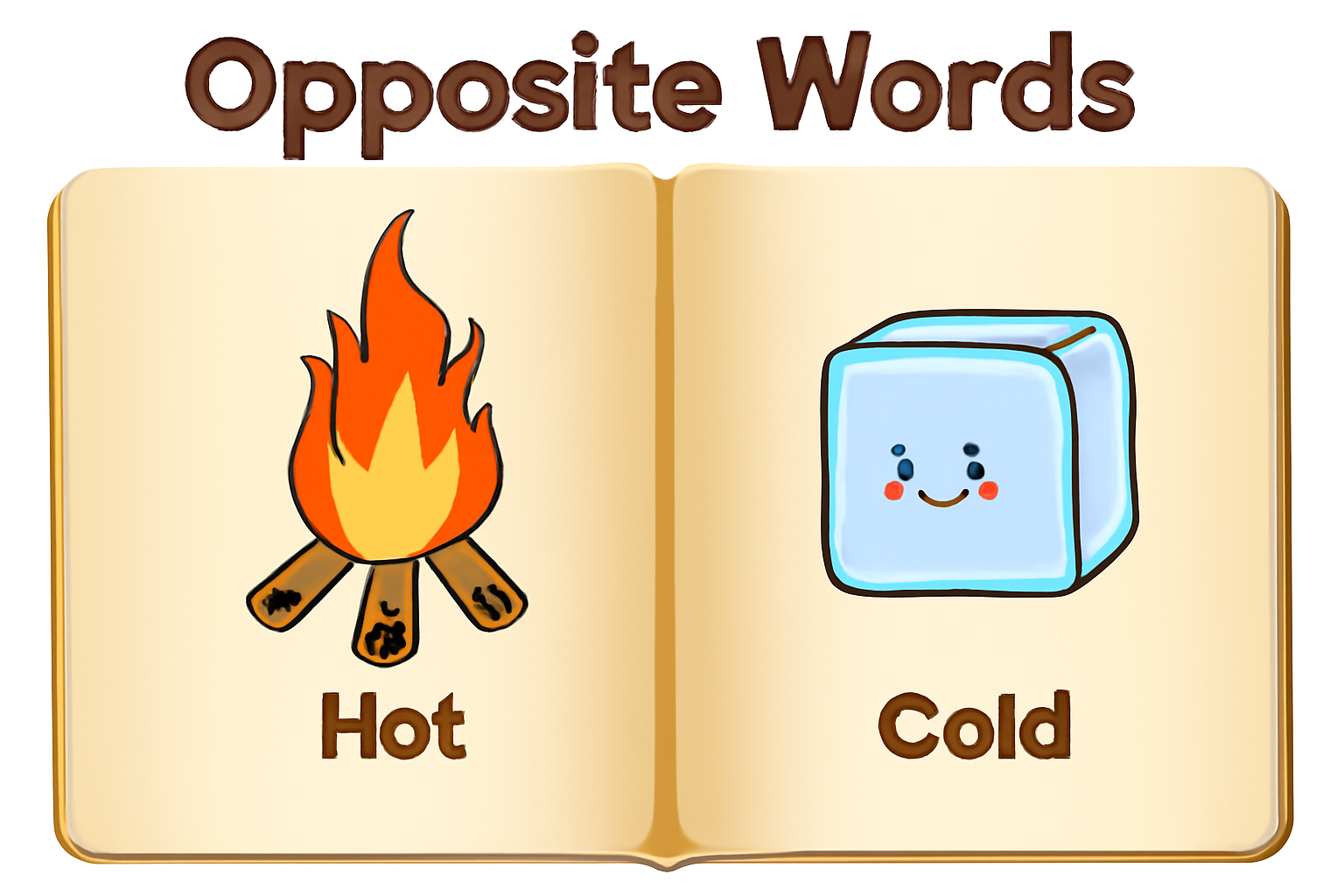
- Hot and Cold uses fire and ice because kids feel temperature in their bodies. They remember touching something warm from the stove or something freezing from the freezer.
- Good and Bad compares a perfect apple with a worm-eaten one. Every kid knows the disappointment of biting into a gross apple and the happiness of a crisp, sweet one.
- Left and Right shows people pointing in opposite directions. Kids need to learn this for reading, writing, sports, and just getting around.
- Full and Empty uses boxes because kids know what it feels like when their toy box is overflowing versus completely empty.
- Big and Small compares balls of totally different sizes. The difference is so obvious that kids get it instantly.
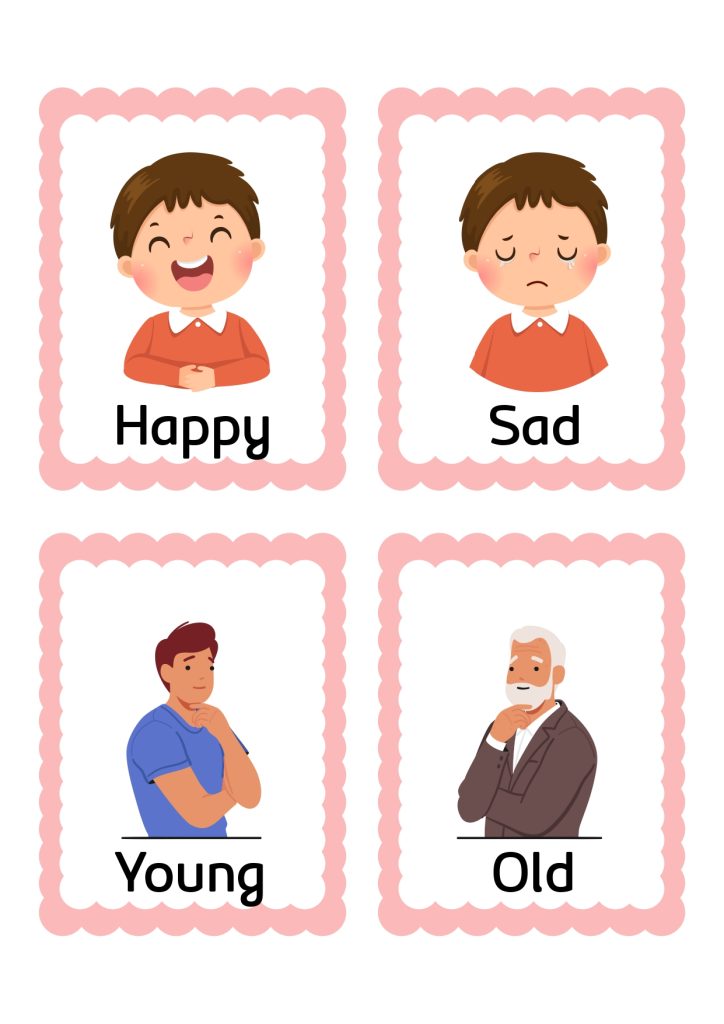
- Happy and Sad features kids’ faces showing real emotions. Children read faces naturally, so these help them name what they see and feel. For deeper emotional vocabulary, explore our Emotions Flashcards for Kids.
- Young and Old shows different ages. Kids understand that people grow up and get older, and this helps them see where they fit.
- Clean and Dirty uses shirts because every parent knows the battle of keeping kids’ clothes clean. Kids understand this from daily experience.
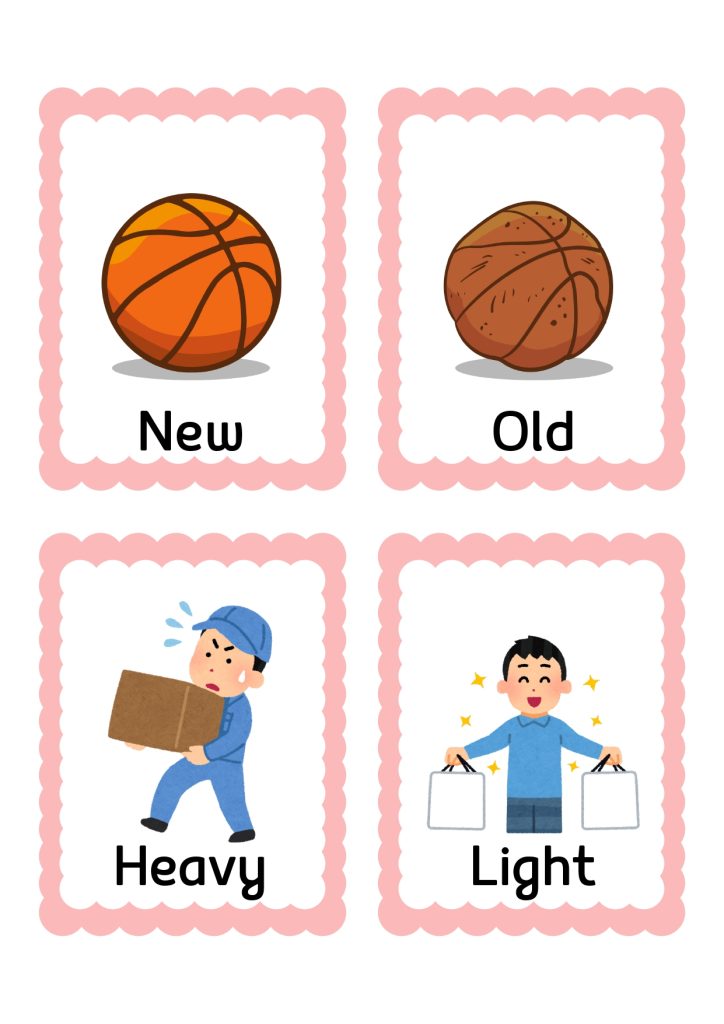
- New and Old compares basketballs in different conditions. Kids can see how things change with time and use.
- Heavy and Light shows someone struggling with weight versus someone easily carrying something light. Kids feel this when they try to help carry groceries or move furniture.
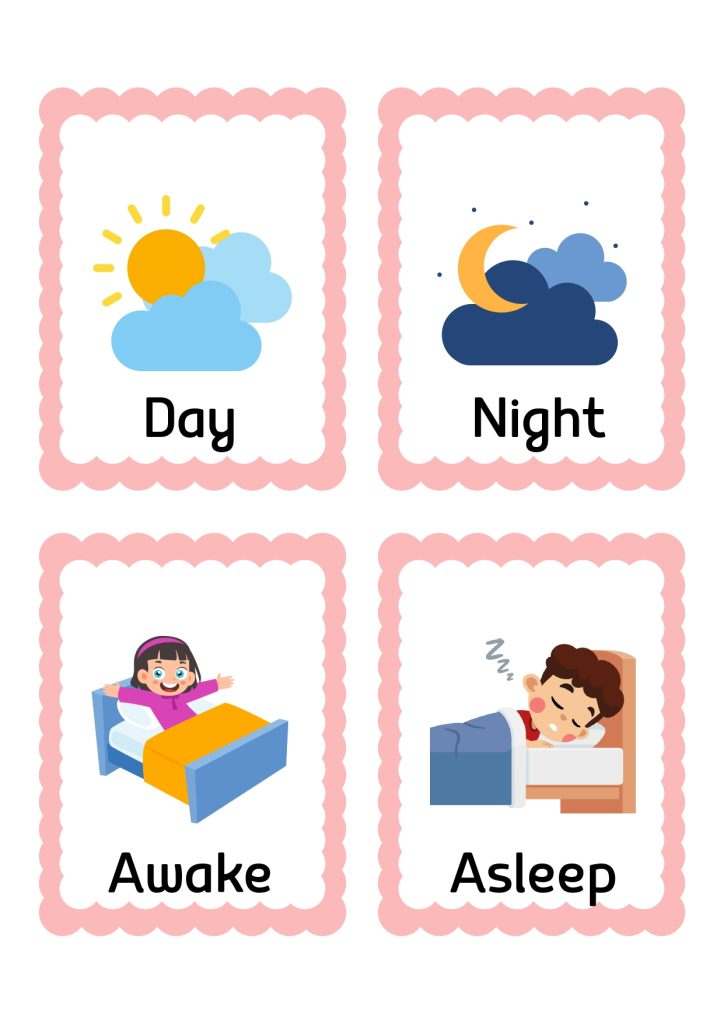
- Day and Night uses sun and moon because kids see this cycle every single day. It helps them understand time and routine.
- Awake and Asleep shows active versus resting states. Every child knows the feeling of being wide awake and the drowsiness of bedtime.
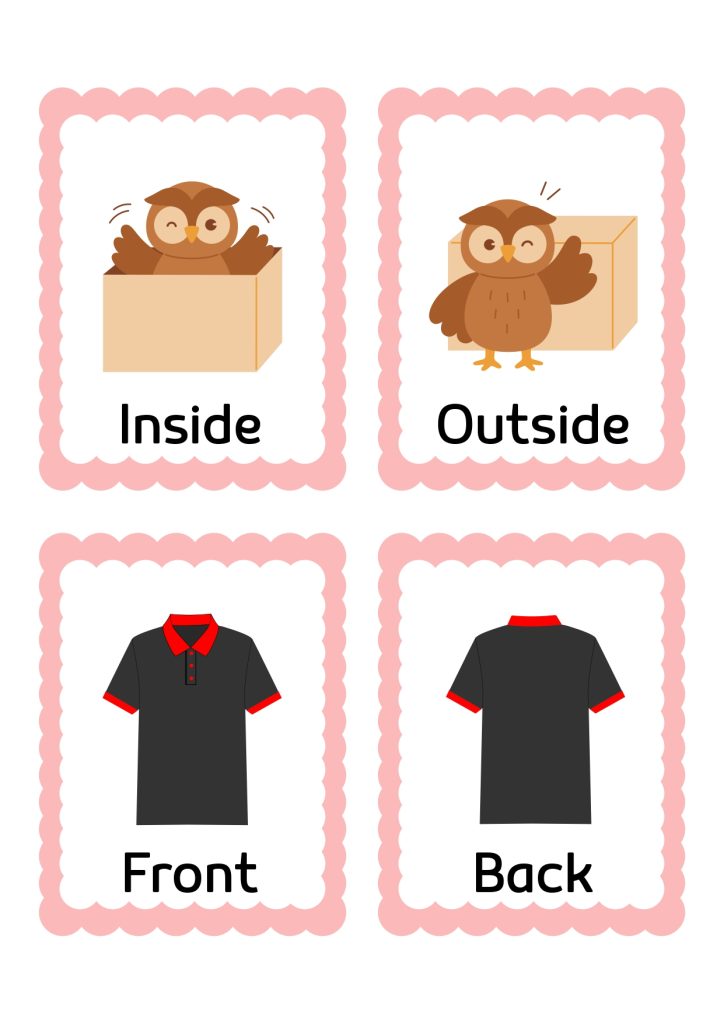
- Inside and Outside uses an owl in a box because kids love hiding games and understand being inside versus outside spaces.
- Front and Back shows both sides of a shirt. Kids dress themselves daily, so this is practical knowledge they use constantly. For more vocabulary on clothing, check out our Clothes Flashcards for Kids.
- Wet and Dry features laundry because kids see wet clothes from playing outside and dry clothes from the dryer.
Games That Actually Work
- Treasure Hunt Race: Hide cards around the house. Give clues using opposites. “Find something that’s not cold” sends them hunting for the hot card. Kids love searching for things, and this gets them moving while learning.
- Beat the Clock: Spread cards face-up on the kitchen table. Shout out one word and see how fast your child can grab both cards in the pair. “Find big and small!” They race to get both cards. This builds quick thinking and recognition.
- Silly Story Chain: Start a story with one card, then your child continues with the opposite. “There once was a very tall elephant…” and they might add “…who had a very short mouse friend.” Stories get ridiculous and memorable.
- Action Opposite: Use cards as movement prompts. Show “big” and everyone stretches as large as possible. Show “small” and everyone curls into tiny balls. Kids remember better when their whole body is involved.
- Real Life Sorting: Make two boxes labeled “This” and “That.” Pull a card and have your child sort actual things into opposite categories. Pull “heavy” and they sort toys into heavy and light boxes. This connects cards to real stuff.
- Bedtime Opposites: Before sleep, review the day using opposites. “This morning you were awake, now you’re getting sleepy.” Helps kids process their day while practicing concepts.
Why Pictures Beat Words Every Time
Kids process pictures way faster than words. When they see the huge difference between the big beach ball and tiny tennis ball, their brains instantly get it. The visual impact creates memory connections that just saying words over and over can’t match.
Each card pair uses super clear, high-contrast images. There’s no confusion about the difference between bright sunny day and dark starry night. These obvious contrasts help kids understand that opposites are extremes, not subtle differences.
The situations in each card connect to what kids already know. They’ve felt the weight of a heavy backpack and the lightness of an empty lunch box. These familiar situations make new words stick because kids can link new vocabulary to stuff they already understand.
Making It Stick in Daily Life
- Morning Routine While getting dressed, use opposite concepts naturally. “Let’s put on your clean shirt” or “Your messy hair needs brushing.” This reinforces learning during stuff you’re already doing.
- Playground Practice At the park, opposites are everywhere. Big kids and little kids. Going up the slide and sliding down. Running fast and walking slow. Outdoor play becomes vocabulary reinforcement without extra effort.
- Car Ride Entertainment Keep cards in the car for traffic jams or long drives. Pull out a card and have everyone find that opposite in what they can see. “Find something tall and something short” while looking out the window.
- Cleanup Time During toy cleanup, use opposites naturally. “Put the big blocks here and the small blocks there.” Regular chores become learning opportunities.
Building Thinking Skills
Learning opposites teaches comparison skills that kids use their whole lives. When they can tell that something is hot versus cold, they’re learning to evaluate, categorize, and make decisions based on what they observe.
The connections between opposites help kids understand cause and effect. If something is full, it can become empty. If something is clean, it can get dirty. These connections teach kids that the world changes and they can predict and influence those changes.
Ready to Print
Ready to help your child learn with confidence? Download your Opposites Flashcards and watch your child’s vocabulary grow. Each card pair opens doors to better conversations, clearer communication, and deeper understanding of how words work.
Printing is easy. Open the PDF and hit print. Use regular paper in portrait mode with “fit to page” selected. Color printing shows the contrasts better, but black and white works fine too.
For cards that survive daily kid handling, use thick paper or cardstock. Laminating protects against water spills and sticky fingers. Cut along the edges and your opposite cards are ready for learning that will help your child for years.